Stretcher transport
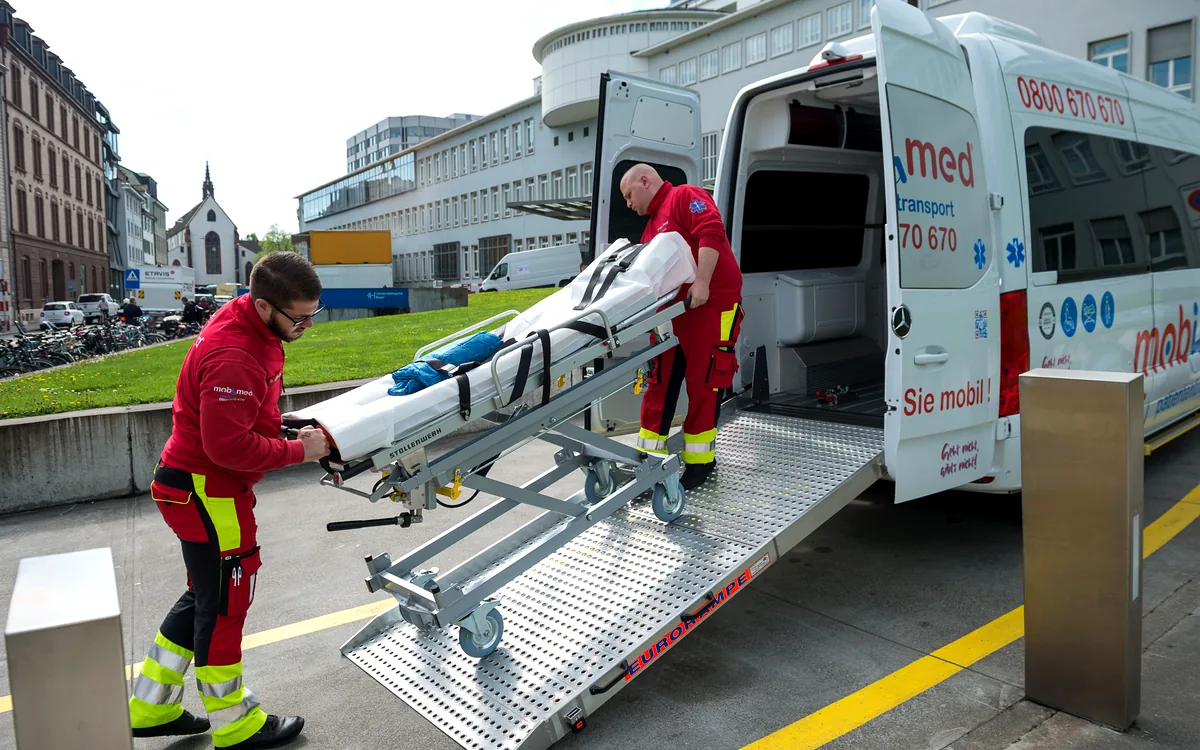
In a stretcher transport, the patient is carried on a patient stretcher in a vehicle specially equipped for the purpose.
Learn more: Stretcher transport
Glossary · Equipment · also: AED, Automated external defibrillator, Defib
A defibrillator is a device that delivers a targeted electric shock in certain life-threatening heart rhythm disorders, above all ventricular fibrillation, so that the heart can return to an orderly rhythm. An AED (automated external defibrillator) analyses the heart rhythm itself and guides the user through the process with voice prompts — so that laypeople can help too. In an emergency, the first step is always: call 144.
Also called: AED · Automated external defibrillator · Defib · Public access defibrillator
An AED is connected via two adhesive electrode pads on the upper body. The device measures the heart rhythm and decides by itself whether a shock is needed. If so, it uses voice prompts to tell everyone to stand clear and to press the shock button — some devices also deliver the shock automatically.
A defibrillator does not replace chest compressions but complements them. Between analyses, the device prompts you to continue chest compressions until the emergency medical service takes over.
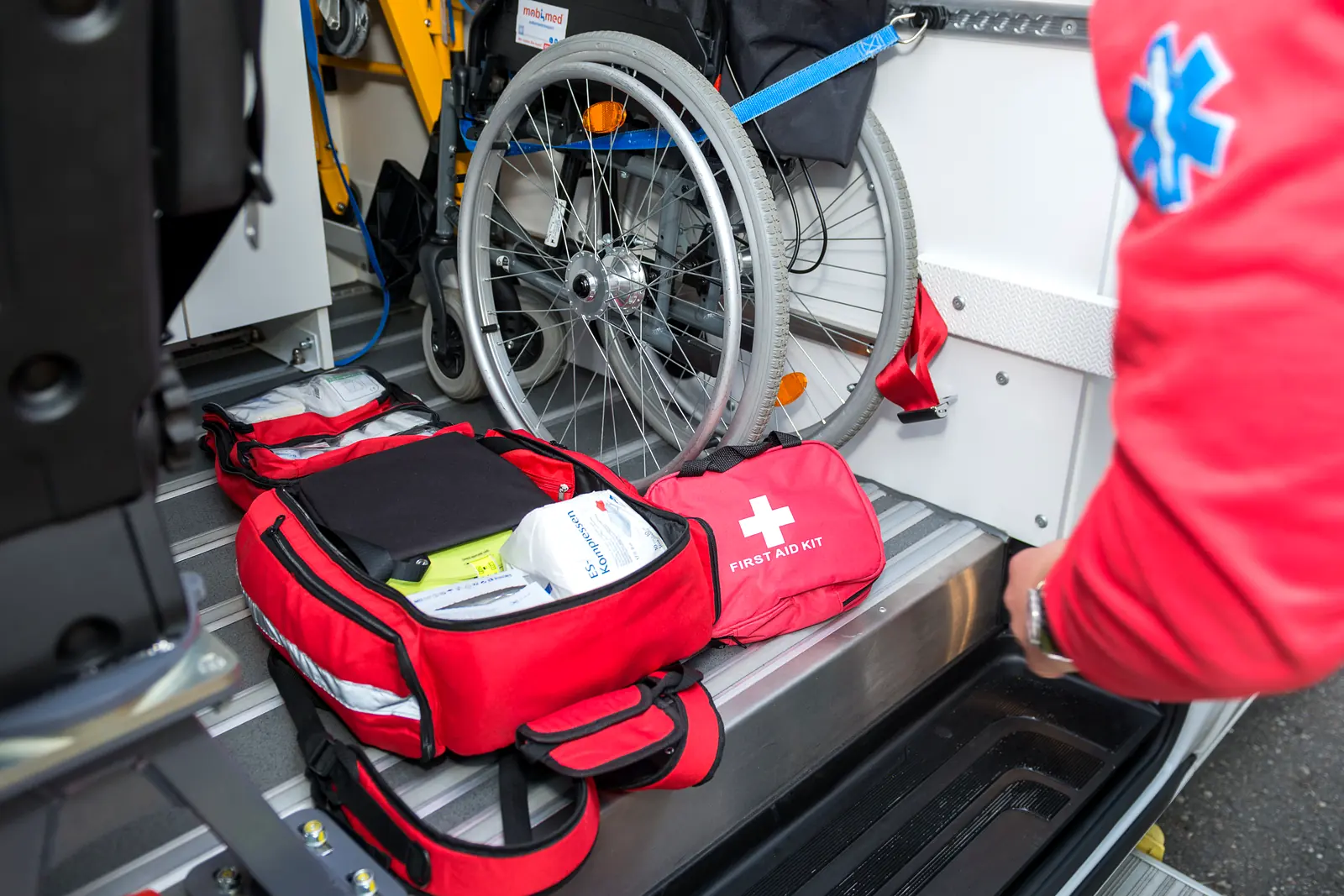
Stretcher transport carries people who are often weakened, have just left hospital or have an underlying illness. Even though patient transport only carries people in a stable condition, their condition can change on the way. For this eventuality, first-response equipment is on board.
At Mobimed, the vehicles used for stretcher transport carry oxygen, first-response emergency medical equipment and a defibrillator. The staff are trained in first response and monitor the patient during the journey.
A defibrillator on board does not turn patient transport into an emergency call-out. Patient transport takes people to appointments, to hospital or home in a planned way and with an escort. An emergency medical service provides medical care in emergencies and transports patients under the care of a doctor or emergency medical staff.
That is why, in an emergency — unconsciousness, severe shortness of breath, chest pain, suspected stroke — the first step is always the emergency number 144. If an emergency occurs on the way, the staff provide first aid and alert the emergency medical service.
In Switzerland, publicly accessible AEDs are installed in many railway stations, shopping centres, sports facilities and municipal buildings. They are marked with a green heart symbol. Anyone who attends a first aid or BLS course learns how to use one in a few hours — and can save lives in an emergency.
Alongside the defibrillator, oxygen is part of the equipment for stretcher transport. It is important, for example, for patients who already receive oxygen at home or in hospital and continue to need it during the journey. Anyone who requires oxygen should state this when booking.
The first-response equipment includes, among other things, dressings and aids to bridge the time until the emergency medical service arrives in an emergency. It is intended for exceptional situations — the norm is a calm, safe journey.
Werner, 81, is discharged after a few days on the cardiology ward of a Basel hospital. He is not yet allowed to sit for long and travels home to Reinach lying down. A transport assistant sits beside him for the whole journey. Oxygen and a defibrillator are on board — they are not needed, but Werner’s daughter is glad they are there.
In a stretcher transport, the patient is carried on a patient stretcher in a vehicle specially equipped for the purpose.
Learn more: Stretcher transport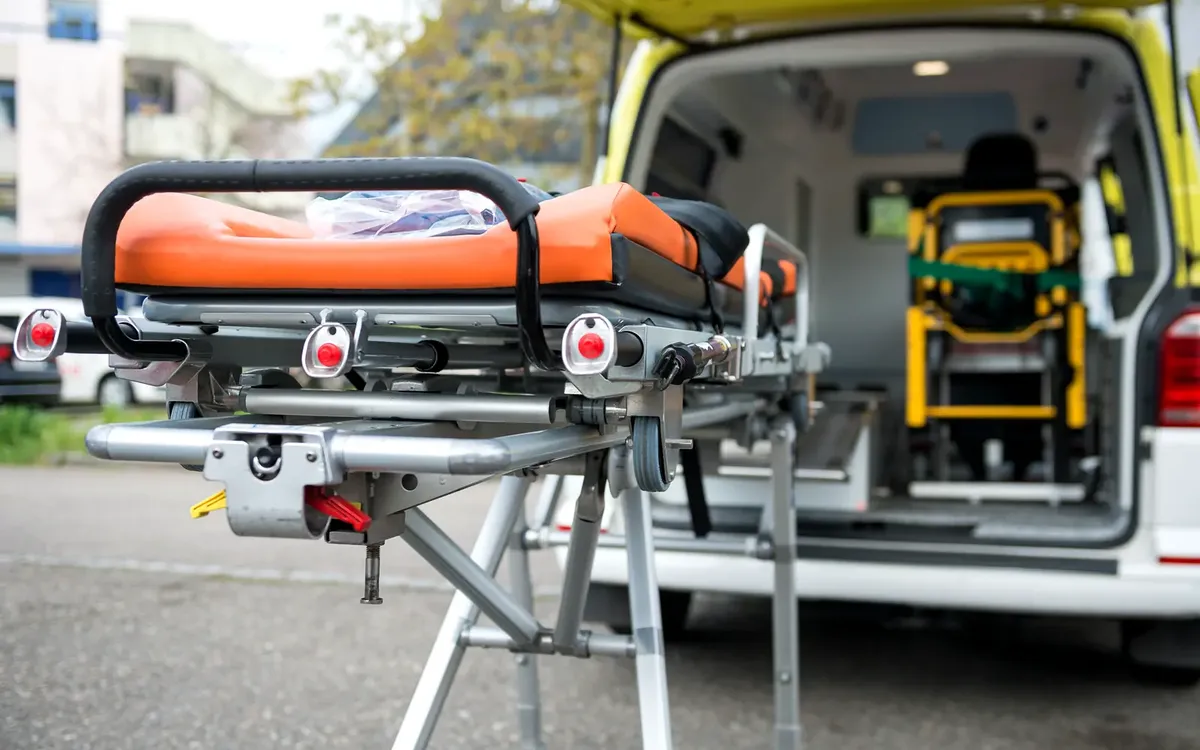
On a hospital transfer, we take patients from one institution to the next: from a hospital to another clinic, from an acute hospital to a care home or from a clinic back to hospital.
Learn more: Hospital transfersYes. Publicly accessible AEDs are designed for laypeople and guide you through the process with voice prompts. A first aid course gives you confidence, but it is not a requirement.
The vehicles used for stretcher transport carry a defibrillator, oxygen and first-response equipment. If you have questions about the equipment for your specific journey, the team can help on 0800 670 670 (free call).
The staff provide first aid and alert the emergency medical service via 144. Patient transport does not replace the emergency medical service.
Client, patient, appointment — one form that goes directly to our dispatch team. Prefer to call? That works too.
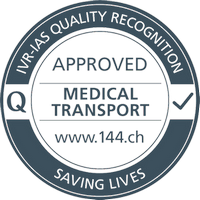
Recognition by the Swiss Interassociation for Rescue Services (IVR/IAS) is not a self-assessment but the result of an external audit of vehicles, equipment, training and procedures. Mobimed was the first patient transport provider in north-western Switzerland to receive it — and still holds it today.
Check the certificate in the IVR register