Stretcher transport
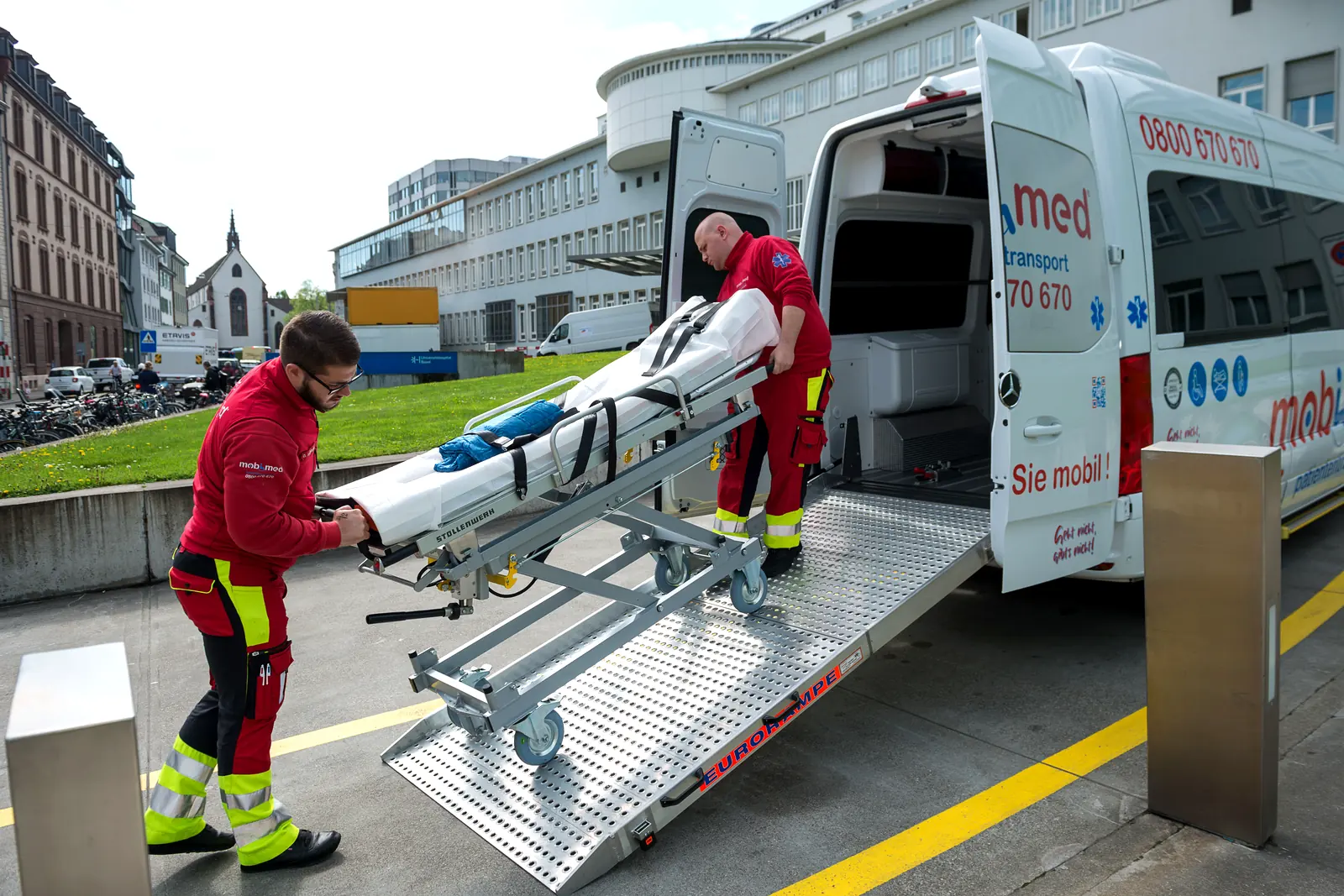
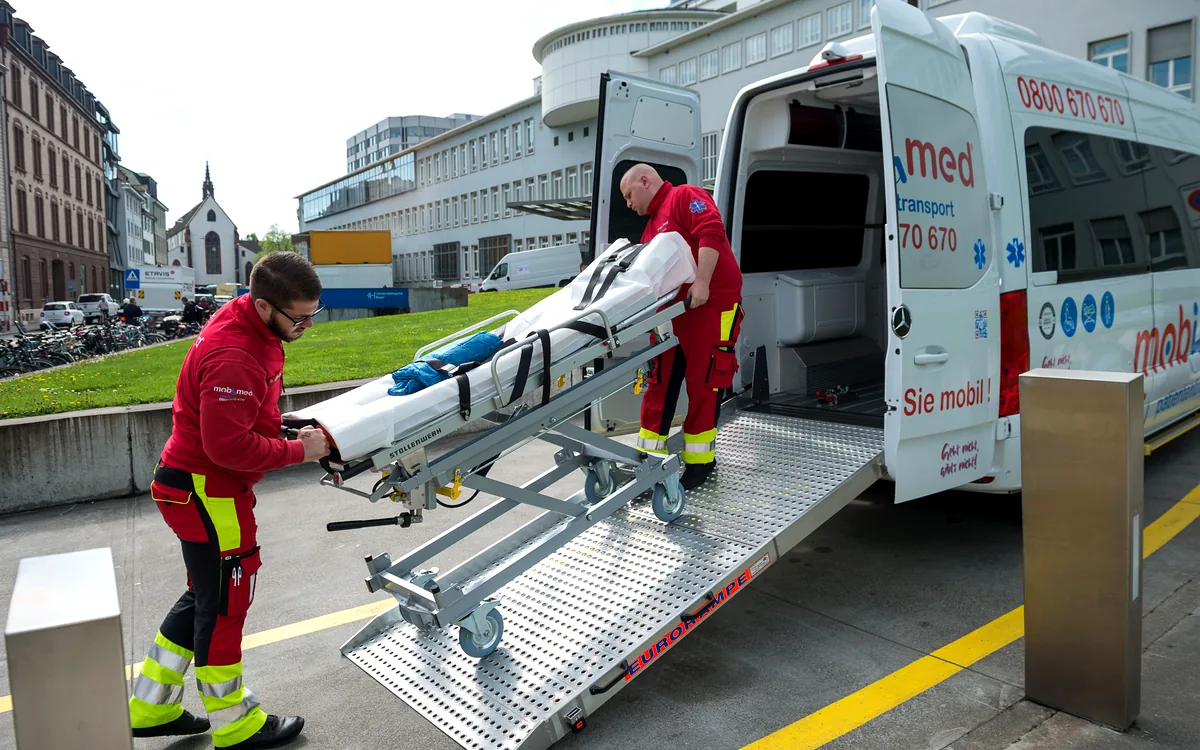
In a stretcher transport, the patient is carried on a patient stretcher in a vehicle specially equipped for the purpose.
Learn more: Stretcher transport
Glossary · Types of transport · also: stretcher transfer, non-emergency stretcher transport, lying-down transport
Stretcher transport is a form of patient transport in which the person travels lying on a stretcher instead of in a seat. It is needed when sitting is not possible or not permitted by the doctor — for example after an operation, in severe pain or when bedridden. At Mobimed, a second trained transport assistant always travels along.
Also called: stretcher transfer · non-emergency stretcher transport · lying-down transport · transport on a stretcher
The most common reason is the period after an operation: after hip or back surgery, patients are often not allowed to sit, or only briefly, for weeks. In cases of severe pain, marked weakness, circulation problems when sitting or for bedridden patients, travelling lying down is also the gentlest option. The treating doctor decides whether the patient must travel lying down.
Anyone who travels seated when they should be lying down risks pain, dizziness or complications at the surgical site. If in doubt, stretcher transport is the safer choice.
Two staff members bring the stretcher right to the bed — in the hospital room, in the care home or at home. They move the patient onto it, secure them with straps and roll the stretcher into the vehicle, where it is firmly locked in place. During the journey, one person sits next to the patient and keeps an eye on them. At the destination, the patient is taken to their room or bed and handed over to the nursing staff.
Where there is no lift, we combine the stretcher with a stair chair or carry the stretcher between two people — we clarify this when you book, so that the right equipment is brought along.
Every Mobimed stretcher transport vehicle carries oxygen, emergency first-aid equipment and a defibrillator. The staff are trained in handling patients lying down and know how to position, secure and transfer them. Even so, stretcher transport is not a substitute for an emergency ambulance: we carry patients in a stable condition, and in an emergency you call 144.
Stretcher transport differs from emergency transport in that it is planned and the patient is in a stable condition. It differs from seated and wheelchair transport through the stretcher and the second assistant — which is why it is also somewhat more expensive. If medically necessary, basic health insurance (KVG/LAMal) covers 50 per cent, up to a maximum of CHF 500 per calendar year.
For stretcher transport to run smoothly, the team needs some information: whether sitting is not allowed at all or only briefly, whether oxygen is needed, how the flat can be reached (floor, lift, tight corners) and whether aids such as a rollator or luggage are coming along. For journeys from hospital, the room number and the preferred collection time after the ward round are helpful.
If these points are clarified in advance, the team arrives with the right equipment and does not have to improvise on site. The patient, relatives, the hospital or the care home can book — online or by phone.
Hans, 74, from Reinach, gets a new hip at the Hirslanden Klinik Birshof. When he is discharged, he is not yet allowed to sit. The ward books a stretcher transport: two staff members collect him on the stretcher, drive him to Reinach and carry him into his bedroom. His walking sticks and suitcase come along, and his wife travels with him free of charge.
In a stretcher transport, the patient is carried on a patient stretcher in a vehicle specially equipped for the purpose.
Learn more: Stretcher transport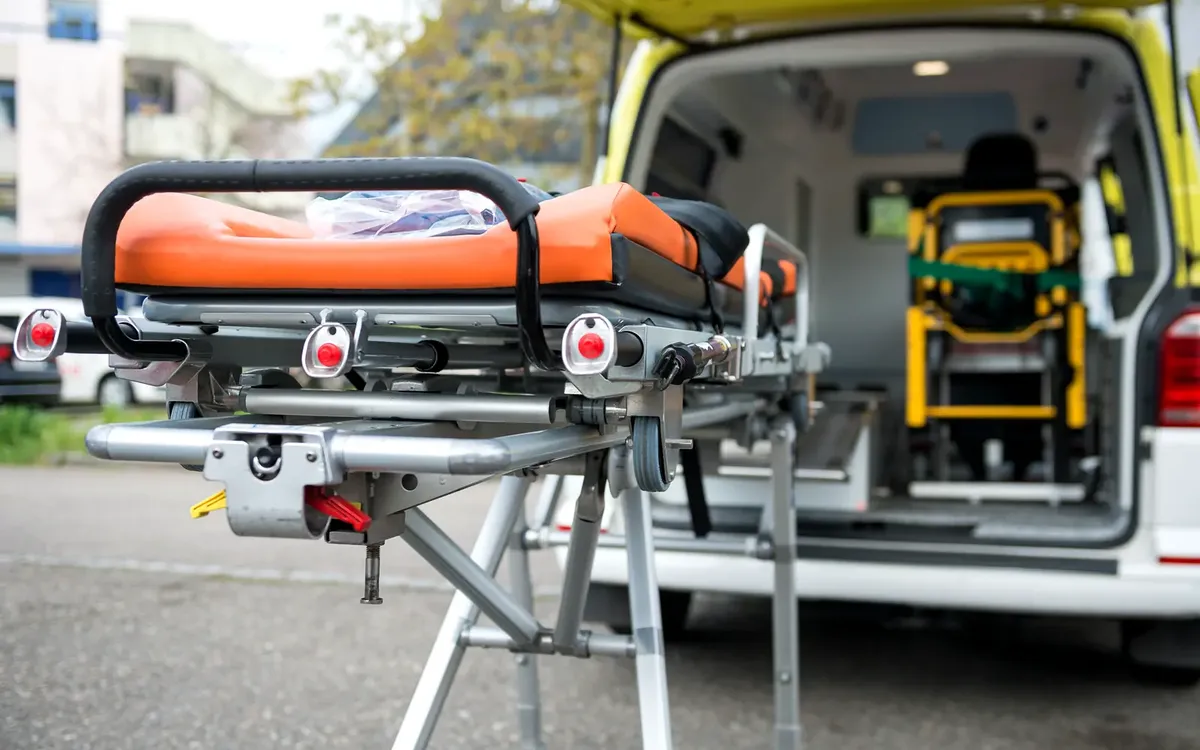
On a hospital transfer, we take patients from one institution to the next: from a hospital to another clinic, from an acute hospital to a care home or from a clinic back to hospital.
Learn more: Hospital transfers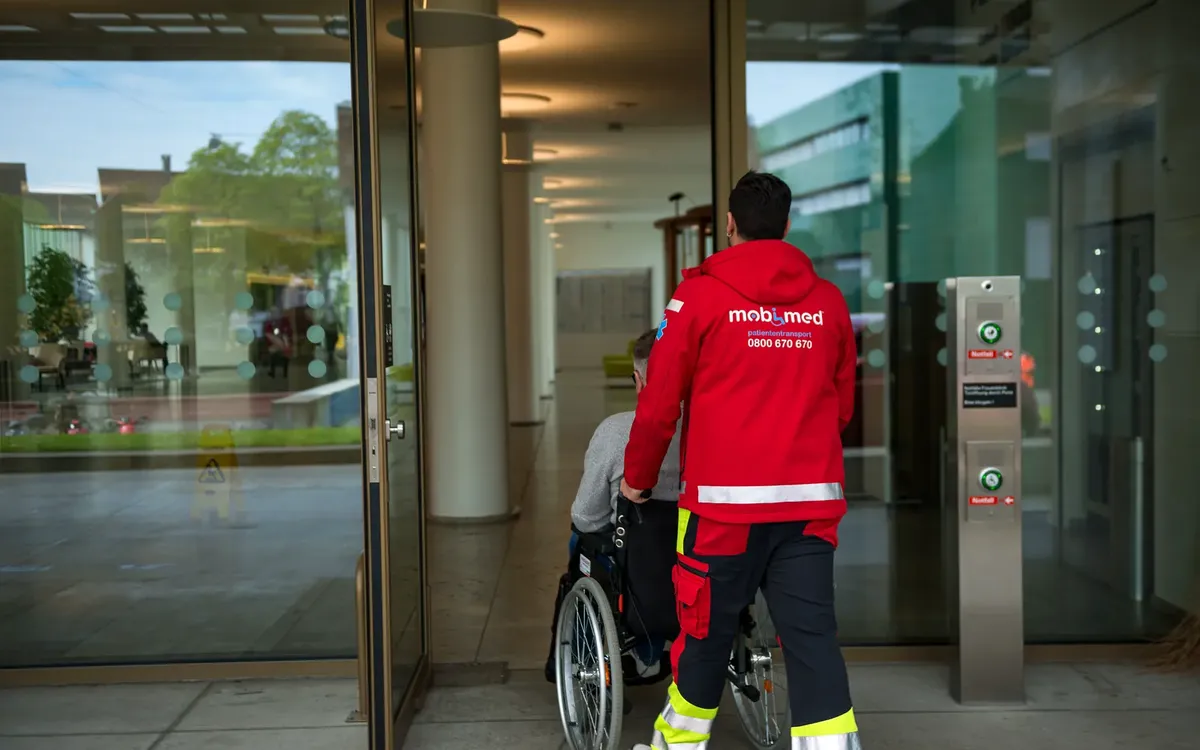
With our rehab transport, we take you to the rehabilitation clinic after a hospital stay and back home again afterwards – by stretcher, in a wheelchair or seated, with your luggage and aids.
Learn more: Rehab transport
With our medical repatriation service, we organise ground-based return transport home or to a clinic for further treatment – within Switzerland and internationally.
Learn more: Medical repatriation & journeys abroadNo. An ambulance of the emergency medical service comes in an emergency and provides medical care. Stretcher transport is a planned journey for patients in a stable condition who need to lie down.
Your doctor. When booking, let us know whether you are allowed to sit — we will then plan the vehicle and staff accordingly.
Client, patient, appointment — one form that goes directly to our dispatch team. Prefer to call? That works too.
Recognition by the Swiss Interassociation for Rescue Services (IVR/IAS) is not a self-assessment but the result of an external audit of vehicles, equipment, training and procedures. Mobimed was the first patient transport provider in north-western Switzerland to receive it — and still holds it today.
Check the certificate in the IVR register