Stretcher transport
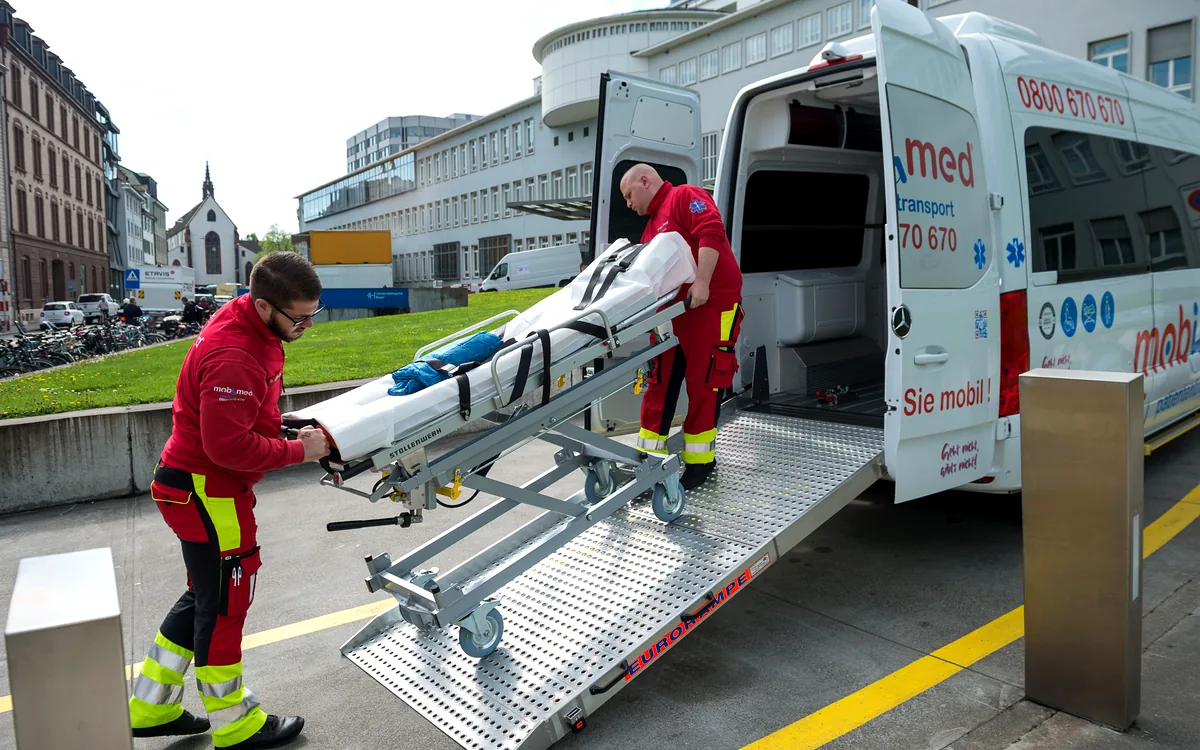
In a stretcher transport, the patient is carried on a patient stretcher in a vehicle specially equipped for the purpose.
Learn more: Stretcher transport
Glossary · Quality and staff · also: Transporthelfer/in, patient escort, accompanying person in patient transport
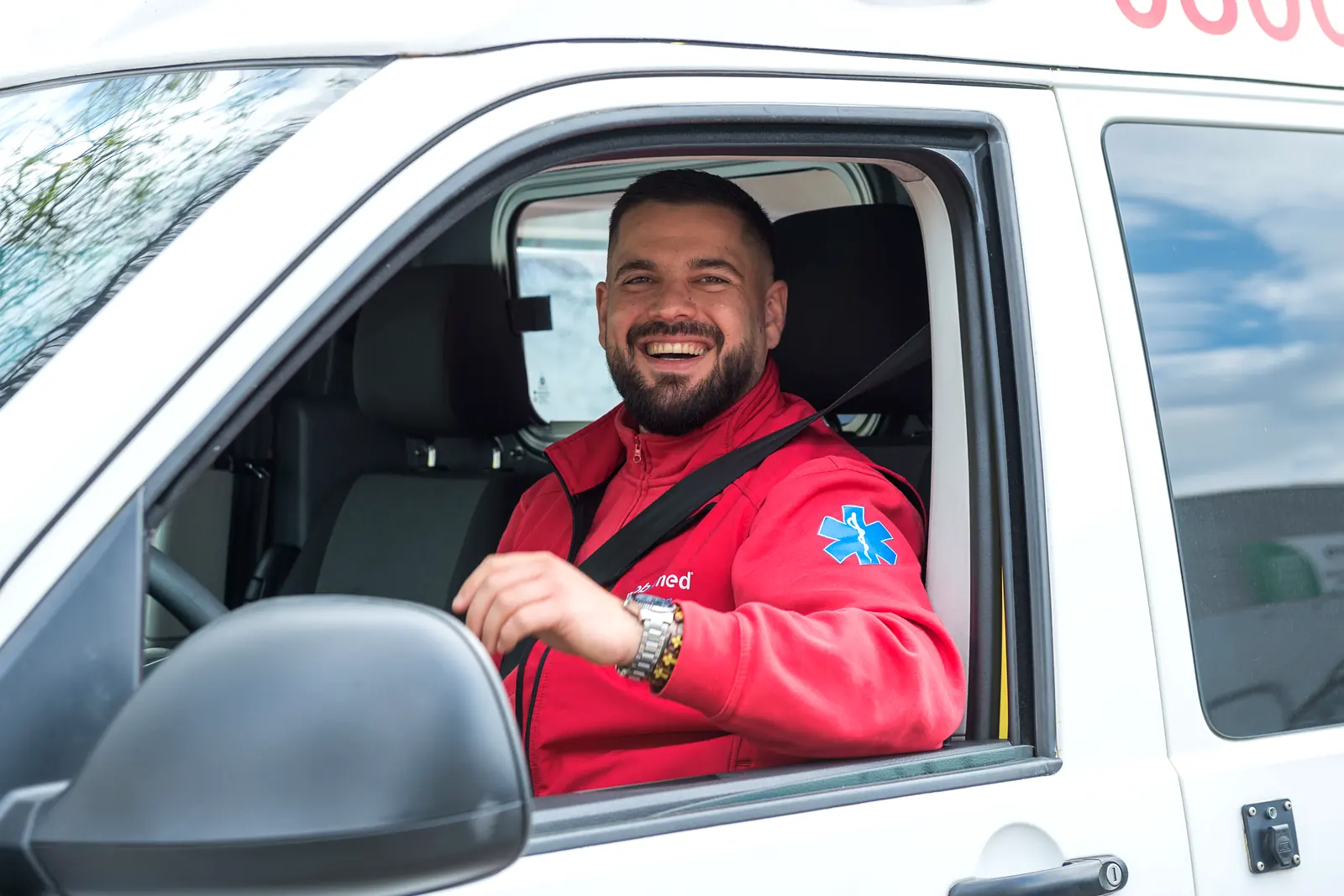
Transport assistants accompany medically stable patients during transport: they help them get in and out, secure the wheelchair and patient in the vehicle, drive and look after them on the way. Their basis is training in first aid, transport techniques and patient care, as described by the Swiss Interassociation for Rescue Services (IVR).
Also called: Transporthelfer/in · patient escort · accompanying person in patient transport · driver in patient transport
The working day consists of many small tasks that make all the difference to patients: ringing at the front door, helping them put on their jacket, getting the patient safely down the stairs, pushing the wheelchair up the ramp into the vehicle and securing it with the restraint system, checking the seat belt. At the destination, they accompany the patient to reception or to the ward.
On the way, they keep an eye on how the patient is feeling: is she nauseous, is she in pain, does she seem confused? Someone who knows first aid and stays calm gives patients and relatives a sense of security.
On a stretcher transport at Mobimed, a second, specially trained transport assistant always comes along. One person drives, the other sits in the back with the patient and monitors them throughout the journey. Two people are also needed to transfer the patient from the bed to the stretcher and to use the stair chair on the stairs — for the patient’s safety as well as for the health of the staff.
In their training, transport assistants learn the basics of first aid and resuscitation, how to use a defibrillator and oxygen, back-friendly lifting and positioning techniques, how to secure wheelchairs and stretchers, and communication with patients, relatives and nursing staff. Many later go on to train as patient transport paramedics with a federal diploma.
At Mobimed, staff are trained to IVR level 3. Mobimed is continuously looking for transport assistants (40 to 100 per cent) for its base in Binningen.
Expertise is the foundation, but in everyday work it is often human qualities that make the difference. Patients are nervous before a hospital appointment, exhausted after treatment, sometimes confused or anxious. A good transport assistant takes time, explains what will happen next and listens. They are punctual, because patients often wait a long time to be picked up, and reliable, because relatives count on everything going smoothly.
Physical resilience is also part of it: carrying, lifting and pushing are part of every shift. Back-friendly techniques and consistently working in pairs protect not only the patients but also the staff. Anyone who chooses this profession finds a job where you see every day how much your own work takes the strain off people.
For many, a position as a transport assistant is also a good way into the rescue services: you get to know the procedures in hospitals and care homes and can later pursue targeted further training.
Mr F. from Gundeldingen lives on the third floor of an old building without a lift and can hardly climb stairs after a fall. Two transport assistants collect him from his flat with the stair chair, bring him safely downstairs and into the vehicle. At the physiotherapy practice they accompany him to the reception desk and collect him again after the appointment.
In a stretcher transport, the patient is carried on a patient stretcher in a vehicle specially equipped for the purpose.
Learn more: Stretcher transport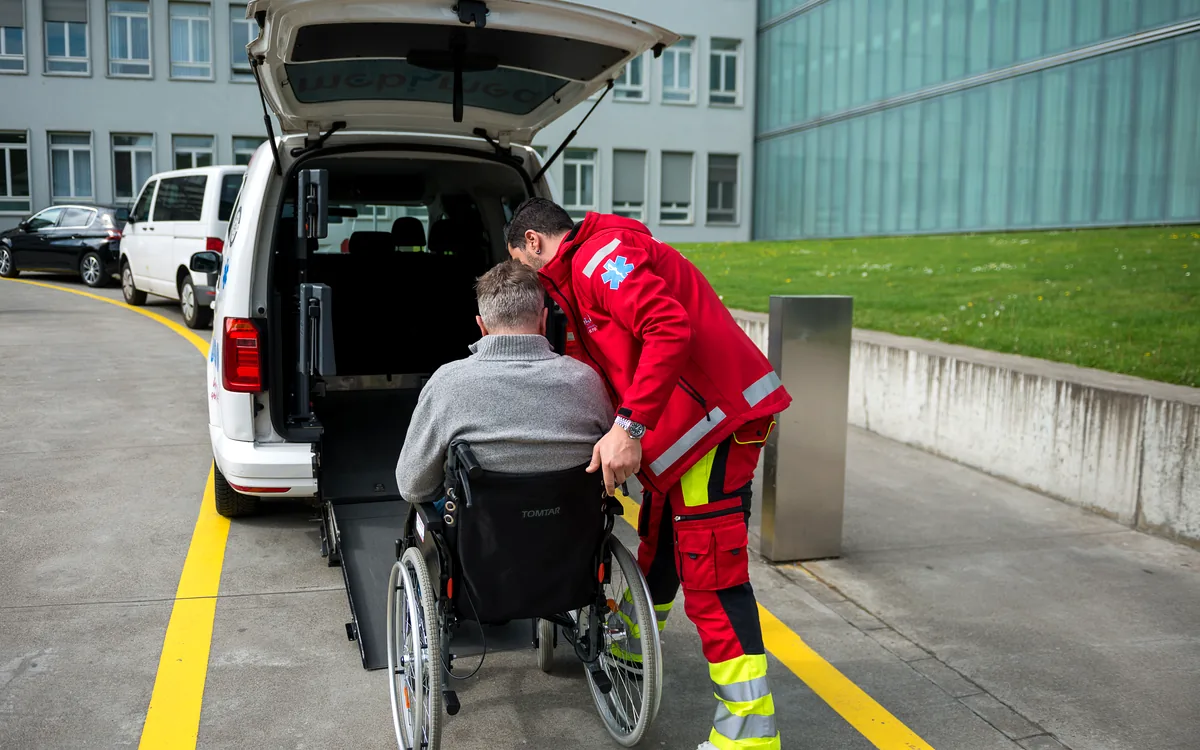
With wheelchair transport, the patient stays seated in their own wheelchair.
Learn more: Wheelchair transport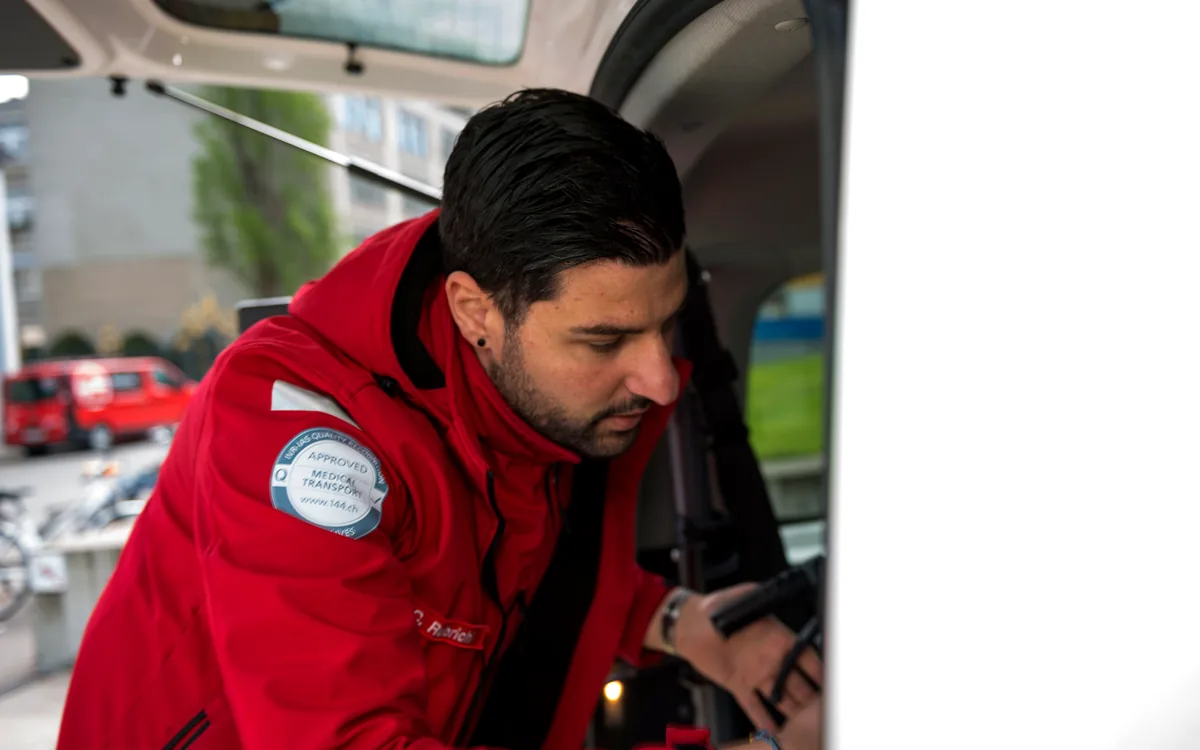
Seated transport is the right choice for medically stable patients who can sit during the journey but need support getting in and out.
Learn more: Seated transport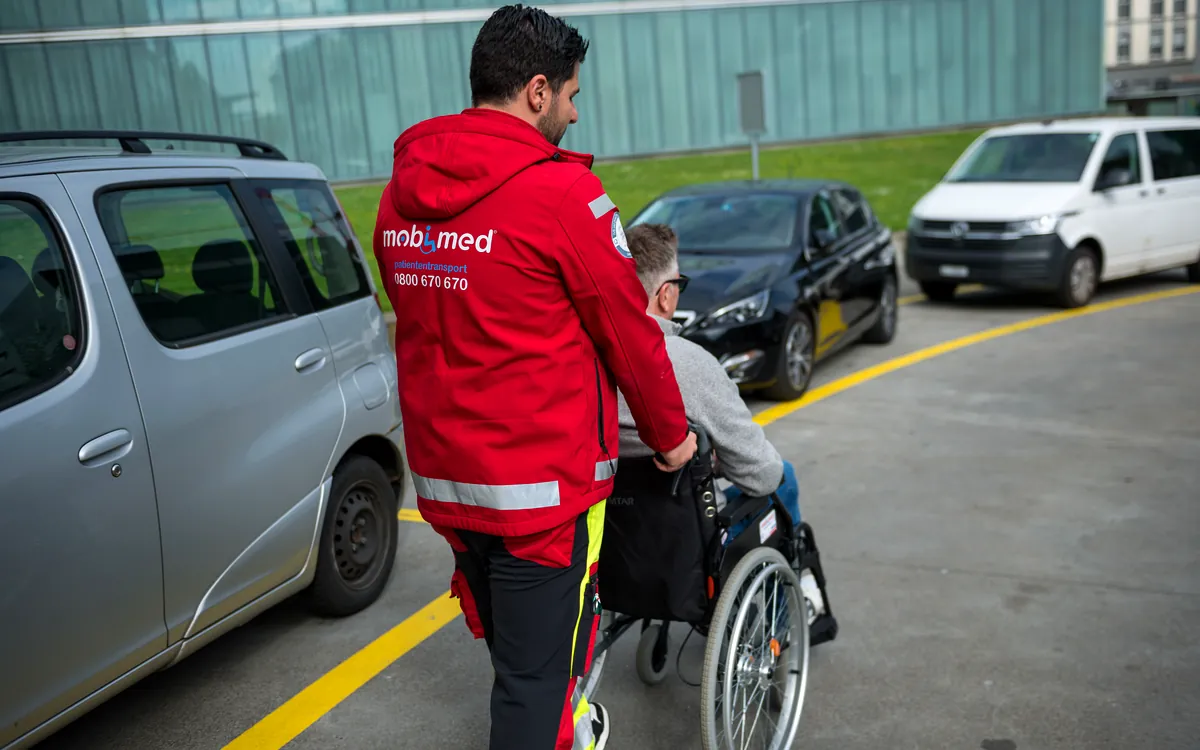
We drive you to your GP, dentist, specialist or physiotherapist and bring you back home after your appointment.
Learn more: Transport to the doctorTransport assistants have basic training for accompanying stable patients. Patient transport paramedics have more comprehensive training with a federal diploma and also take on more demanding transports.
One person drives, the other monitors the patient during the journey. In addition, two people are needed to transfer and carry the patient safely.
Client, patient, appointment — one form that goes directly to our dispatch team. Prefer to call? That works too.
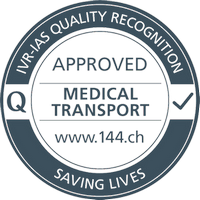
Recognition by the Swiss Interassociation for Rescue Services (IVR/IAS) is not a self-assessment but the result of an external audit of vehicles, equipment, training and procedures. Mobimed was the first patient transport provider in north-western Switzerland to receive it — and still holds it today.
Check the certificate in the IVR register