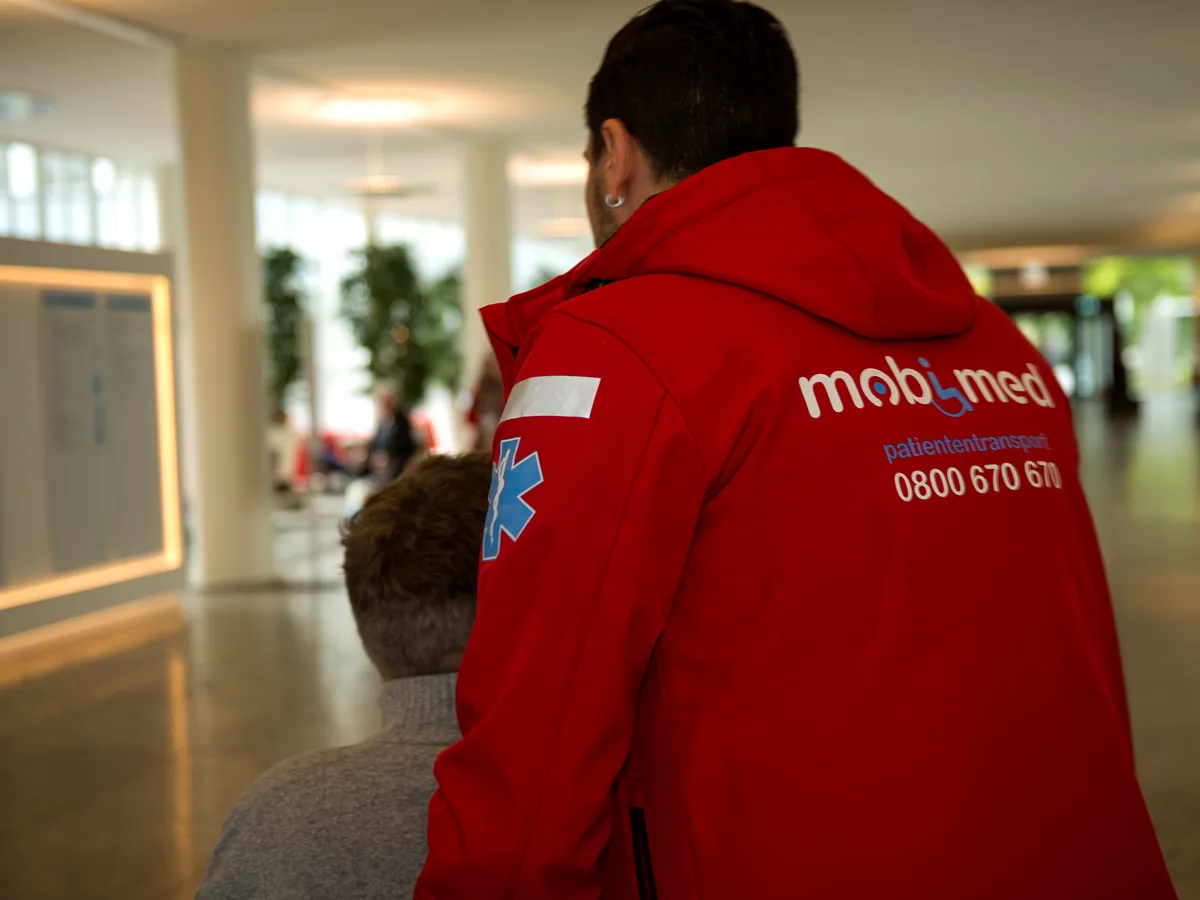
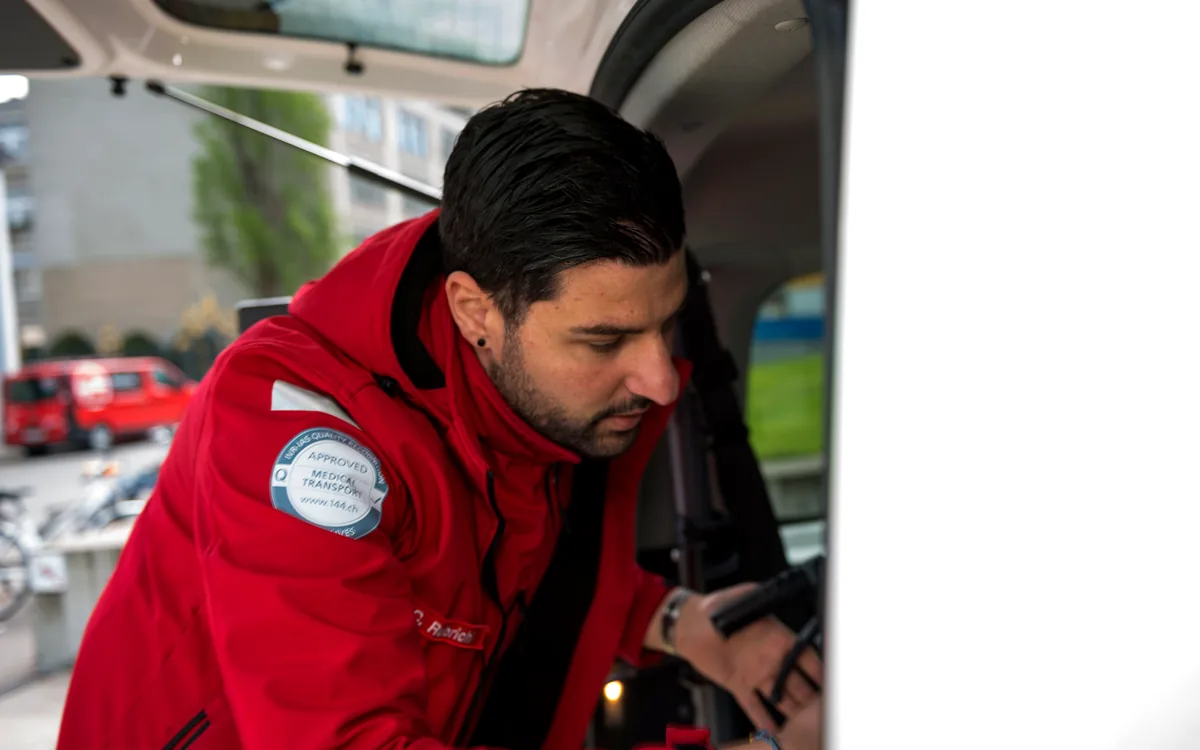
Seated transport
Seated transport is the right choice for medically stable patients who can sit during the journey but need support getting in and out.
Learn more: Seated transport
Glossary · Occasions and assistance · also: Companion, Escort, Carer
An accompanying person is a relative, a friend or another trusted person who rides along during patient transport. They provide reassurance, know the medical history and wishes, and can help at the destination. At Mobimed, one companion rides free of charge with every type of transport.
Also called: Companion · Escort · Carer · Person riding along
A journey to hospital, to an examination or home is stressful for many people. A familiar person at their side is reassuring — especially for older people, people with dementia, those anxious about the appointment, or children. They can answer questions, have documents to hand and be present during the consultation with the doctor.
An accompanying person is also helpful for the staff: they know the patient’s habits, medication and needs and can pass on information that is not on any form.
An accompanying person can be anyone close to the patient: a partner, children, parents, friends or neighbours. With children, a parent or another familiar carer usually rides along. At Mobimed, one companion rides free of charge with every type of transport — lying down, in a wheelchair or seated.
To ensure enough space is planned in, the companion should be mentioned when booking. This is particularly important with larger mobility aids or a lot of luggage.
The accompanying person does not replace the trained staff. The transport team is responsible for safe positioning, securing the wheelchair, monitoring during the journey and first aid. The companion is there for personal support — for conversation, calm and orientation.
On stretcher transports at Mobimed, a second trained transport assistant always travels in addition to the driver. The companion then sits so that the staff can reach the patient easily at all times.
Many relatives work and cannot be there for every journey. In that case, the staff accompany the person to reception or to the ward and get in touch on the telephone number provided if there are questions. Anyone booking for a relative should therefore leave a number on which they can be reached during the day.
For children, an accompanying person goes without saying: as a rule, a parent or another familiar carer who knows the child and can comfort them rides along. On transports for pregnant women, too, the partner or a trusted person often rides along — for example to a check-up or to hospital when labour begins.
Whoever rides along should have personal items to hand: the patient’s ID and insurance card, medication list, important documents and, for children, their favourite toy. This makes arrival at the destination easier.
At the destination, the companion helps with settling in: with registration, putting things away in the room or the first conversation with the nursing staff. The transport team hands over the person and the documents, while the companion remains as a familiar face.
Anna accompanies her father, who has dementia, to an examination at the hospital. When booking, she states that she will be riding along. During the journey she holds his hand and explains where they are going. At the hospital she is present during the conversation with the doctor. There is no extra charge for Anna to ride along.
Seated transport is the right choice for medically stable patients who can sit during the journey but need support getting in and out.
Learn more: Seated transport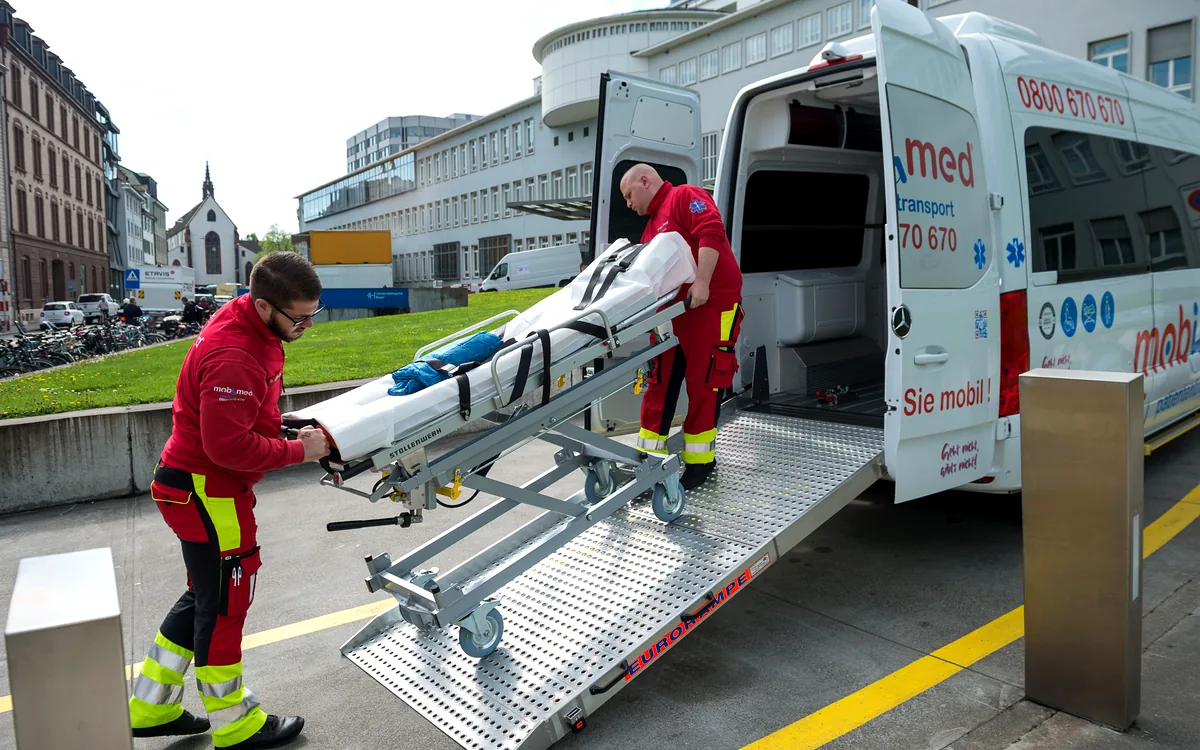
In a stretcher transport, the patient is carried on a patient stretcher in a vehicle specially equipped for the purpose.
Learn more: Stretcher transport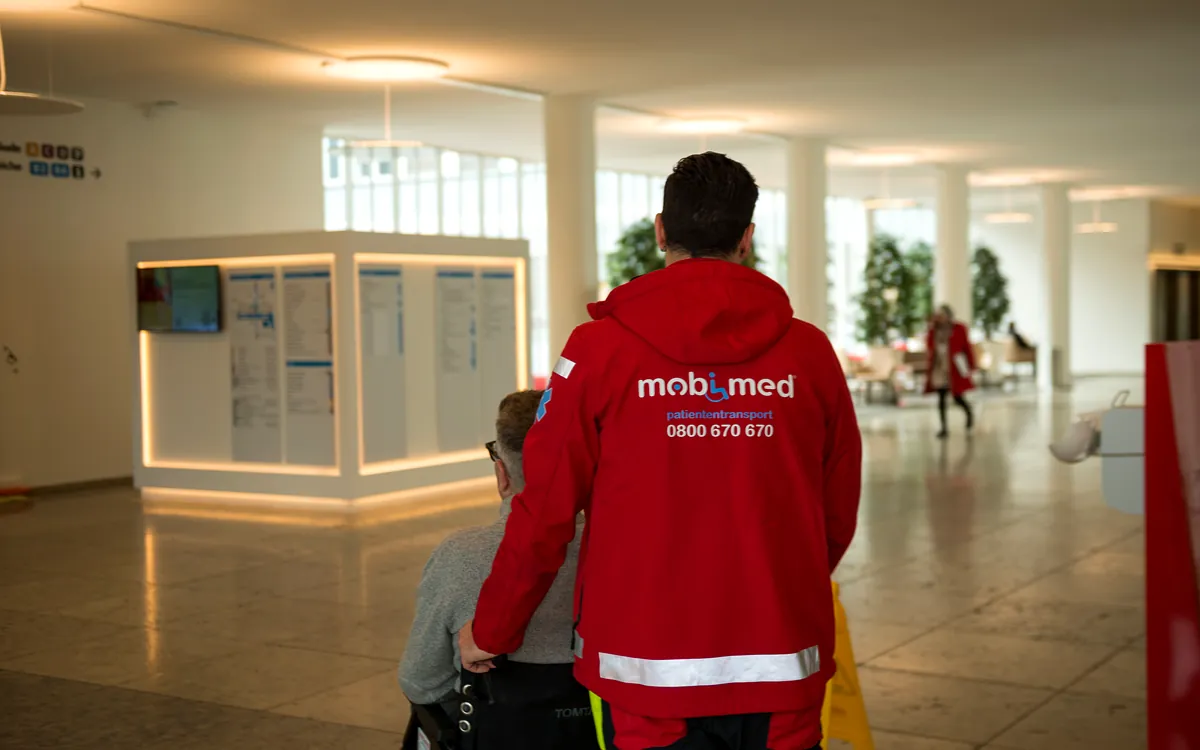
With our transport to medical examinations, we take you to your appointment – for example for an MRI, CT or X-ray, for chemotherapy or radiotherapy or for a follow-up check – and back again afterwards.
Learn more: Transport to medical examinations
In the Basel area, we offer a specialised transport service for pregnant women – for journeys to examinations and for the journey to hospital when labour begins.
Learn more: Transport for pregnant womenNo. At Mobimed, one companion rides free of charge with every type of transport. Just mention them when booking.
That depends on the vehicle and the type of transport. Ask when booking — the team will tell you what is possible.
Client, patient, appointment — one form that goes directly to our dispatch team. Prefer to call? That works too.
Recognition by the Swiss Interassociation for Rescue Services (IVR/IAS) is not a self-assessment but the result of an external audit of vehicles, equipment, training and procedures. Mobimed was the first patient transport provider in north-western Switzerland to receive it — and still holds it today.
Check the certificate in the IVR register