
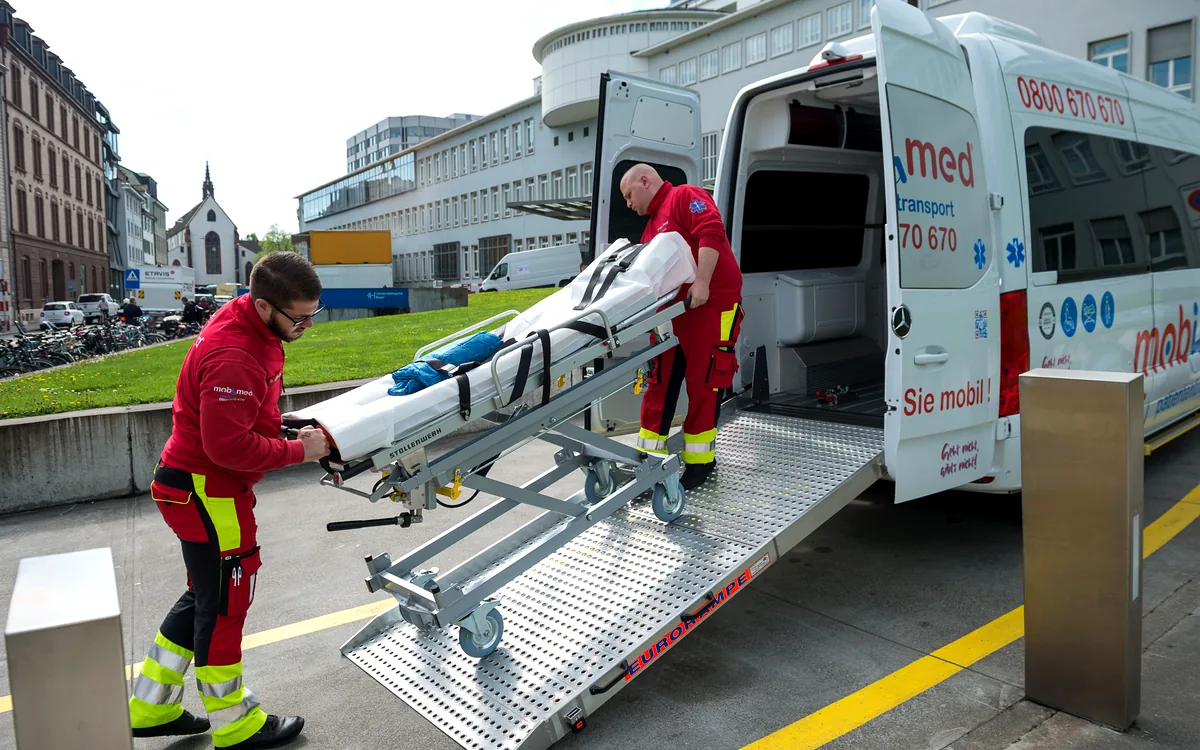
Stretcher transport
In a stretcher transport, the patient is carried on a patient stretcher in a vehicle specially equipped for the purpose.
Learn more: Stretcher transport
Glossary · Types of transport · also: medical transport, non-emergency patient transport, patient transfer
Patient transport is the accompanied transport of a person who is ill, injured or has limited mobility but is medically stable — to the doctor, to hospital, to rehabilitation or home. Patients travel lying down, in a wheelchair or seated, with trained staff and specially equipped vehicles. Patient transport is not an emergency service: in an emergency in Switzerland, call 144.
Also called: medical transport · non-emergency patient transport · patient transfer · non-emergency medical transport
Patient transport is for people who cannot manage a journey on their own, by public transport or in an ordinary car — but who do not need an emergency doctor. Typical passengers are older people after a hospital stay, patients after an operation, wheelchair users, dialysis patients or care home residents who need to go to an examination.
What matters is the patient’s condition during the journey: they must be medically stable. If someone needs monitoring by an emergency doctor, medication or life-sustaining measures on the way, that is a case for the emergency medical service, not for patient transport.
Depending on mobility, there are three types to choose from. In stretcher transport, the patient lies on a stretcher — for example after a hip operation or when sitting is not allowed. In wheelchair transport, they stay in their own wheelchair; the vehicle has a ramp or lift. In seated transport, they travel in a normal seat but receive help getting in and out and are accompanied all the way to their destination.
There are also journeys for specific purposes: transfers between hospitals, journeys to rehabilitation, regular dialysis transport or repatriation from abroad. The type of transport stays the same; the process is tailored to the occasion.
A professional provider collects the patient from their front door or from the ward, not from the kerb. Staff are trained in handling patients, the vehicles are equipped for stretchers and wheelchairs, and the patient is secured during the journey. In Switzerland, recognition by the Swiss Interassociation for Rescue Services (IVR/IAS) is a publicly verifiable proof of quality.
Mobimed is the first IVR-recognised patient transport provider in north-western Switzerland. In stretcher transport, a second trained transport assistant always travels along; on board are oxygen, first-aid equipment and a defibrillator. One accompanying person travels free of charge.
If the transport is medically necessary and prescribed by a doctor, basic health insurance (KVG/LAMal) generally covers 50 per cent of the costs, up to a maximum of CHF 500 per calendar year. The rest is paid by supplementary insurance, in some cases by supplementary benefits (EL), or by the patient. Without a prescription, patient transport can still be booked privately.
Ruth, 78, lives on the third floor in Basel-Gundeldingen and is being discharged from hospital after knee surgery. She is allowed to sit, but not yet to climb stairs. The ward books a seated transport with a stair chair: two staff members collect Ruth from her room, drive her home and carry her up the stairs in the stair chair right into her flat. Her daughter travels with her free of charge.
In a stretcher transport, the patient is carried on a patient stretcher in a vehicle specially equipped for the purpose.
Learn more: Stretcher transport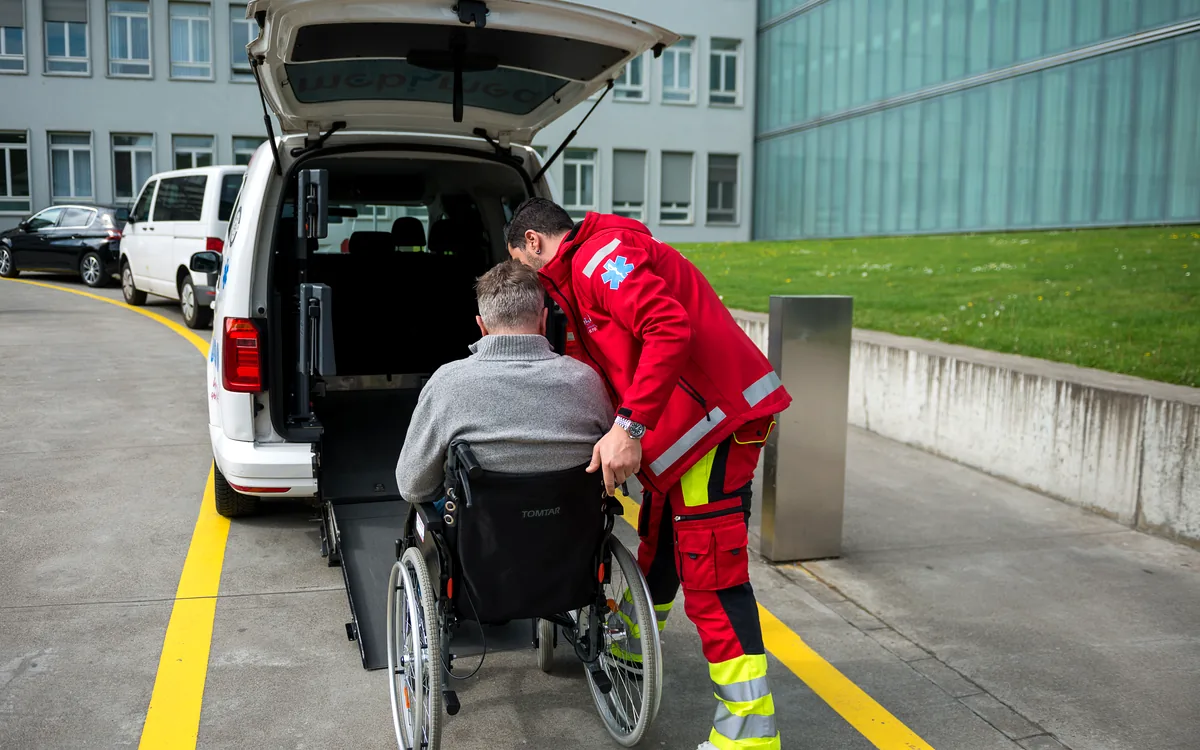
With wheelchair transport, the patient stays seated in their own wheelchair.
Learn more: Wheelchair transport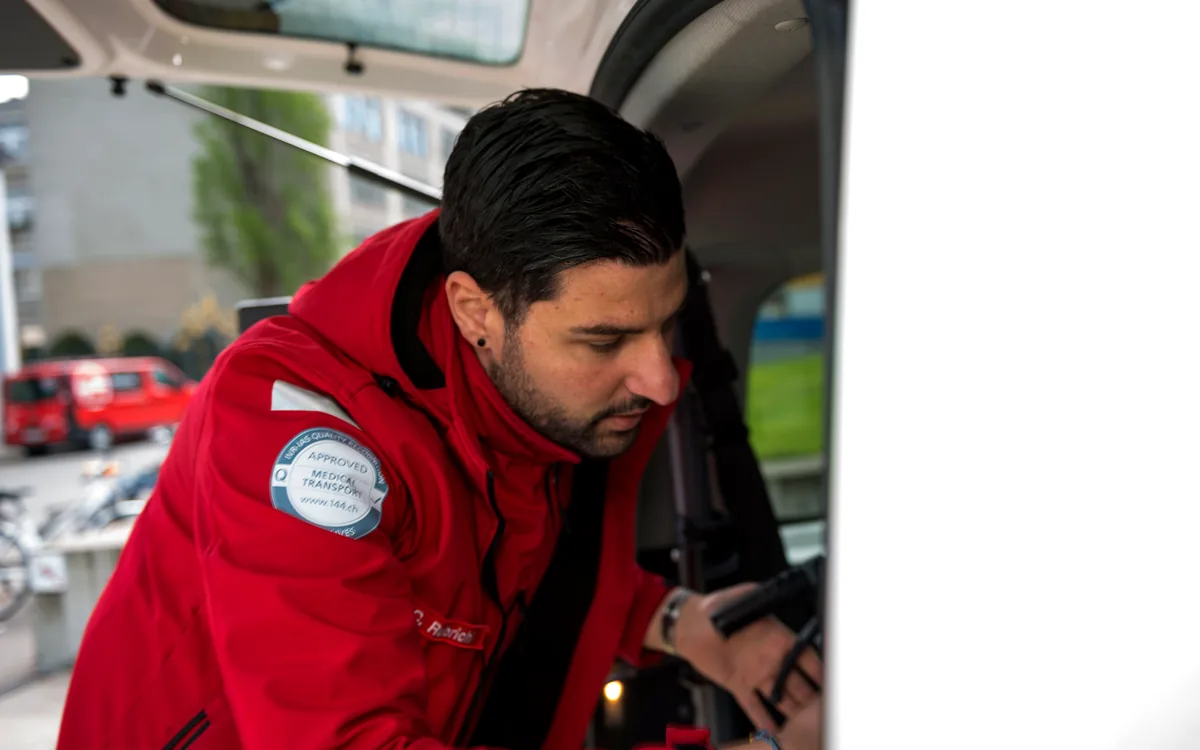
Seated transport is the right choice for medically stable patients who can sit during the journey but need support getting in and out.
Learn more: Seated transport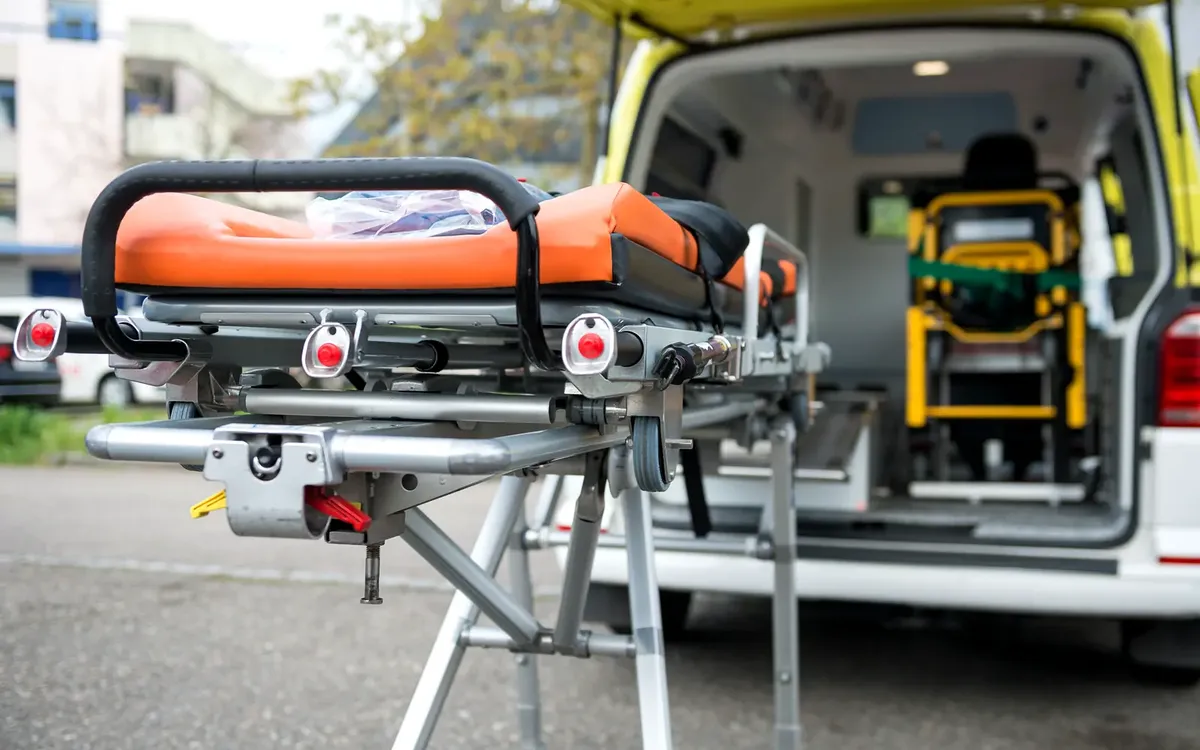
On a hospital transfer, we take patients from one institution to the next: from a hospital to another clinic, from an acute hospital to a care home or from a clinic back to hospital.
Learn more: Hospital transfersThe patient, relatives, the hospital, the care home, Spitex (home care) or the doctor’s practice. At Mobimed you can book online via the order form or by phone on 0800 670 670 (free call).
No. An ambulance in the sense of the emergency medical service comes via 144 in an emergency and provides medical care. Patient transport carries out planned journeys for patients in a stable condition.
Ideally one day in advance. Short-notice journeys are possible if a vehicle is available — for those, it is best to call us directly.
Client, patient, appointment — one form that goes directly to our dispatch team. Prefer to call? That works too.
Recognition by the Swiss Interassociation for Rescue Services (IVR/IAS) is not a self-assessment but the result of an external audit of vehicles, equipment, training and procedures. Mobimed was the first patient transport provider in north-western Switzerland to receive it — and still holds it today.
Check the certificate in the IVR register