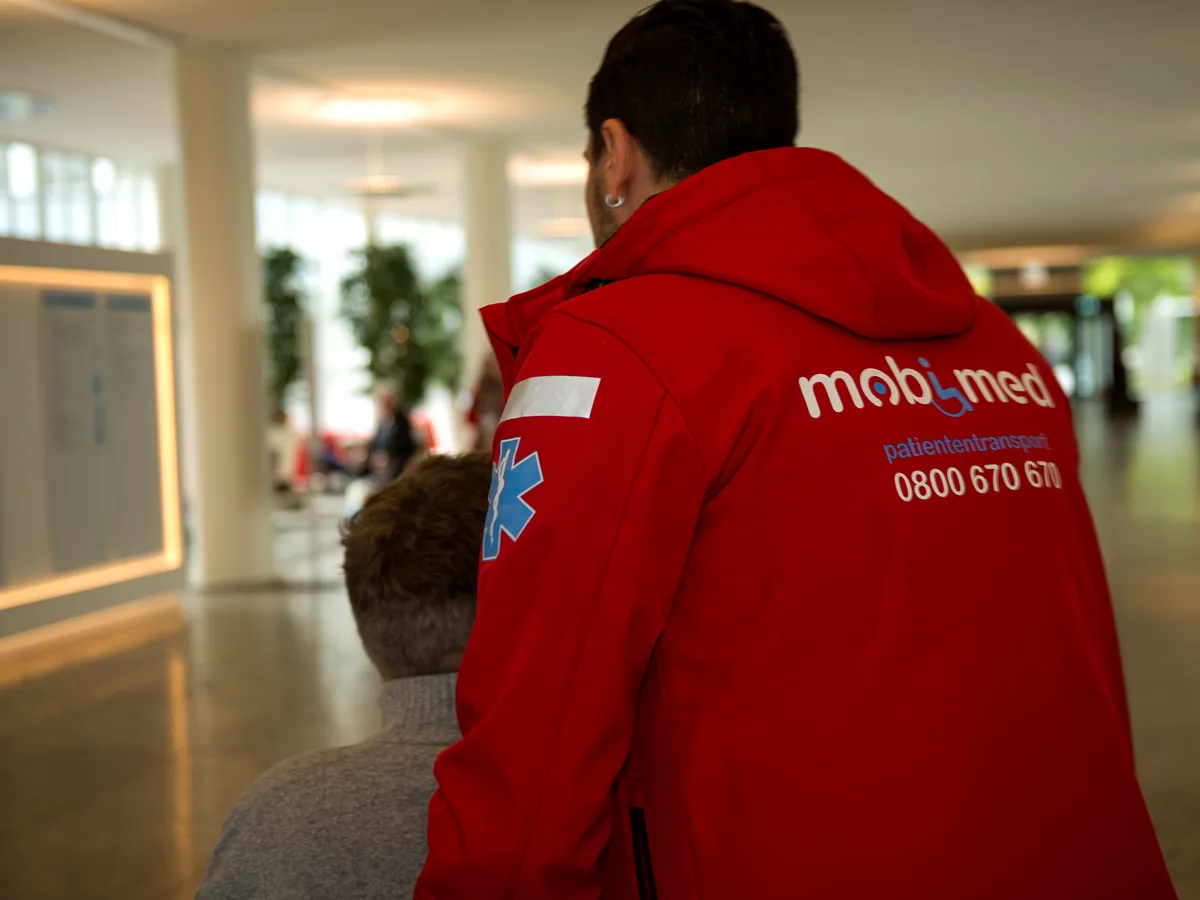
Dialysis transport
Dialysis transport is not a one-off matter but a routine: usually three times a week, often for years.
Learn more: Dialysis transport
Glossary · Costs and insurance · also: cost coverage for medical transport, OKP transport costs, basic insurance transport
For medically necessary patient transport, basic health insurance in Switzerland covers 50 per cent of the costs, up to a maximum of CHF 500 per calendar year. A medical prescription is generally required; the rest is paid by the patient, a supplementary insurance or, where applicable, supplementary benefits (EL).
Also called: cost coverage for medical transport · OKP transport costs · basic insurance transport · who pays for medical transport
Under the Health Insurance Benefits Ordinance, compulsory health insurance (OKP), commonly known as basic insurance, contributes to two kinds of journeys: transports (KLV Art. 26) and rescues (KLV Art. 27). For a medically necessary transport to a suitable provider — hospital, doctor’s practice, therapy — it pays half of the costs, up to a maximum of CHF 500 per calendar year. For rescues, i.e. emergency call-outs, it is also 50 per cent, but up to CHF 5000.
The word “necessary” is key. There must be medical reasons why the person cannot travel by public transport or privately. This is confirmed by the medical prescription.
Journeys without medical necessity, such as to the hairdresser or a family celebration, are a private matter. Basic insurance generally does not cover repatriation from abroad; that is the responsibility of travel or supplementary insurance and assistance organisations. Transfers between hospitals during an inpatient stay are generally already part of the hospital bill and are not charged to you separately.
Suppose you have transport costs of CHF 800 in a year. Half of that would be CHF 400; this is below the cap of CHF 500, so this amount is covered in principle. However, because the benefit is paid through basic insurance, your deductible and the 10 per cent co-payment also apply. If you have not yet used up your deductible in the current year, you will first pay that part yourself as well.
With many journeys — for example three times a week to dialysis — the CHF 500 cap is quickly reached. From then on, basic insurance pays nothing more for the rest of the year. This is where it is worth looking at supplementary insurance and supplementary benefits.
Get the medical prescription before the transport, ask Mobimed for the price in advance and afterwards submit the invoice and prescription together to your health insurer. If anything is unclear, a quick call to the insurer is worthwhile before a longer series begins. Mobimed will tell you the price on 0800 670 670 (free) before you book — only your insurance can say with certainty what share it will cover.
Because basic insurance covers only part of the cost, it pays to know the price before the journey. It depends on the type of transport, the distance and the level of assistance: a stretcher transport with two staff and waiting time costs more than a short seated journey. With the price in hand, you can estimate what you will have to pay yourself and, if necessary, check with your supplementary insurance.
For recurring journeys — dialysis, radiotherapy, therapy — it is advisable to make a rough estimate of the annual costs. That way you will see early on when the CHF 500 limit will be reached and can clarify in good time whether supplementary insurance or supplementary benefits will help cover the rest.
After a hip operation, Mr B. travels lying down to four follow-up appointments. He has a prescription from his orthopaedic surgeon and a deductible of CHF 300, which has already been used up by the operation. Basic insurance covers half of the transport costs up to CHF 500, minus the co-payment. His supplementary insurance partly covers the remaining amount.
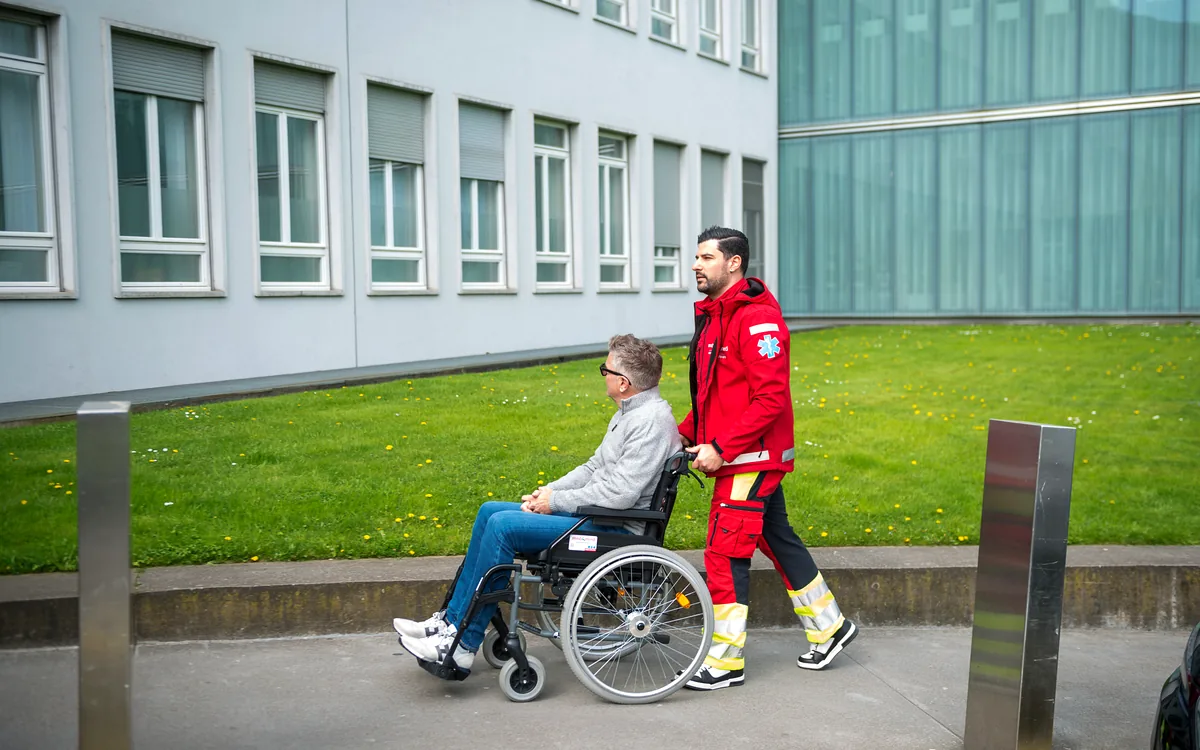
Dialysis transport is not a one-off matter but a routine: usually three times a week, often for years.
Learn more: Dialysis transport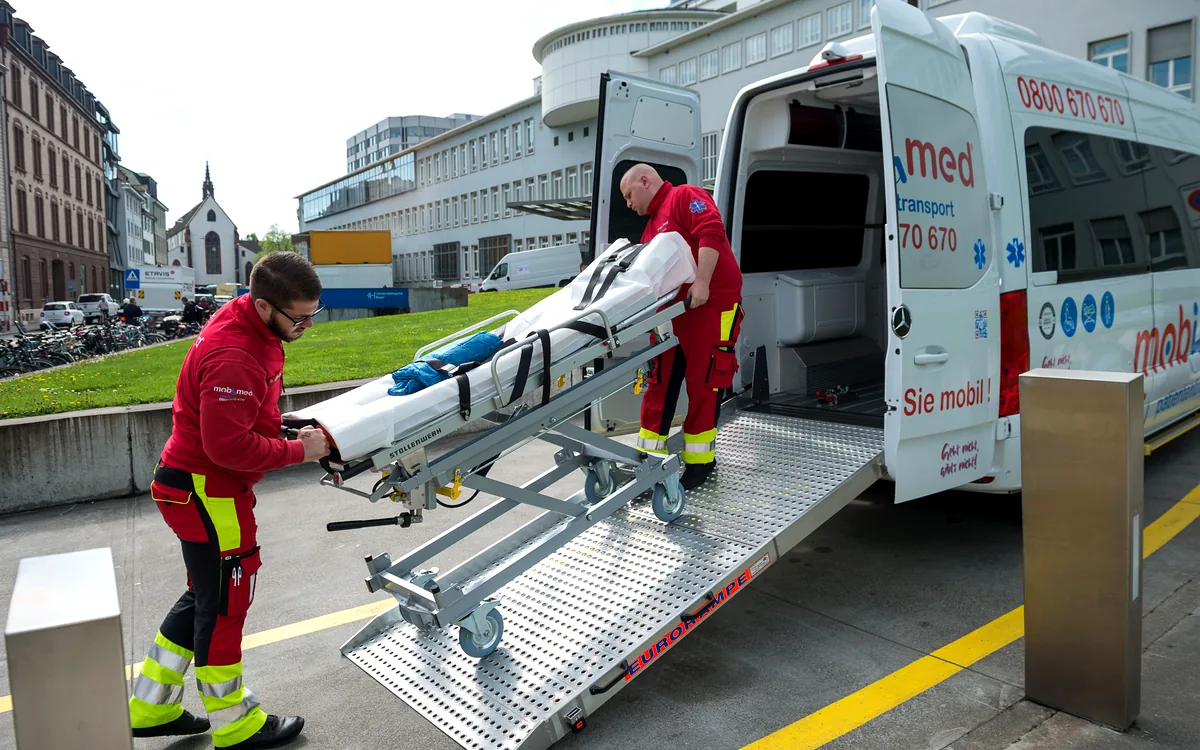
In a stretcher transport, the patient is carried on a patient stretcher in a vehicle specially equipped for the purpose.
Learn more: Stretcher transport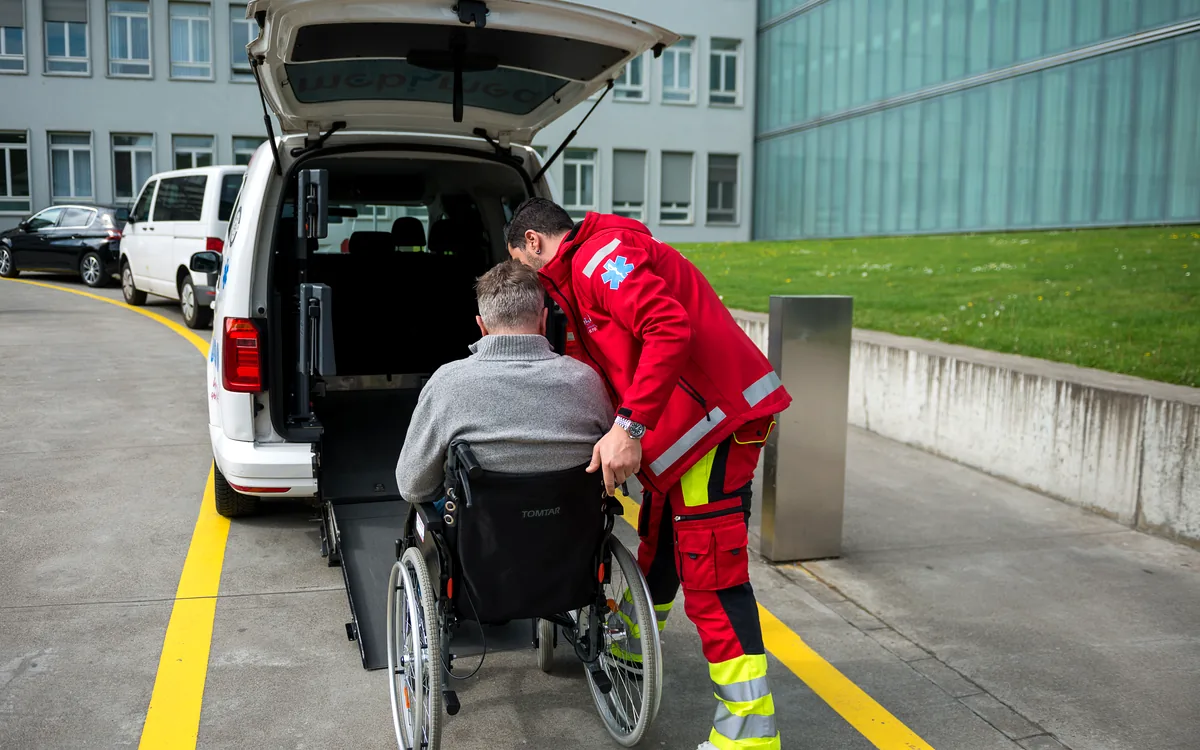
With wheelchair transport, the patient stays seated in their own wheelchair.
Learn more: Wheelchair transport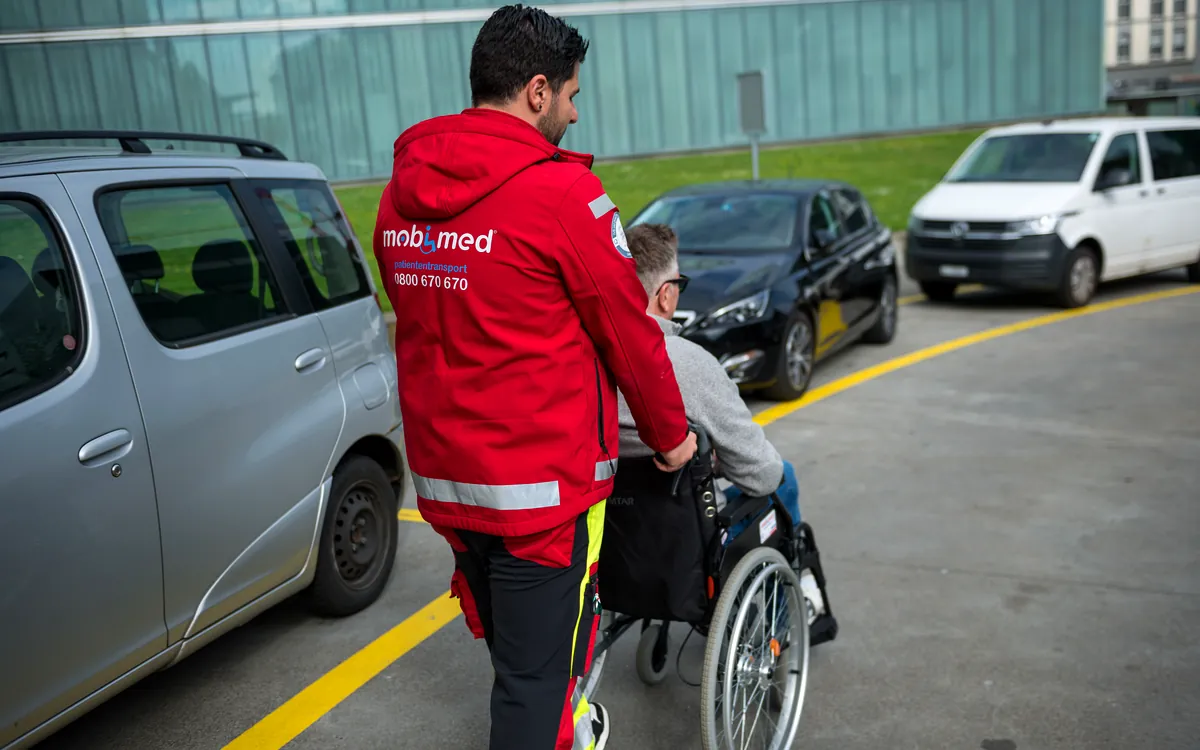
We drive you to your GP, dentist, specialist or physiotherapist and bring you back home after your appointment.
Learn more: Transport to the doctorBasic insurance covers 50 per cent of the costs of medically necessary transport, up to a maximum of CHF 500 per calendar year. The deductible and co-payment also apply. A supplementary insurance may cover more.
Per calendar year. Anyone who needs many journeys, for example to dialysis, reaches the limit quickly. After that, basic insurance pays nothing more towards transport until the end of the year.
No. Emergency call-outs count as rescues: basic insurance covers 50 per cent up to a maximum of CHF 5000 per year. Mobimed is not an emergency medical service — in an emergency, call 144.
Client, patient, appointment — one form that goes directly to our dispatch team. Prefer to call? That works too.
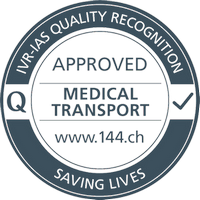
Recognition by the Swiss Interassociation for Rescue Services (IVR/IAS) is not a self-assessment but the result of an external audit of vehicles, equipment, training and procedures. Mobimed was the first patient transport provider in north-western Switzerland to receive it — and still holds it today.
Check the certificate in the IVR register