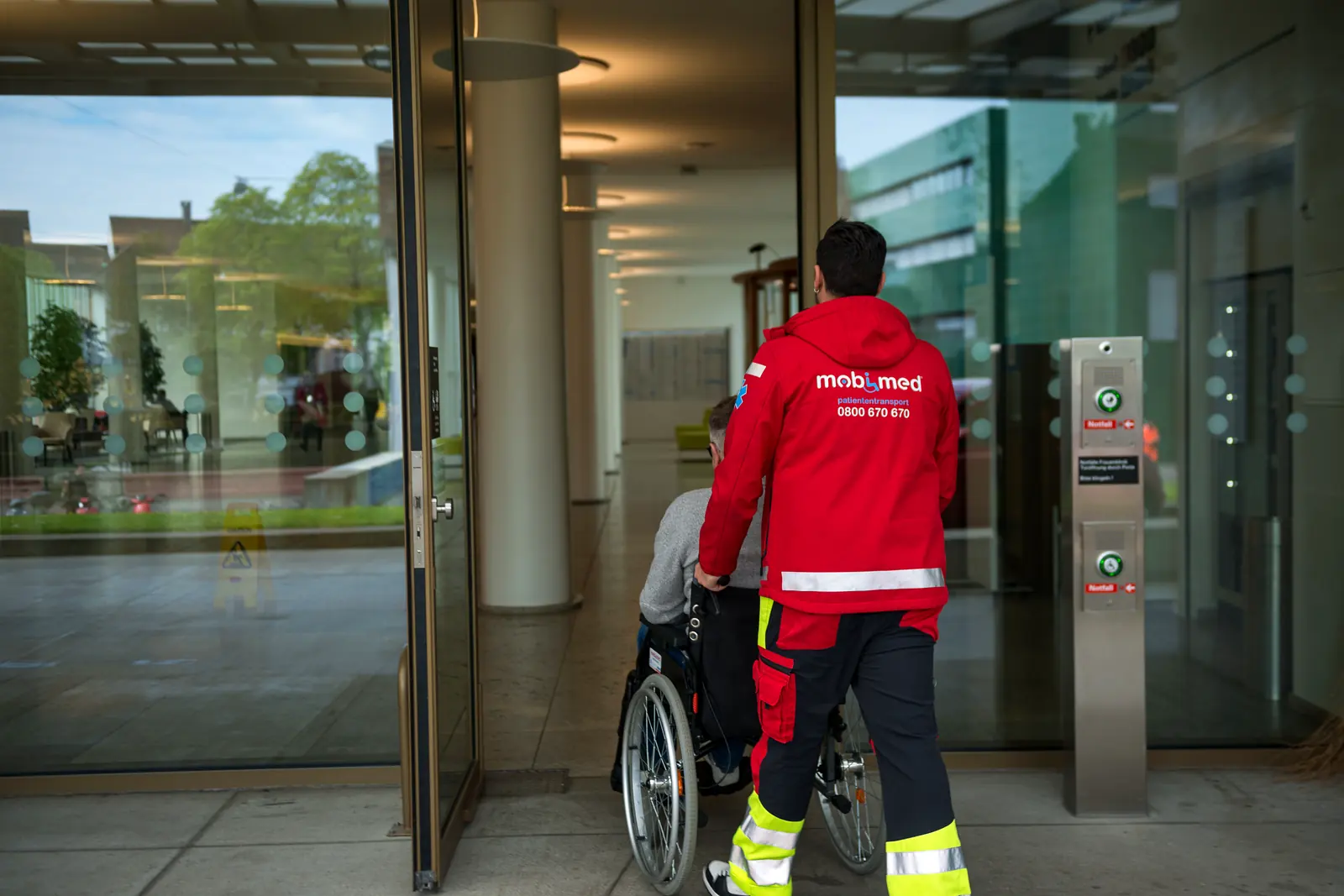
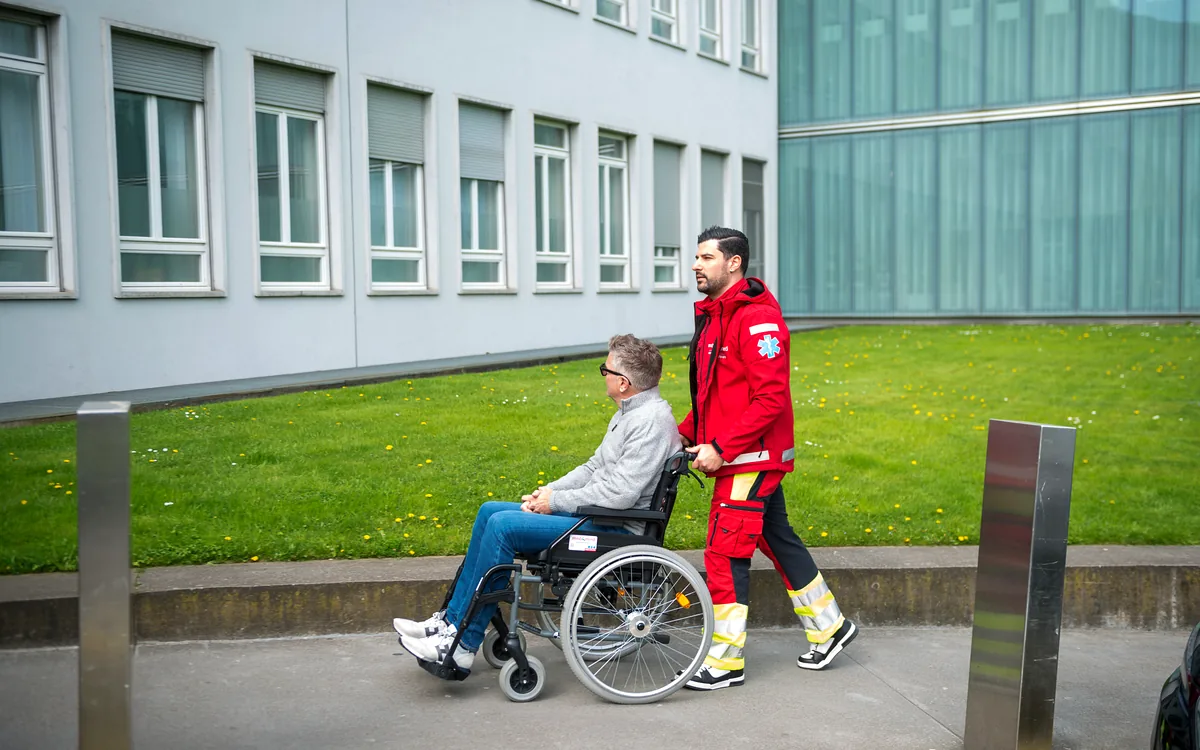
Dialysis transport
Dialysis transport is not a one-off matter but a routine: usually three times a week, often for years.
Learn more: Dialysis transport
Glossary · Costs and insurance · also: supplementary health insurance, VVG insurance, supplementary hospital insurance
Supplementary insurance is voluntary health insurance that covers benefits beyond basic insurance. Many supplementary outpatient policies contribute to transport and rescue costs that basic insurance no longer covers because of its cap of CHF 500 per year.
Also called: supplementary health insurance · VVG insurance · supplementary hospital insurance · supplementary outpatient insurance
Basic insurance pays only half towards medically necessary transport, up to a maximum of CHF 500 a year. Anyone who regularly depends on transport — for dialysis, chemotherapy, radiotherapy or therapy — quickly reaches this limit. From that point on, your supplementary insurance determines whether further journeys have to be paid out of your own pocket.
Supplementary insurance is governed by the Insurance Contract Act (VVG), not the KVG (Swiss Health Insurance Act). Each insurer therefore sets its own benefits: some cover a percentage of the remaining costs, others a fixed annual amount, others only rescues.
Look in the insurance terms and conditions for keywords such as “transport”, “rescue”, “medical transport” or “search, rescue and transport”. Check whether an annual maximum applies, whether a medical prescription is required and whether transport is covered only within Switzerland or also from abroad.
Repatriation from abroad is often the responsibility of travel insurance, credit card insurance or assistance organisations. Before travelling, check whether repatriation is covered — basic insurance generally does not cover it.
You usually submit the transport company’s invoice together with the medical prescription to your health insurer. The insurer first settles the basic insurance share and then checks what the supplementary insurance covers. If your basic and supplementary insurance are with different companies, forward the basic insurance statement to the supplementary insurer as proof.
For a longer series of journeys, it is worth sending a written enquiry to the insurer before the journeys begin. Some insurers will issue a cost approval on request. Mobimed will tell you the price of the transport in advance on 0800 670 670 (free), so that you can make your enquiry with concrete figures.
Supplementary insurers may ask health questions and may refuse people with existing conditions or apply exclusions. Unlike basic insurance, they are not obliged to accept you. If you want a supplementary insurance with transport benefits, it is therefore best to take it out while you have no major health problems.
Review existing policies regularly — especially when your circumstances change, for example in old age or with a chronic illness. Comparing transport and rescue benefits is worthwhile because the differences between products are large. Never cancel an existing supplementary insurance before a new one has been confirmed in writing.
It also helps to look at combinations: some policyholders have transport cover several times over, for example through a supplementary insurance, a credit card and an assistance organisation. Clarify which one pays first, so that invoices are not sent back and forth twice.
Since January, Mrs K. from Pratteln has been travelling to dialysis three times a week. By February, basic insurance has already paid out its maximum of CHF 500 for transport. Her supplementary outpatient insurance then covers part of the further journeys. Because her daughter checked with the insurer in advance, the family knew from the start how much they would have to pay themselves.
Dialysis transport is not a one-off matter but a routine: usually three times a week, often for years.
Learn more: Dialysis transport
With our medical repatriation service, we organise ground-based return transport home or to a clinic for further treatment – within Switzerland and internationally.
Learn more: Medical repatriation & journeys abroad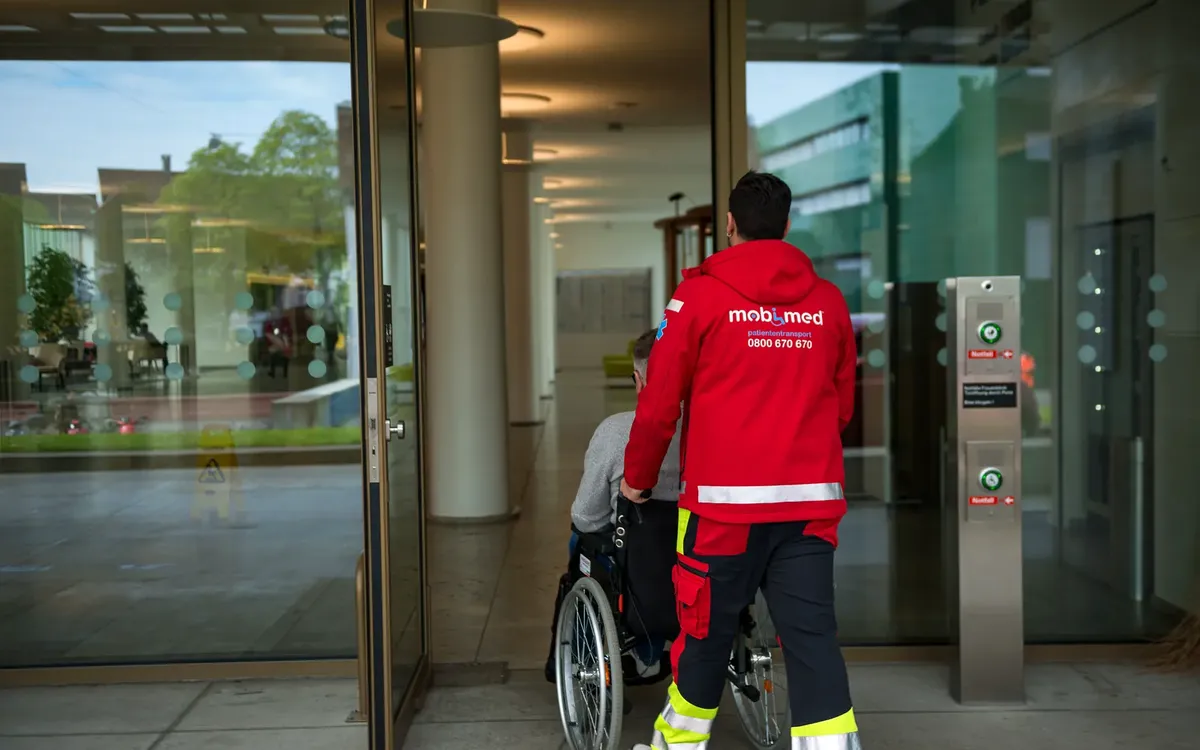
With our rehab transport, we take you to the rehabilitation clinic after a hospital stay and back home again afterwards – by stretcher, in a wheelchair or seated, with your luggage and aids.
Learn more: Rehab transport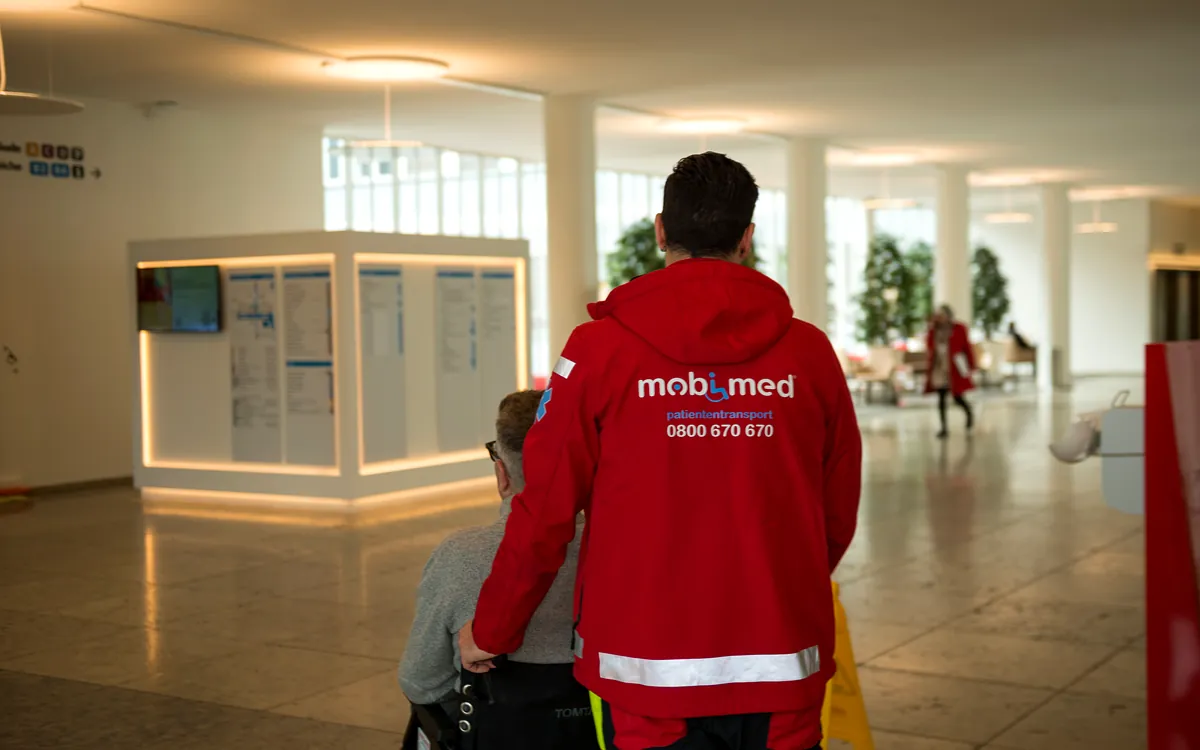
With our transport to medical examinations, we take you to your appointment – for example for an MRI, CT or X-ray, for chemotherapy or radiotherapy or for a follow-up check – and back again afterwards.
Learn more: Transport to medical examinationsNo. Benefits vary greatly from product to product. Check your insurance terms and conditions or ask your insurer directly.
In most cases, yes. The insurer wants to know that the transport was medically necessary.
Client, patient, appointment — one form that goes directly to our dispatch team. Prefer to call? That works too.
Recognition by the Swiss Interassociation for Rescue Services (IVR/IAS) is not a self-assessment but the result of an external audit of vehicles, equipment, training and procedures. Mobimed was the first patient transport provider in north-western Switzerland to receive it — and still holds it today.
Check the certificate in the IVR register