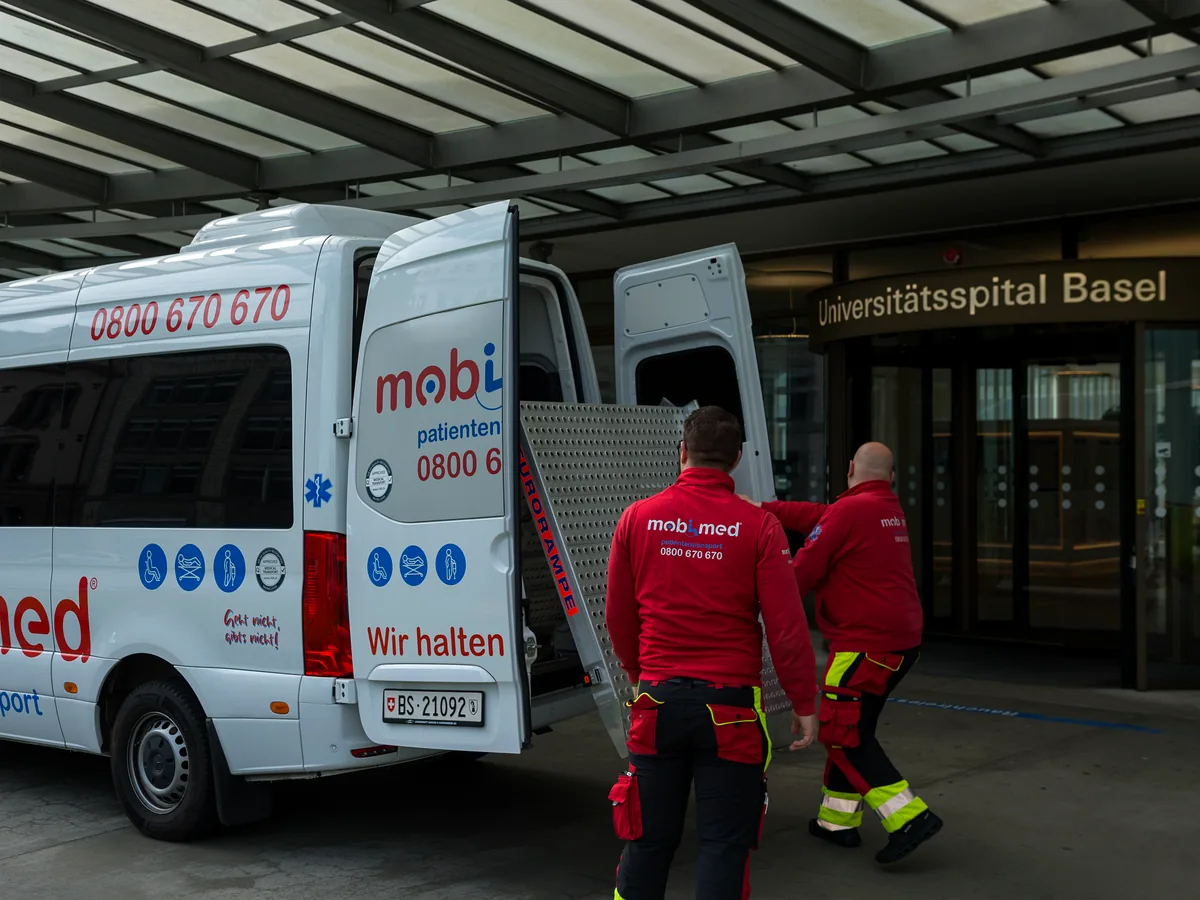
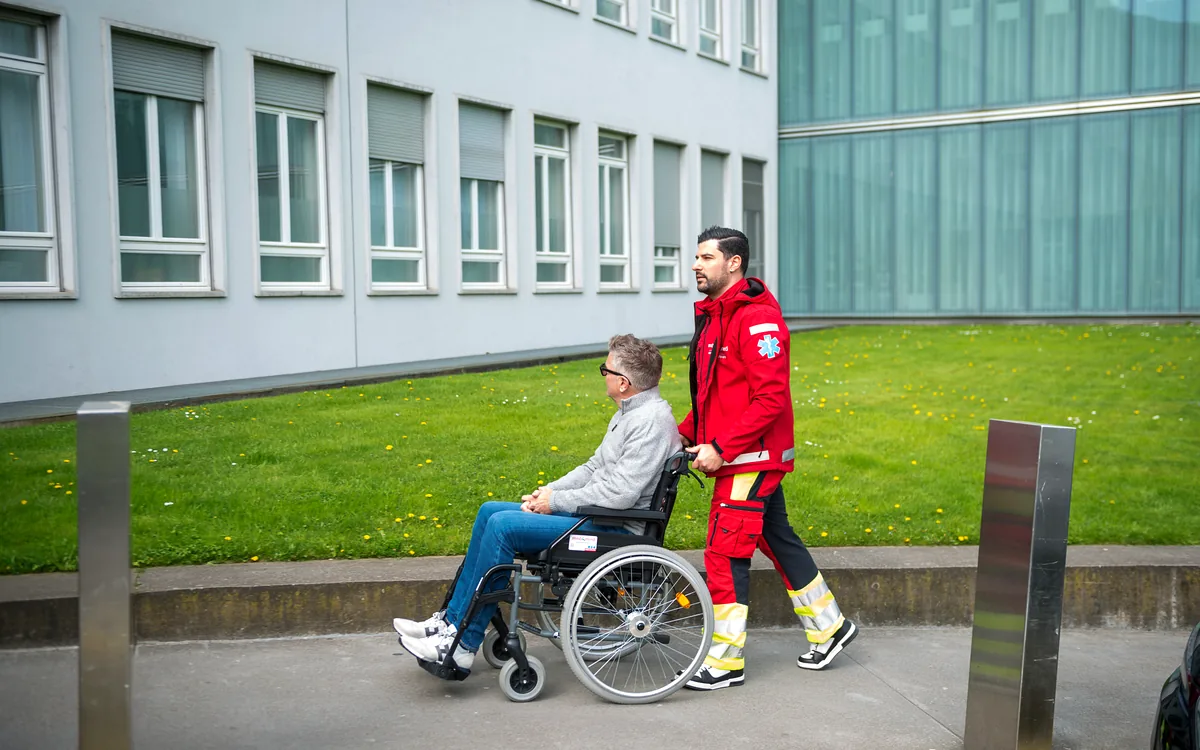
Dialysis transport
Dialysis transport is not a one-off matter but a routine: usually three times a week, often for years.
Learn more: Dialysis transport
Glossary · Costs and insurance · also: transport prescription, medical certificate for transport, transport certificate
A medical prescription for transport is a written confirmation from a doctor that a patient transport is medically necessary and that any other means of travel would not be reasonable. In Switzerland it is generally the precondition for your health insurer contributing to the transport costs.
Also called: transport prescription · medical certificate for transport · transport certificate · doctor’s transport order
A prescription records who is being transported, where to and why. The justification matters most: the doctor confirms that, because of their state of health, the person can travel neither by public transport nor in a private car — for example because they must not sit, use a wheelchair, are weakened after an operation or need someone with them during the journey.
The type of transport is often noted as well, i.e. stretcher, wheelchair or seated. For recurring journeys, such as to dialysis or radiotherapy, a prescription can be issued for an entire course of treatment. This saves patients from having to obtain a new document for every journey.
Under the Health Insurance Benefits Ordinance (KLV Art. 26), basic health insurance covers 50 per cent of the costs of a medically necessary transport, up to a maximum of CHF 500 per calendar year. “Medically necessary” has to be documented — and that is exactly what the medical prescription does. Without it, the health insurer will in many cases refuse to contribute.
Supplementary insurance policies also usually require a prescription before they pay anything beyond the basic insurance share. You can of course book a transport without a prescription, but you will then bear the costs yourself.
A prescription does not mean that the transport is free of charge. It only opens the way to a contribution from your health insurer — subject to the cap of CHF 500 per year as well as your deductible and co-payment. Nor does it replace calling 144 in an emergency: a patient transport only carries patients in a stable condition.
It may be issued by the treating doctor: your GP, your specialist or, on discharge from hospital, the hospital itself. The simplest approach is to ask for the prescription when you arrange the appointment — not only once the bill arrives. Many hospitals in Basel issue it automatically on discharge if they organise the transport themselves.
Keep the prescription together with the transport invoice and submit both together to your health insurer. Mobimed provides an invoice that is suitable for submission; whether and how much the insurer pays is decided solely by your insurance.
Many relatives wonder whether to organise the transport or the prescription first. The order is simple: first clarify with the doctor whether the transport is medically justified, then book it. The transport company does not need the prescription for the journey to take place — it is needed for billing with the health insurer.
When booking, still mention whether there is a prescription and which type of transport it specifies. That way the journey matches the justification: anyone who must travel lying down according to the prescription should not be transported seated, otherwise the health insurer may query it. If the type of transport is unclear, a short conversation with the staff planning the journey will help.
After cancer surgery, Ruth from Riehen has to go to hospital in Basel for radiotherapy every day for five weeks. She is not allowed to drive, and the tram is too tiring for her after treatment. Her oncologist issues a prescription for the entire course of treatment. Ruth books the journeys as a series and submits the prescription and invoices together to her health insurer.
Dialysis transport is not a one-off matter but a routine: usually three times a week, often for years.
Learn more: Dialysis transport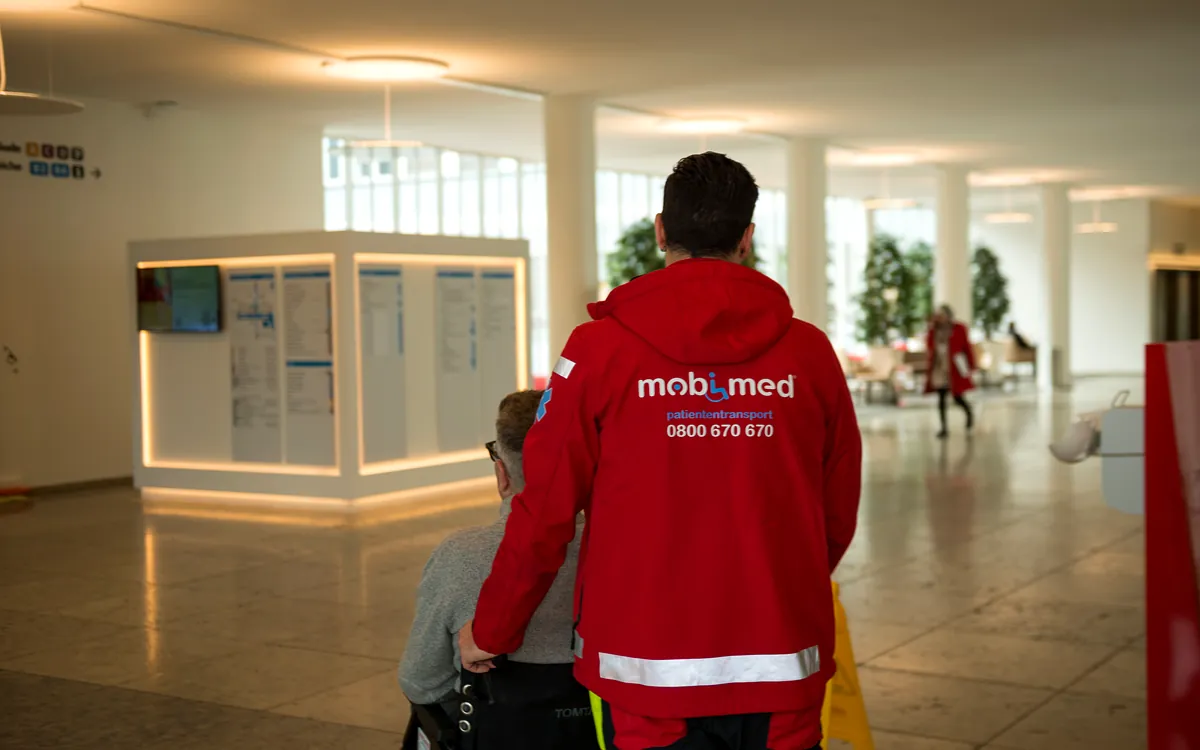
With our transport to medical examinations, we take you to your appointment – for example for an MRI, CT or X-ray, for chemotherapy or radiotherapy or for a follow-up check – and back again afterwards.
Learn more: Transport to medical examinations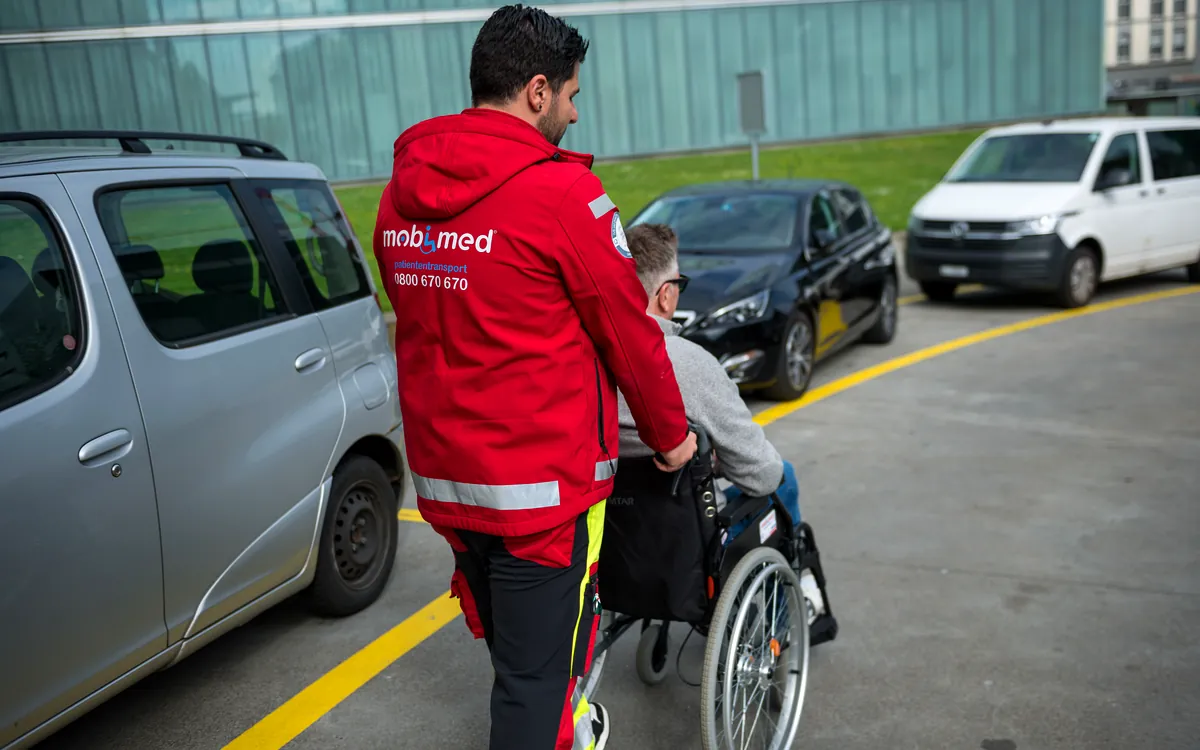
We drive you to your GP, dentist, specialist or physiotherapist and bring you back home after your appointment.
Learn more: Transport to the doctor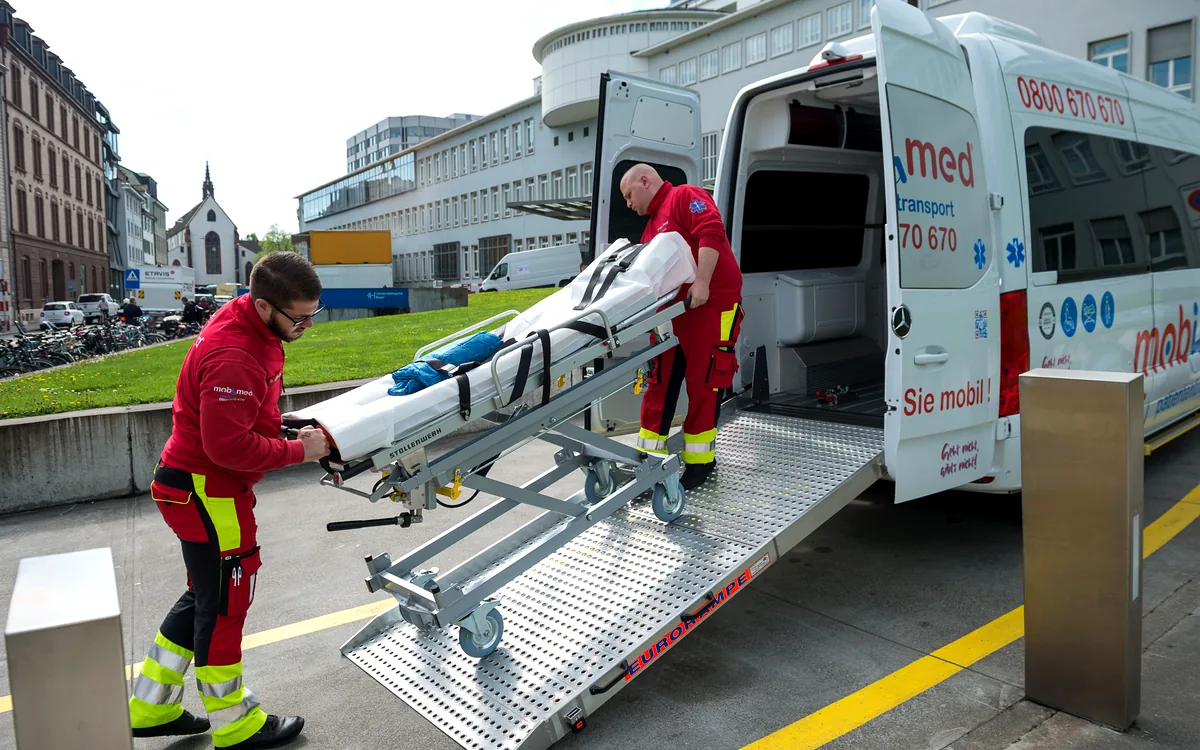
In a stretcher transport, the patient is carried on a patient stretcher in a vehicle specially equipped for the purpose.
Learn more: Stretcher transportNo, you can also book without one. However, the prescription is generally a precondition for a contribution from your health insurer. Without a prescription, you bear the costs yourself.
Yes. For recurring treatments such as dialysis, chemotherapy or radiotherapy, doctors often issue a prescription for the whole series. It is best to ask about it directly at the first appointment.
Usually the hospital discharging you. If the ward books the transport, it generally also takes care of the necessary document.
Client, patient, appointment — one form that goes directly to our dispatch team. Prefer to call? That works too.
Recognition by the Swiss Interassociation for Rescue Services (IVR/IAS) is not a self-assessment but the result of an external audit of vehicles, equipment, training and procedures. Mobimed was the first patient transport provider in north-western Switzerland to receive it — and still holds it today.
Check the certificate in the IVR register