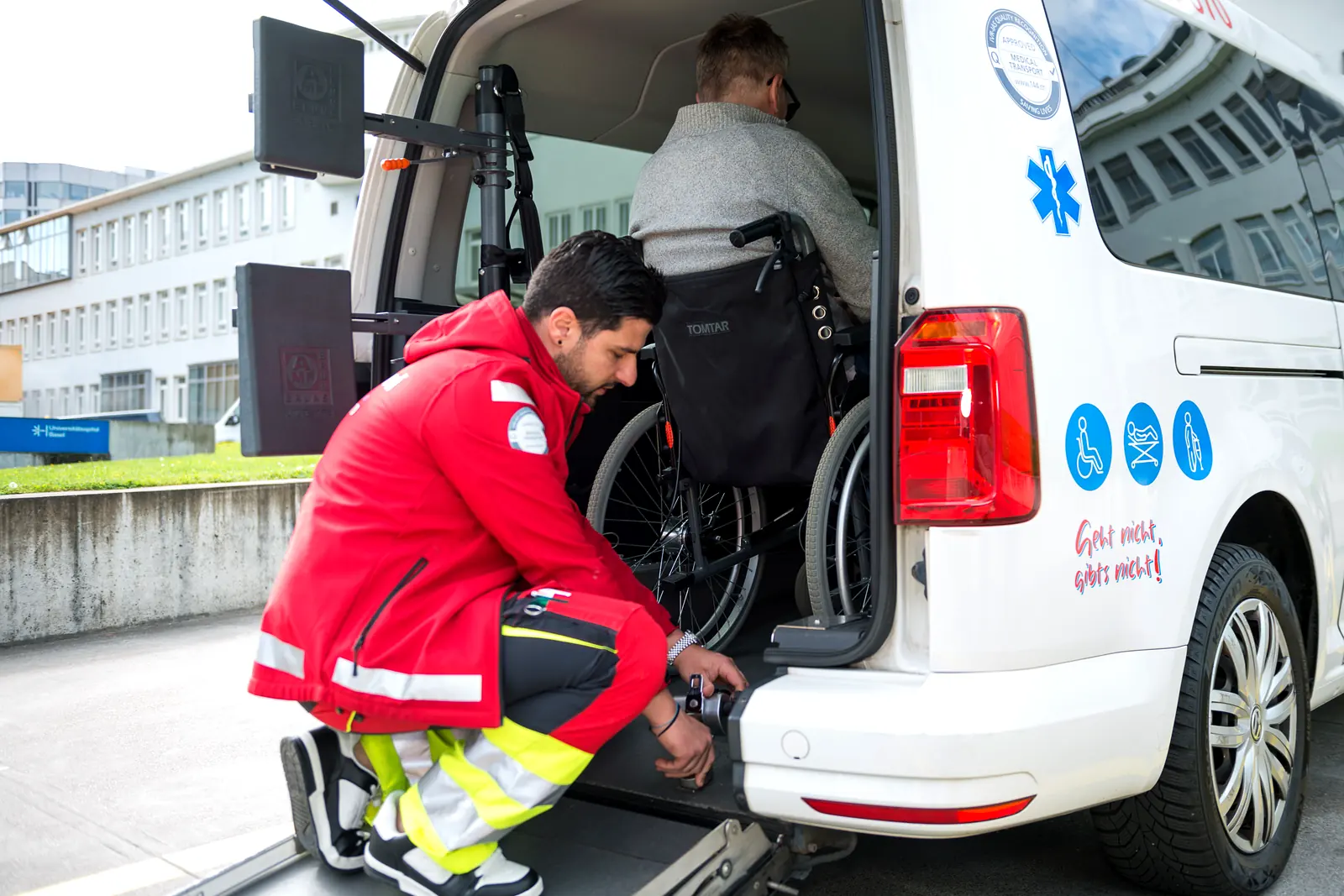

Seated transport
Seated transport is the right choice for medically stable patients who can sit during the journey but need support getting in and out.
Learn more: Seated transport
Glossary · Costs and insurance · also: cost-sharing, annual deductible, 10 per cent co-payment
The deductible (franchise) and co-payment (Selbstbehalt) are the cost-sharing that insured persons in Switzerland pay themselves towards basic insurance benefits. The deductible is a fixed annual amount (for adults selectable between CHF 300 and CHF 2500); after that you pay a 10 per cent co-payment up to a maximum of CHF 700 per year — this also applies to the share that basic insurance covers for a patient transport.
Also called: cost-sharing · annual deductible · 10 per cent co-payment · out-of-pocket share health insurance
First, you pay all basic insurance costs yourself up to the amount of your deductible. Only once this has been used up in the calendar year does the health insurer start paying — and even then you still pay 10 per cent as a co-payment until this reaches CHF 700 a year for adults. Lower amounts apply to children.
Cost-sharing applies to all basic insurance benefits together: doctor’s visits, medicines, hospital stays and transport too. Anyone who has already had an operation in the same year has often already used up the deductible.
Patient transport has a particular feature: basic insurance contributes only 50 per cent and at most CHF 500 a year. The deductible and co-payment relate to this insured share. The other half of the transport costs is not covered by basic insurance in any case.
In concrete terms: if you have chosen a high deductible and have been healthy so far this year, you may pay for a single transport entirely yourself, even though it was prescribed by a doctor. That is billed correctly — the health insurer still counts it towards your deductible.
Submit transport invoices to your health insurer even if you know that the deductible has not yet been reached. Only then will the amount be counted, and you will reach your deductible sooner. If you receive supplementary benefits (EL), the deductible and co-payment can also be reimbursed.
If you know that many treatments and journeys lie ahead in the coming year — for example because of dialysis, cancer treatment or a planned operation — a low deductible often works out cheaper. The premium is higher, but the health insurer starts paying earlier. With a high deductible, healthy policyholders save on premiums but, if they fall ill, first have to pay a large amount themselves.
The deductible can usually only be changed with effect from the start of the next calendar year; the deadlines for a change are set by your health insurer. If you can foresee a deterioration in your health, you should therefore review your choice in good time in the autumn. Separate, lower amounts apply to children, and in the case of maternity no deductible or co-payment is charged for certain benefits.
Note also: cost-sharing applies per insured person and calendar year. If you still need a transport in December and have already reached your deductible, you benefit from this — in January, the count starts again from zero.
Mrs M. from Allschwil has a deductible of CHF 2500 and has hardly seen a doctor so far. In March, after outpatient knee surgery, she travels home seated, with a medical prescription. The health insurer counts the insured share towards her deductible, and Mrs M. pays for this journey herself. When further treatment follows in the autumn, the deductible is already partly covered — thanks in part to this submitted invoice.
Seated transport is the right choice for medically stable patients who can sit during the journey but need support getting in and out.
Learn more: Seated transport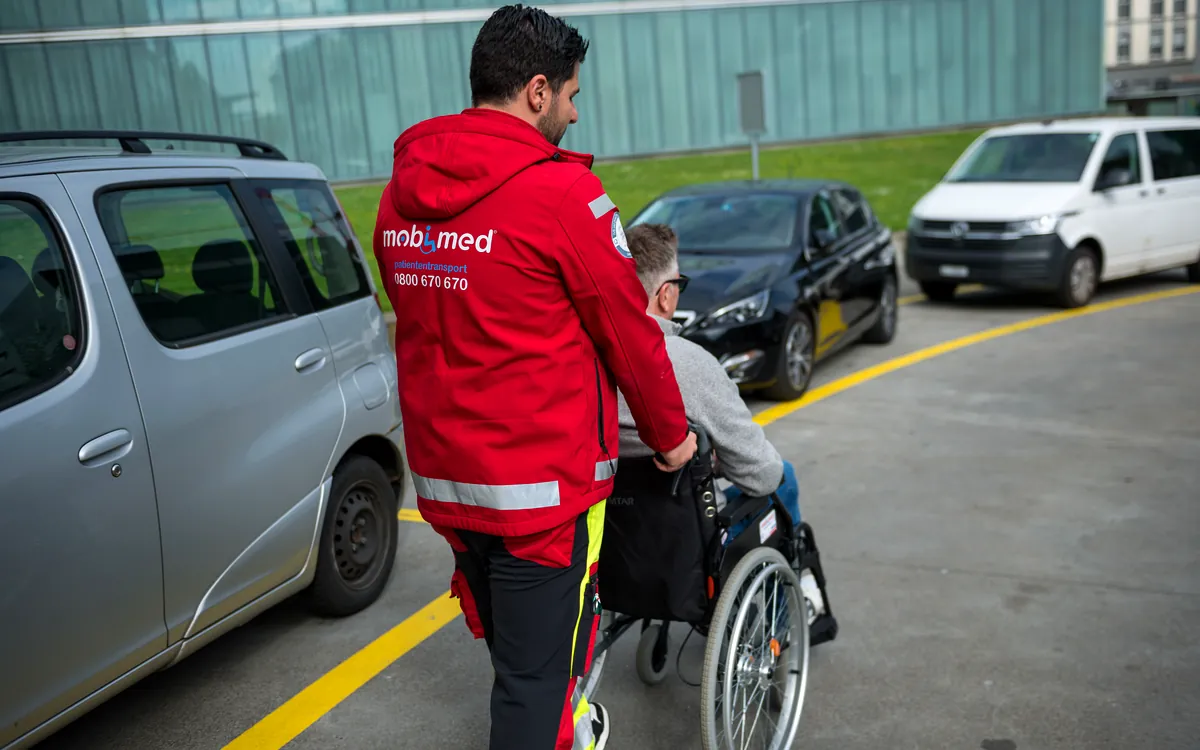
We drive you to your GP, dentist, specialist or physiotherapist and bring you back home after your appointment.
Learn more: Transport to the doctor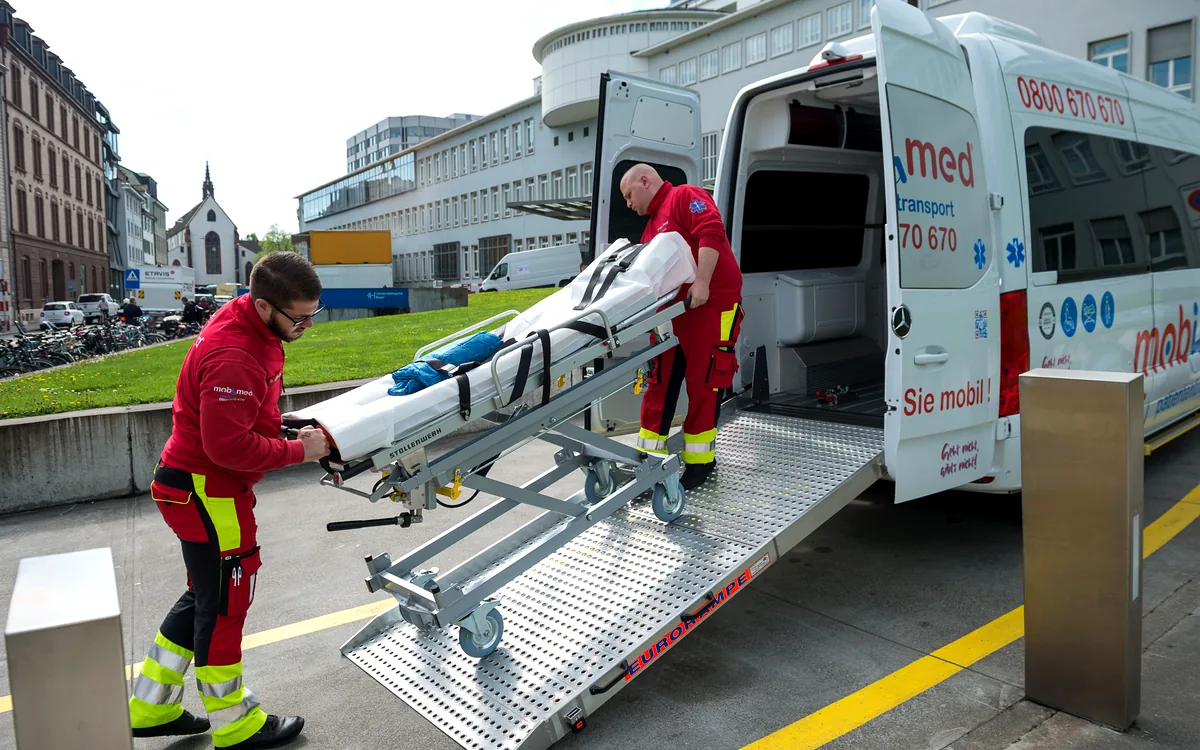
In a stretcher transport, the patient is carried on a patient stretcher in a vehicle specially equipped for the purpose.
Learn more: Stretcher transportYes. The share that basic insurance covers for a transport is first counted towards the deductible, like any other benefit. After that, the 10 per cent co-payment applies.
Yes. Only submitted invoices are counted towards the deductible. That way you pay less yourself later in the year.
Client, patient, appointment — one form that goes directly to our dispatch team. Prefer to call? That works too.
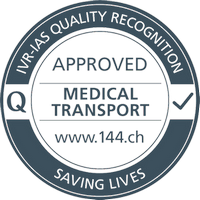
Recognition by the Swiss Interassociation for Rescue Services (IVR/IAS) is not a self-assessment but the result of an external audit of vehicles, equipment, training and procedures. Mobimed was the first patient transport provider in north-western Switzerland to receive it — and still holds it today.
Check the certificate in the IVR register