Stretcher transport
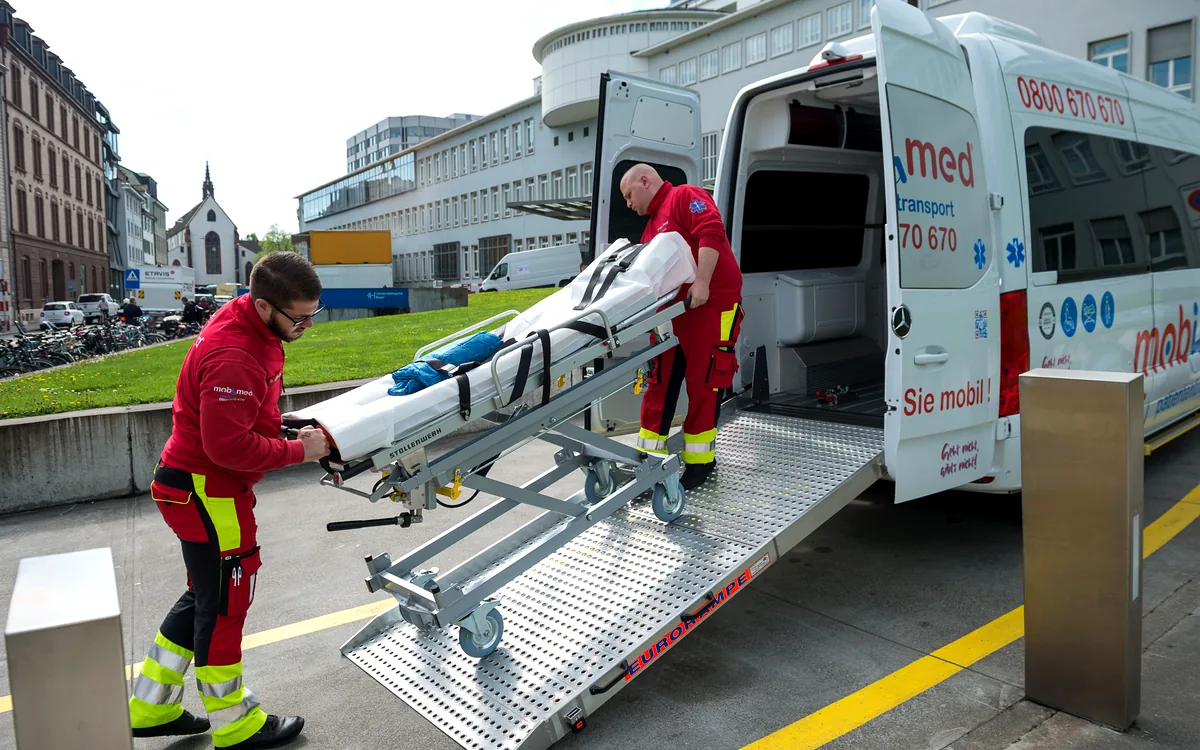
In a stretcher transport, the patient is carried on a patient stretcher in a vehicle specially equipped for the purpose.
Learn more: Stretcher transport
Glossary · Occasions and assistance · also: Discharge from hospital, Discharge, Discharge planning
Hospital discharge is the release from hospital after treatment. Through discharge management, the hospital plans what happens next — going home, to rehab, to a nursing home or with the support of Spitex (home care). This also includes the question of how the patient will reach their destination safely.
Also called: Discharge from hospital · Discharge · Discharge planning · Discharge management · Leaving hospital
Hospitals often begin discharge planning during the stay itself. Nursing staff, doctors and social services clarify which follow-up arrangement is needed: is returning home enough, or is Spitex, mobility aids or a place in rehab required? The aim is for the transition to go smoothly and for nobody to be left without support.
Shorter hospital stays and more outpatient treatment make this planning more important. Anyone who goes home earlier is often not yet fully mobile — and needs support for the journey home.
What the transport looks like depends on the patient’s condition. After hip or back surgery, stretcher transport is often necessary. Anyone who uses a wheelchair stays in it. Anyone who can walk but is weak travels seated and is accompanied into their flat — including help on the stairs.
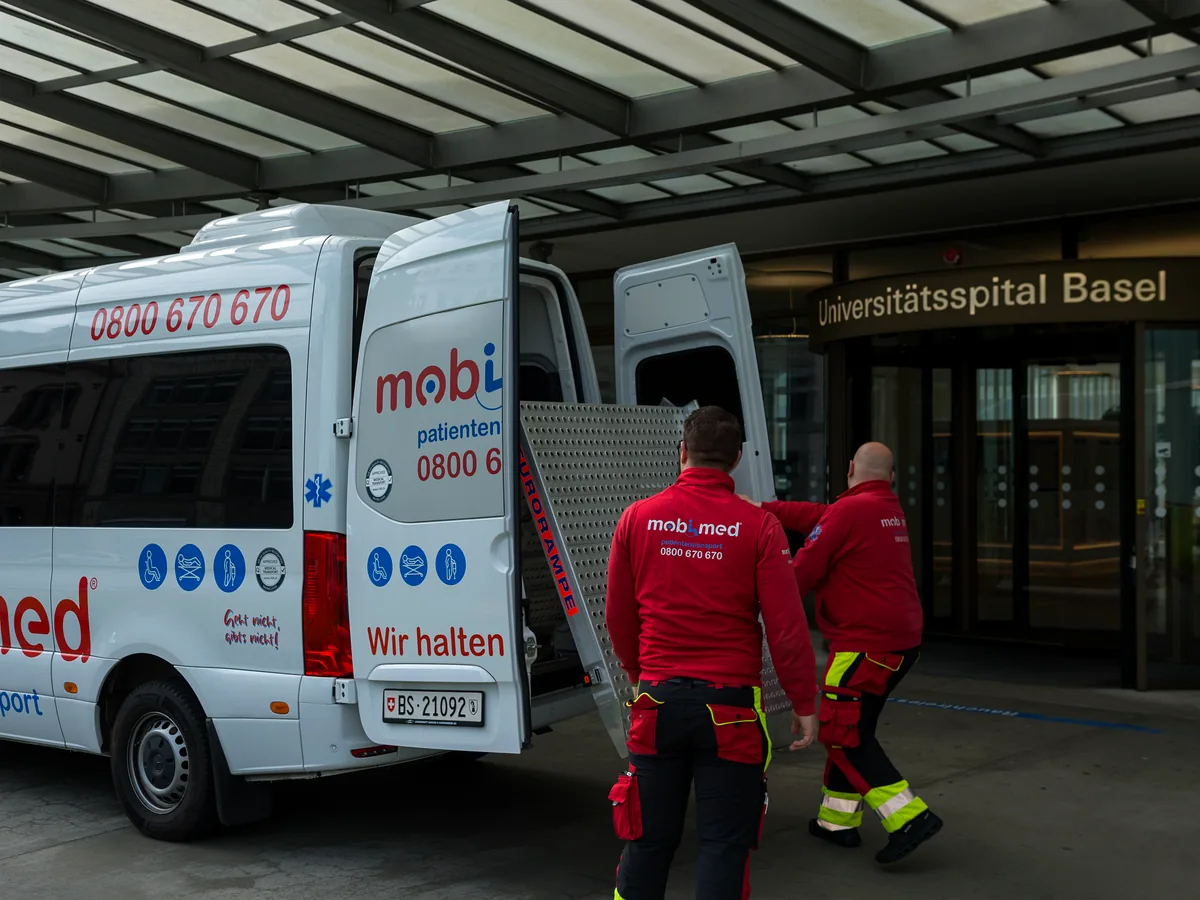
With Mobimed, the ward can book the transport directly, with the case number and cost centre in the order. The team collects the patient from the ward, takes luggage, mobility aids and documents along and brings the person all the way into their home, to the rehabilitation clinic or to the care home — with a handover to the nursing staff if care continues there.
It helps if everything is ready at home: keys, a clear path from the entrance to the bed, and any mobility aids that may already have been ordered. Anyone who would like to be there on arrival can ride along free of charge as a companion or wait at home.
For older buildings without a lift or with narrow stairwells, the floor should be stated when booking. The team will then plan in a stair chair and a second person.
Not every discharge leads home. If someone is transferred to another hospital, a clinic or a nursing home, this is called an inter-facility transfer. It is also organised by the hospital and ends with the handover to the staff at the destination.
If the transport is medically necessary and prescribed by a doctor, basic health insurance covers 50 per cent of the costs, up to a maximum of CHF 500 per calendar year. The patient pays the rest unless a supplementary insurance steps in. A transfer between two hospitals, on the other hand, is generally part of the hospital treatment and is billed differently.
Anyone who books the journey privately without a prescription, for example because it is more convenient, pays for it themselves. Mobimed tells you the price before you book so that there are no surprises.
After knee surgery, Peter is allowed to go home to Allschwil on Friday. The ward books a wheelchair transport for 2 pm. The team collects him from his room, takes his walking sticks and medication list and accompanies him up the stairs to the second floor. His daughter is already waiting in the flat.
In a stretcher transport, the patient is carried on a patient stretcher in a vehicle specially equipped for the purpose.
Learn more: Stretcher transport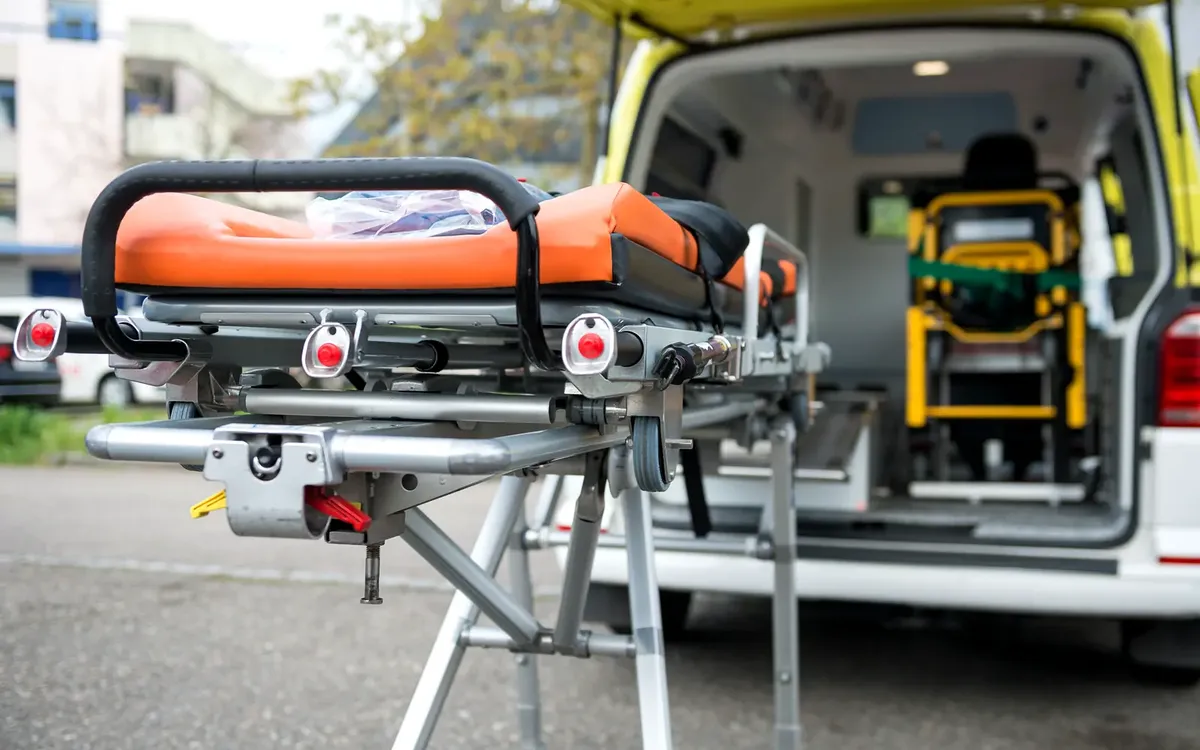
On a hospital transfer, we take patients from one institution to the next: from a hospital to another clinic, from an acute hospital to a care home or from a clinic back to hospital.
Learn more: Hospital transfers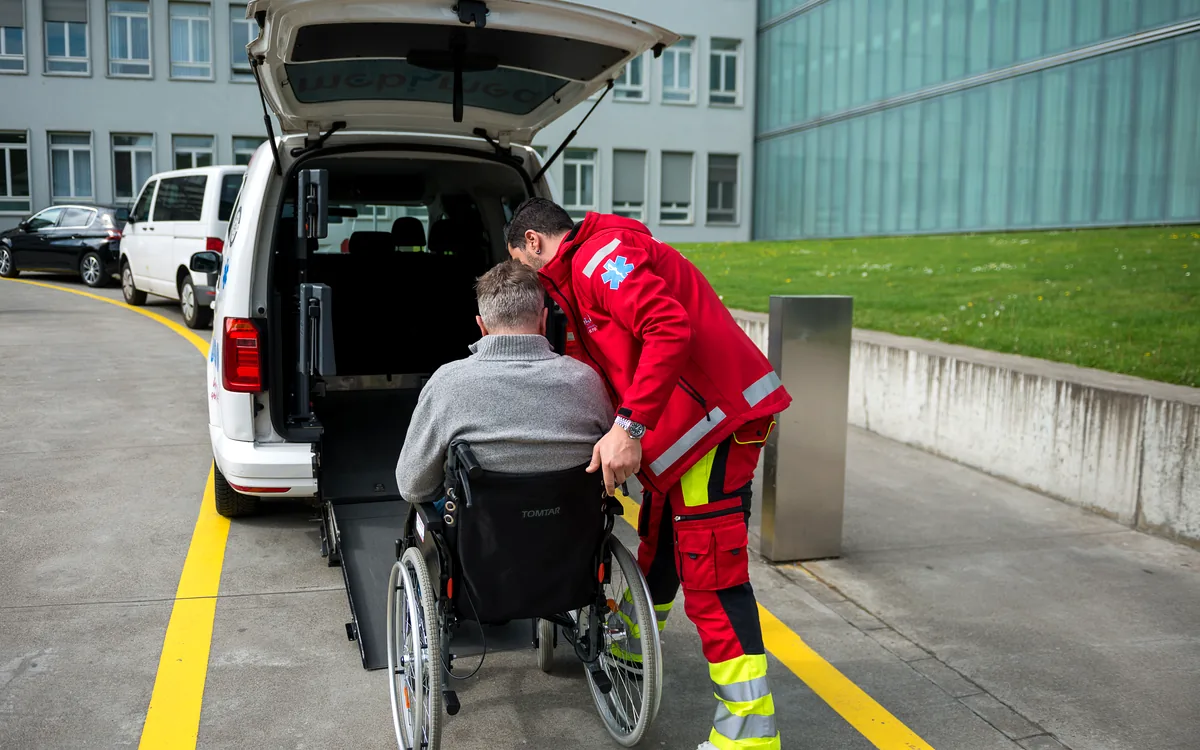
With wheelchair transport, the patient stays seated in their own wheelchair.
Learn more: Wheelchair transport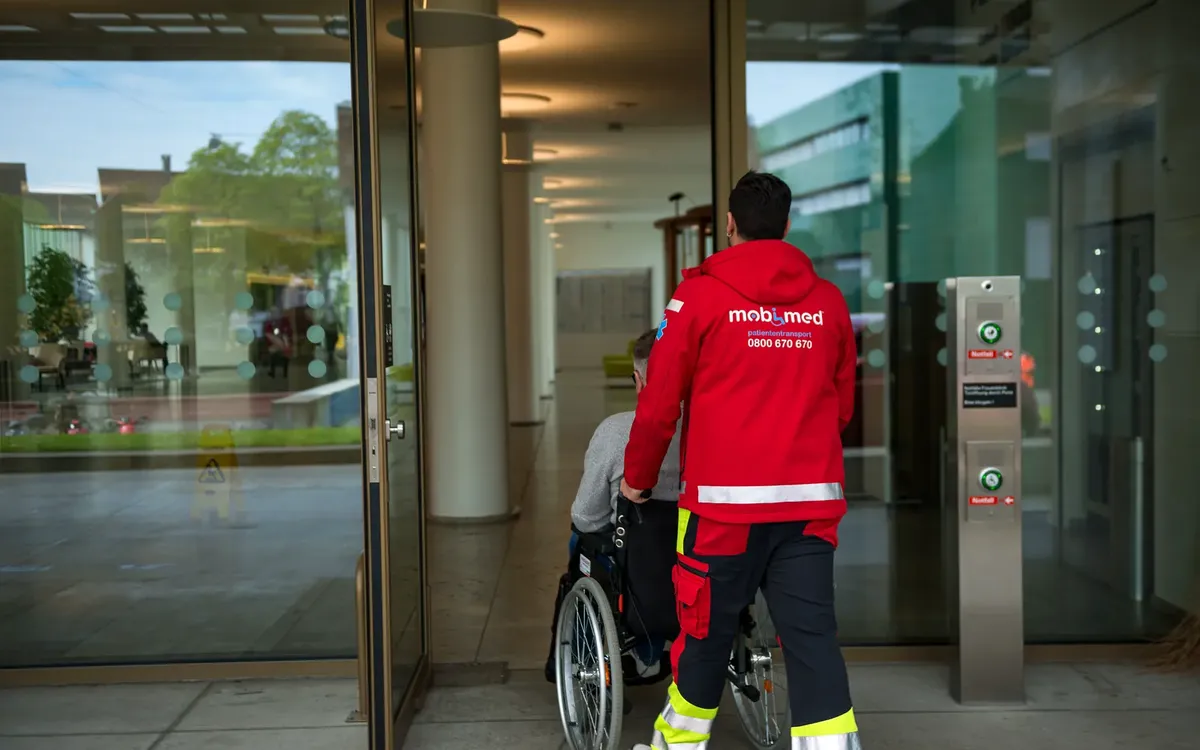
With our rehab transport, we take you to the rehabilitation clinic after a hospital stay and back home again afterwards – by stretcher, in a wheelchair or seated, with your luggage and aids.
Learn more: Rehab transportUsually the ward or the hospital’s social services. However, you or your relatives can also book the transport yourselves — online or on 0800 670 670 (free call).
Often yes, if a vehicle is available. The safest option is to book as soon as the discharge date is fixed. For short-notice journeys, it is best to call.
Client, patient, appointment — one form that goes directly to our dispatch team. Prefer to call? That works too.
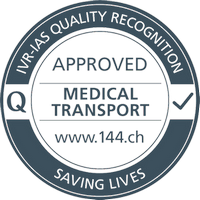
Recognition by the Swiss Interassociation for Rescue Services (IVR/IAS) is not a self-assessment but the result of an external audit of vehicles, equipment, training and procedures. Mobimed was the first patient transport provider in north-western Switzerland to receive it — and still holds it today.
Check the certificate in the IVR register