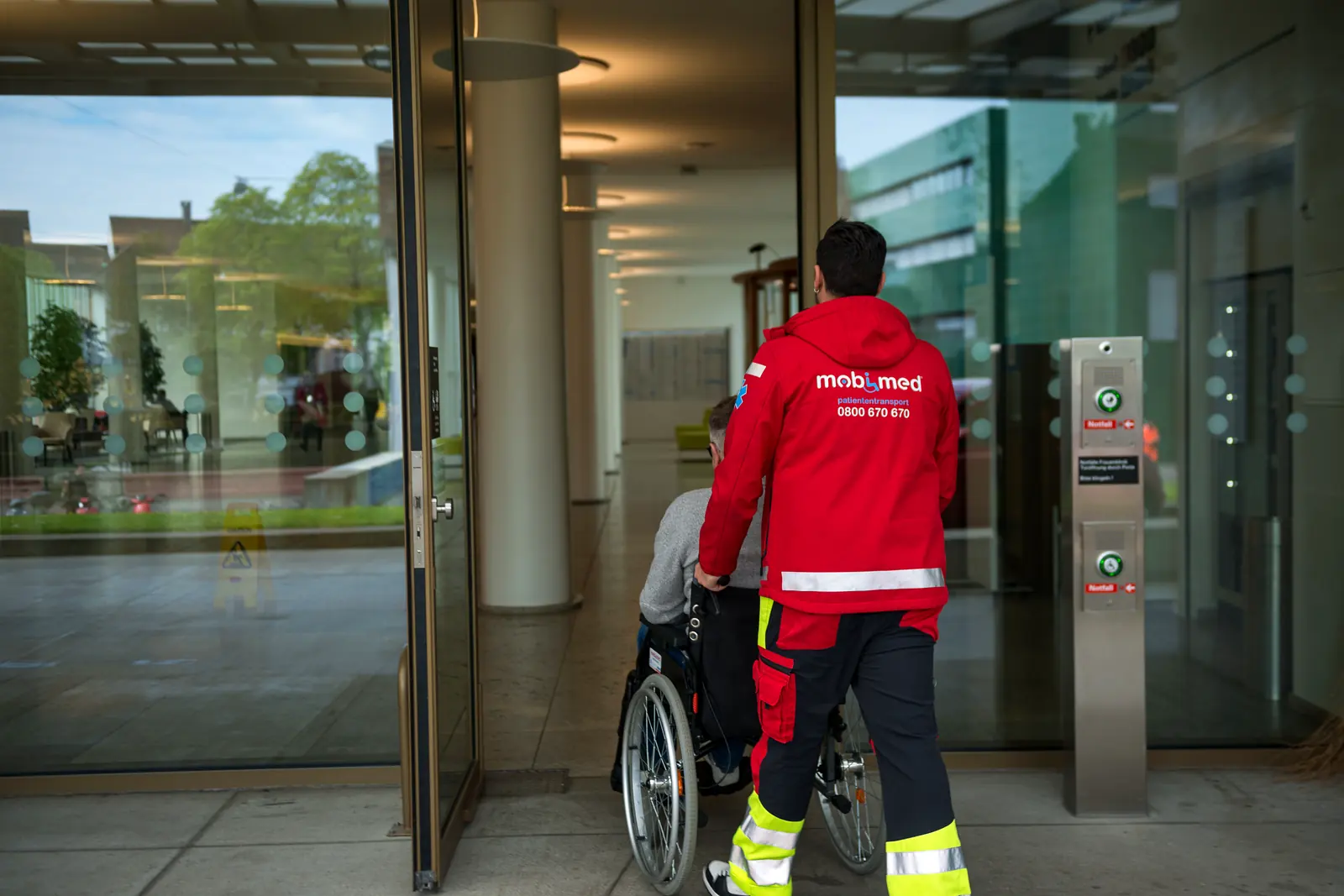
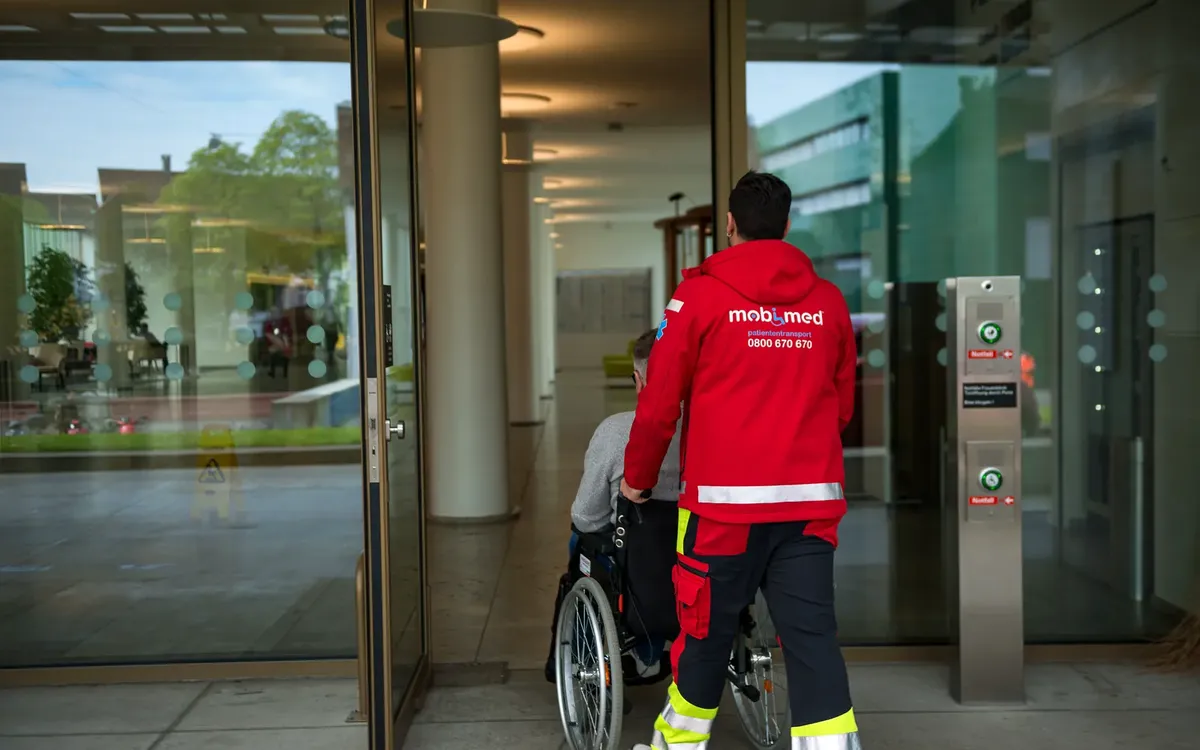
Rehab transport
With our rehab transport, we take you to the rehabilitation clinic after a hospital stay and back home again afterwards – by stretcher, in a wheelchair or seated, with your luggage and aids.
Learn more: Rehab transport
Glossary · Occasions and assistance · also: Rehab, Rehabilitation stay, Convalescence
Rehabilitation, or rehab for short, is targeted treatment after an illness, operation or injury that helps you regain lost abilities and manage everyday life independently again. It takes place as an inpatient stay in a rehabilitation clinic or as an outpatient programme with regular therapy appointments. It often begins immediately after a hospital stay.
Also called: Rehab · Rehabilitation stay · Convalescence · Inpatient rehabilitation · Outpatient rehabilitation
In inpatient rehabilitation, you stay in a rehabilitation clinic for a few weeks and receive therapy there every day — for example physiotherapy, occupational therapy, speech therapy or psychological support. This is typical after a stroke, major surgery on the musculoskeletal system or a long hospital stay.
In outpatient rehabilitation, you live at home and travel to your therapy appointments. Over several weeks, this can mean several journeys a week. Which form is suitable depends on your state of health and the support available at home, and is prescribed by a doctor.
There are specialised clinics in the region, for example Reha Rheinfelden in the Fricktal area of the canton of Aargau or REHAB Basel, which specialises in neurorehabilitation and paraplegiology. Which clinic is suitable is clarified by the doctors together with the hospital’s social services and the insurer.
Admission to rehab often takes place directly from hospital: on the day of discharge, you are collected from the ward and taken to the rehabilitation clinic. Suitcases, a rollator or wheelchair, medication and documents come too. Anyone who cannot yet sit for long travels lying down; anyone who is mobile but weak travels seated or in a wheelchair.
Mobimed provides rehab transport from hospital to the clinic, home again after the stay and to outpatient therapy. Luggage and mobility aids are taken along, and one companion rides free of charge. Bookings can be made by the hospital, the rehabilitation clinic, the patient themselves and relatives.
After rehab, everyday life at home begins. It helps to clarify in advance whether mobility aids are needed, whether Spitex (home care) will provide support and how the flat can be reached — for example if there is no lift. The journey home can be booked at the same time as the journey there, so that everything is ready on the day of discharge.
Inpatient rehabilitation generally requires a medical prescription and cost approval from the health insurer before it starts. This is usually taken care of by the hospital and the rehabilitation clinic.
The general rules for transport apply to the journey: for medically necessary transport, basic health insurance covers 50 per cent of the costs, up to a maximum of CHF 500 per year. A supplementary insurance can cover more. If you are unsure, it is best to clarify this with your insurer before admission — Mobimed tells you the price of the journey in advance.
After a stroke, Erika, 72, is treated in a Basel hospital. A place in a rehabilitation clinic has been reserved for neurorehabilitation. On the day of discharge, Mobimed collects her from the ward, with her wheelchair, suitcase and documents. Her husband rides along. The ward has also booked the journey home after her stay at the same time.
With our rehab transport, we take you to the rehabilitation clinic after a hospital stay and back home again afterwards – by stretcher, in a wheelchair or seated, with your luggage and aids.
Learn more: Rehab transport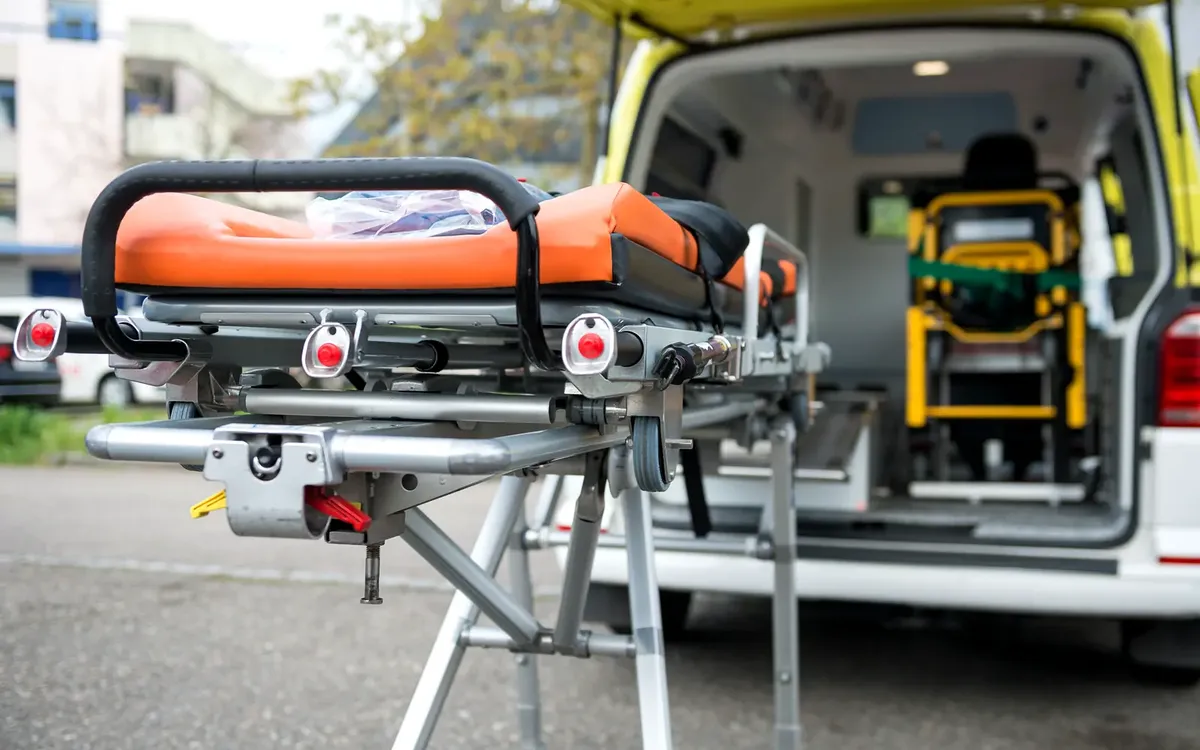
On a hospital transfer, we take patients from one institution to the next: from a hospital to another clinic, from an acute hospital to a care home or from a clinic back to hospital.
Learn more: Hospital transfers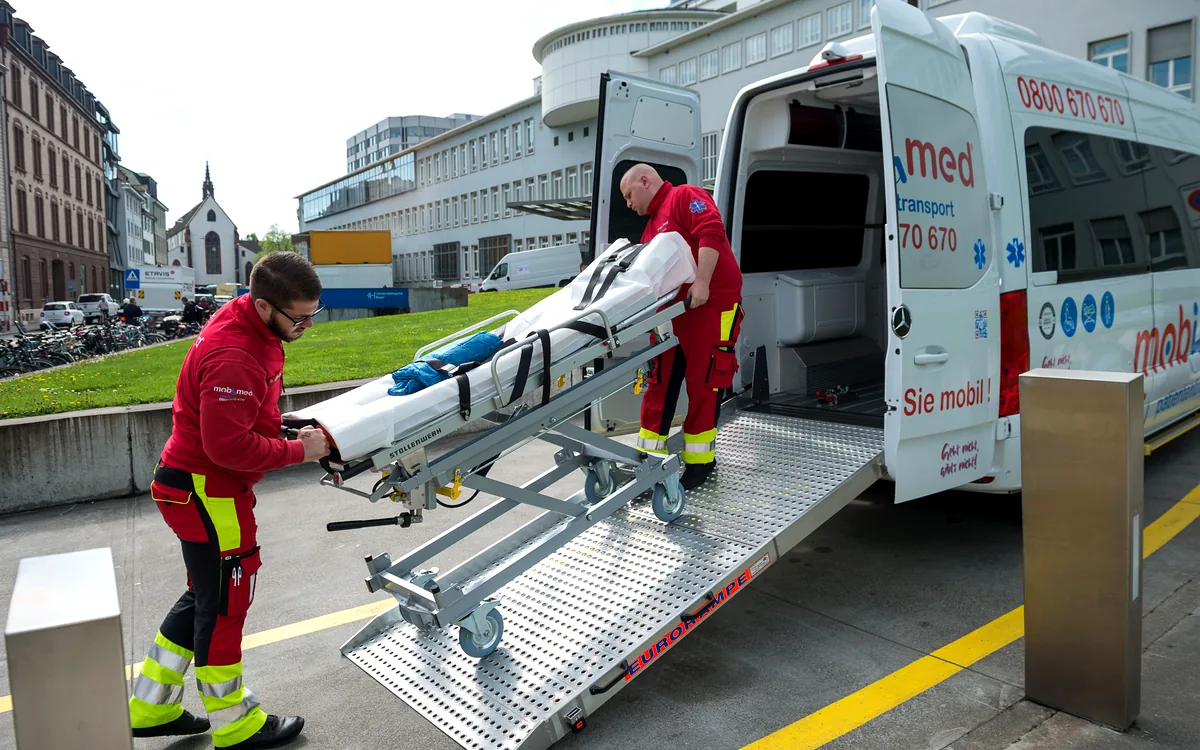
In a stretcher transport, the patient is carried on a patient stretcher in a vehicle specially equipped for the purpose.
Learn more: Stretcher transportThe hospital usually organises the transport as part of the discharge. However, you or your relatives can also book the journey yourselves — online or on 0800 670 670 (free call).
Yes. We take suitcases, rollators, wheelchairs and other mobility aids. Tell us when booking what is coming along so that enough space is planned in.
Client, patient, appointment — one form that goes directly to our dispatch team. Prefer to call? That works too.
Recognition by the Swiss Interassociation for Rescue Services (IVR/IAS) is not a self-assessment but the result of an external audit of vehicles, equipment, training and procedures. Mobimed was the first patient transport provider in north-western Switzerland to receive it — and still holds it today.
Check the certificate in the IVR register