Hospital transfers
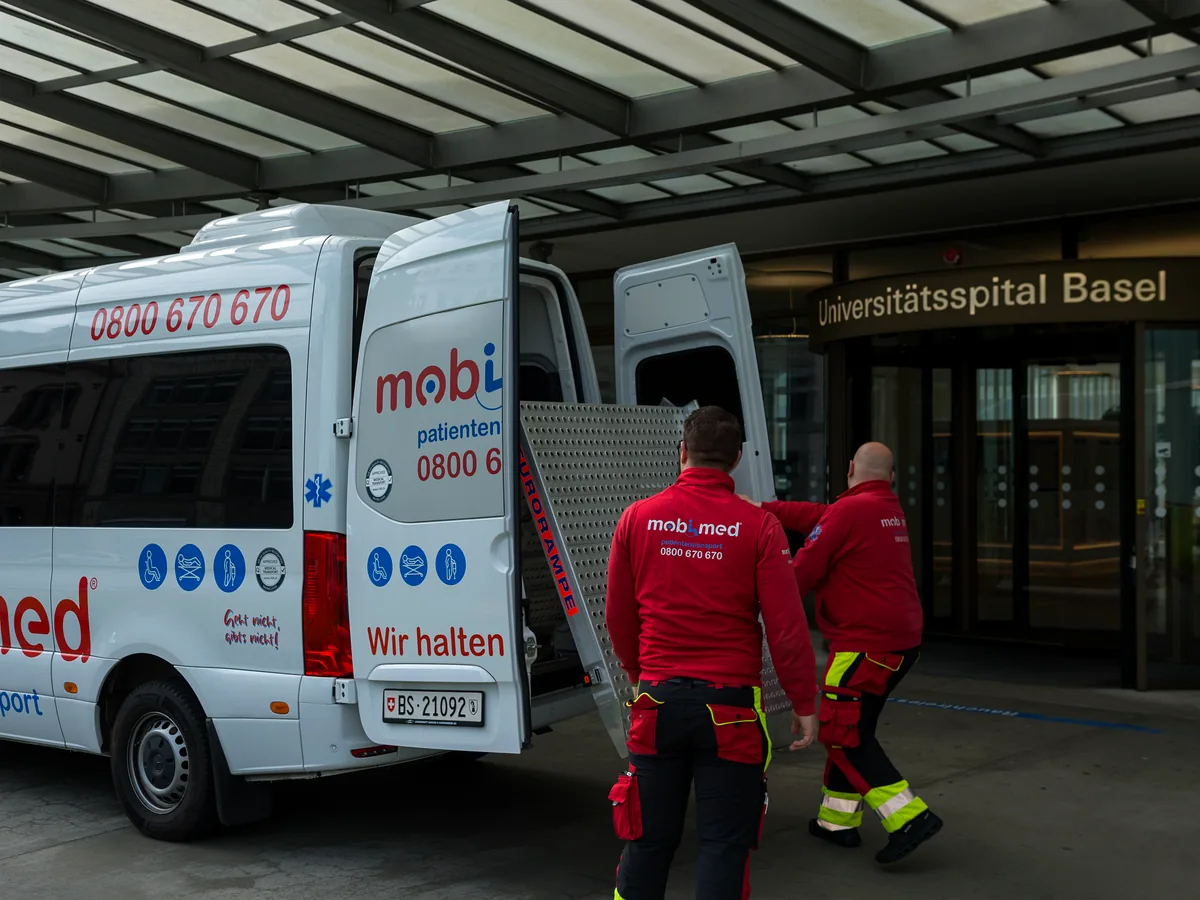
On a hospital transfer, we take patients from one institution to the next: from a hospital to another clinic, from an acute hospital to a care home or from a clinic back to hospital.
Learn more: Hospital transfers
Glossary · Types of transport · also: hospital transfer, interhospital transfer, secondary transport
An inter-facility transfer is the transport of a patient from one medical facility to another — for example from an acute hospital to a specialist clinic, to rehabilitation or to a care home. Patients travel lying down, seated or in a wheelchair, are collected from the ward and handed over to the nursing staff at the destination.
Also called: hospital transfer · interhospital transfer · secondary transport · patient transfer between hospitals
Patients are transferred when their treatment continues somewhere else: after an operation at the University Hospital, rehabilitation follows at a rehab clinic; after the acute phase, a move to a hospital closer to home; after a hospital stay, admission to a care home. Patients are also transferred between the sites of one hospital, for example between Liestal and Bruderholz.
Unlike the journey home, an inter-facility transfer begins and ends at an institution. That changes the process: documents, the medication plan and information have to travel with the patient and arrive correctly at the destination.
The ward books the transport with a time window, case number and the required type of transport. Our staff collect the patient from their room, take charge of the documents and secure the patient in the vehicle. At the destination, the patient is taken to the ward and handed over verbally to the responsible nurse — with the documents in hand, not left at reception.
Luggage, aids such as a rollator or walking sticks and personal belongings travel along. At Mobimed, these are not extras but part of the journey.
Intensive care transfers with ventilation, running infusions or medical monitoring belong to the emergency medical service or to specialised intensive care transport. A patient transport service such as Mobimed handles transfers of patients in a stable condition. As for billing: transfers between hospitals are often covered by the hospital tariffs and are then not charged to the patient — the ordering hospital clarifies this.
For the transfer to go smoothly, the ward prepares the transfer report, the current medication plan and, if needed, X-rays or data media. Information on allergies, mobility, oxygen requirements and nutrition is also helpful. The transport team takes everything along in an envelope and hands it over in person.
Coordination with the receiving institution is just as important: is the room ready, who will receive the patient, and by when must they arrive? A clear time window prevents waiting on both sides — every unnecessary wait is a strain for the patient.
Relatives should ideally be informed and can travel along on request; at Mobimed free of charge.
Typical transfers in the Basel region run between the University Hospital, the Kantonsspital Baselland (Cantonal Hospital Basel-Landschaft) sites in Liestal and on the Bruderholz, rehab clinics such as REHAB Basel or Reha Rheinfelden, and care homes. Mobimed carries out these journeys lying down, seated or in a wheelchair.
After a stroke, Anna, 66, is treated at the Universitätsspital Basel (University Hospital Basel). Two weeks later she is stable and can move to Reha Rheinfelden. The ward books an inter-facility transfer in a wheelchair. Mobimed collects Anna from her room, takes her suitcase, rollator and transfer report and hands her over directly to the ward nursing staff in Rheinfelden.
On a hospital transfer, we take patients from one institution to the next: from a hospital to another clinic, from an acute hospital to a care home or from a clinic back to hospital.
Learn more: Hospital transfers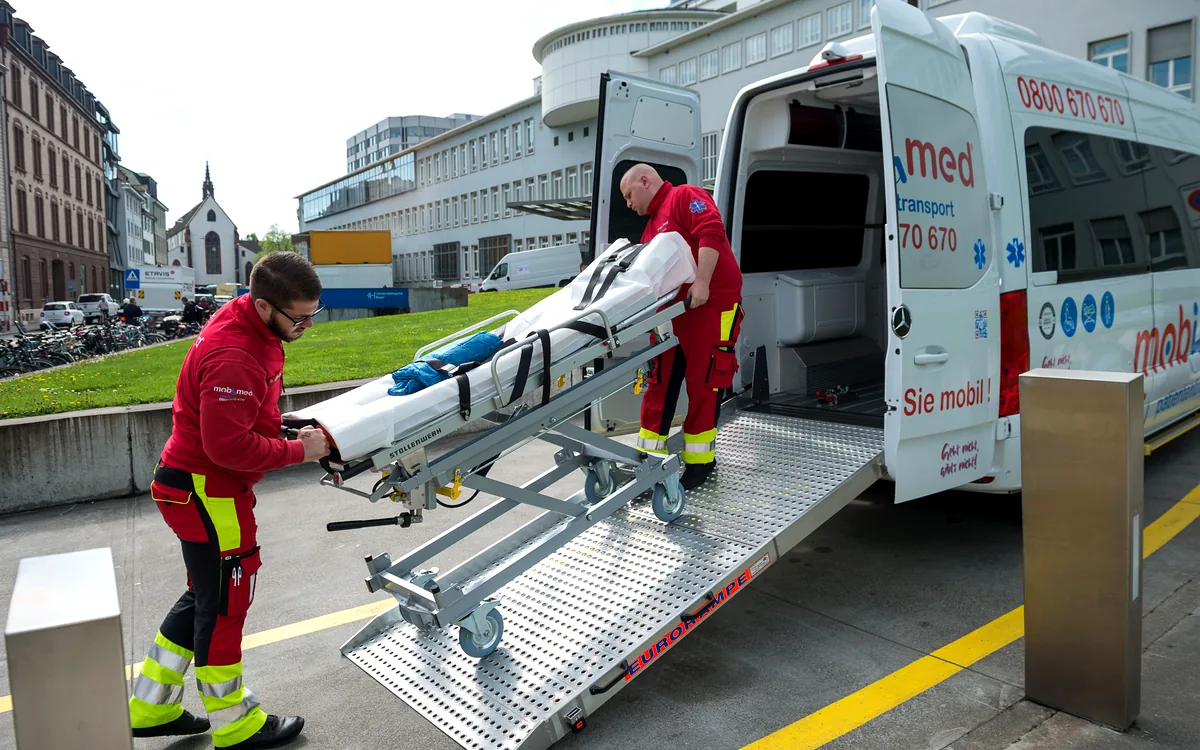
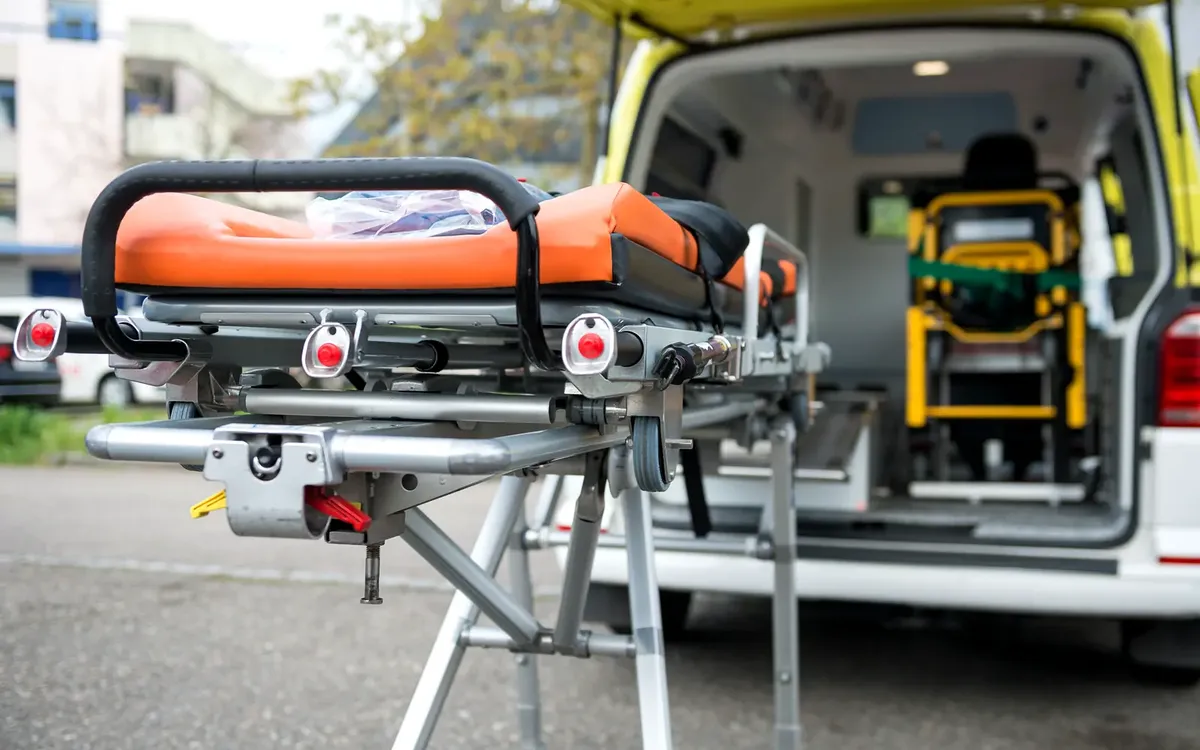
In a stretcher transport, the patient is carried on a patient stretcher in a vehicle specially equipped for the purpose.
Learn more: Stretcher transport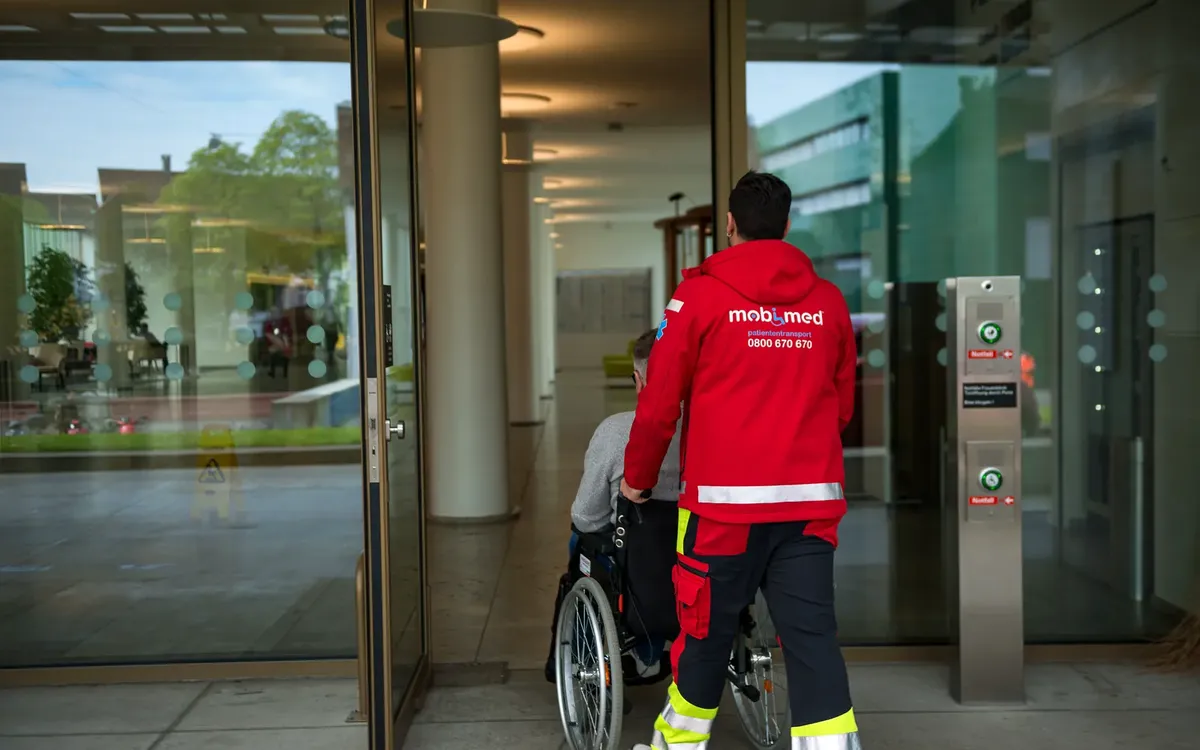
With our rehab transport, we take you to the rehabilitation clinic after a hospital stay and back home again afterwards – by stretcher, in a wheelchair or seated, with your luggage and aids.
Learn more: Rehab transportUsually the discharging ward or the hospital’s social services, with case number and cost centre. Relatives can also book themselves, though.
No. Mobimed transfers patients in a stable condition — lying down, seated or in a wheelchair. Intensive care and ventilation transport belongs to the emergency medical service.
Client, patient, appointment — one form that goes directly to our dispatch team. Prefer to call? That works too.
Recognition by the Swiss Interassociation for Rescue Services (IVR/IAS) is not a self-assessment but the result of an external audit of vehicles, equipment, training and procedures. Mobimed was the first patient transport provider in north-western Switzerland to receive it — and still holds it today.
Check the certificate in the IVR register