Stretcher transport
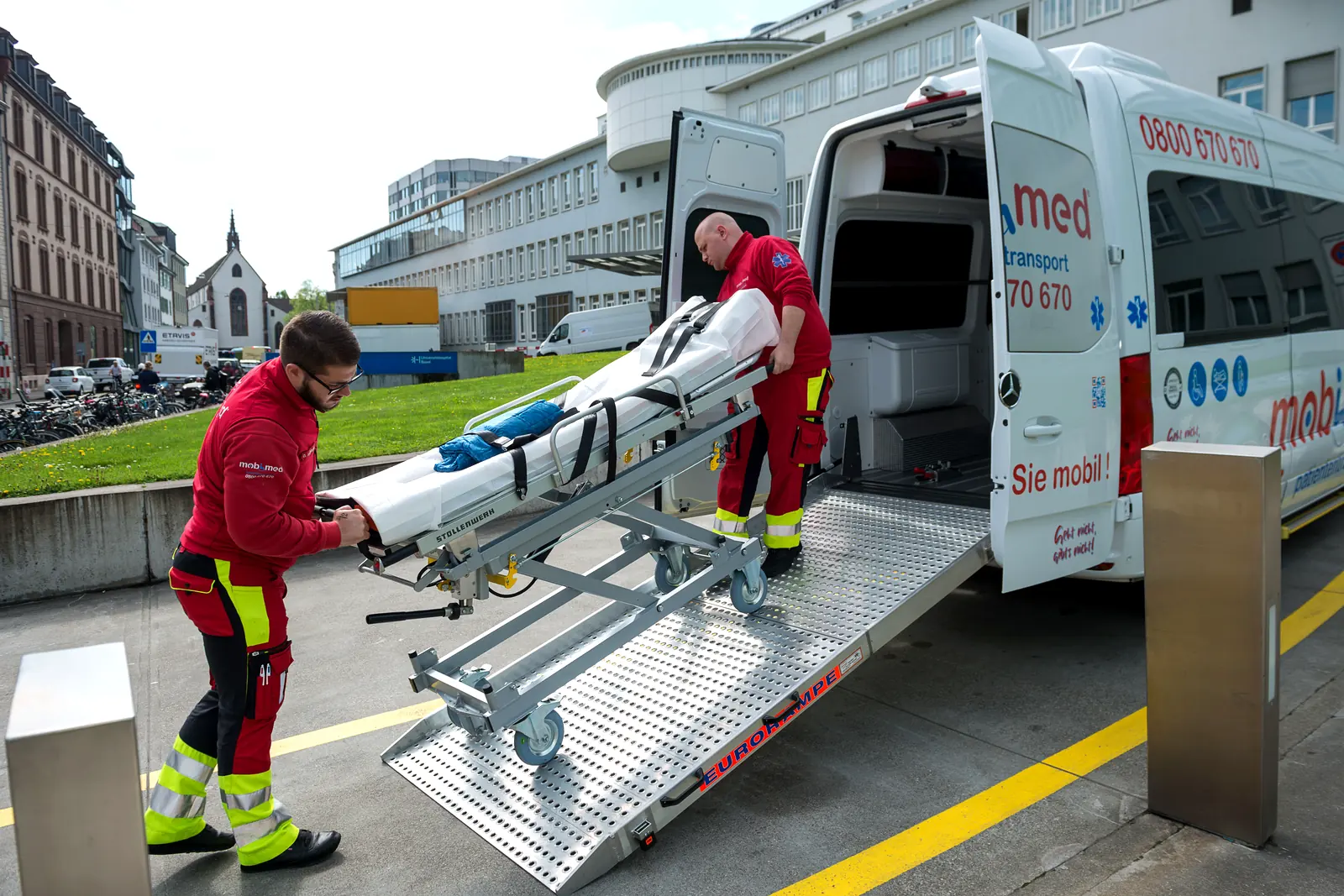
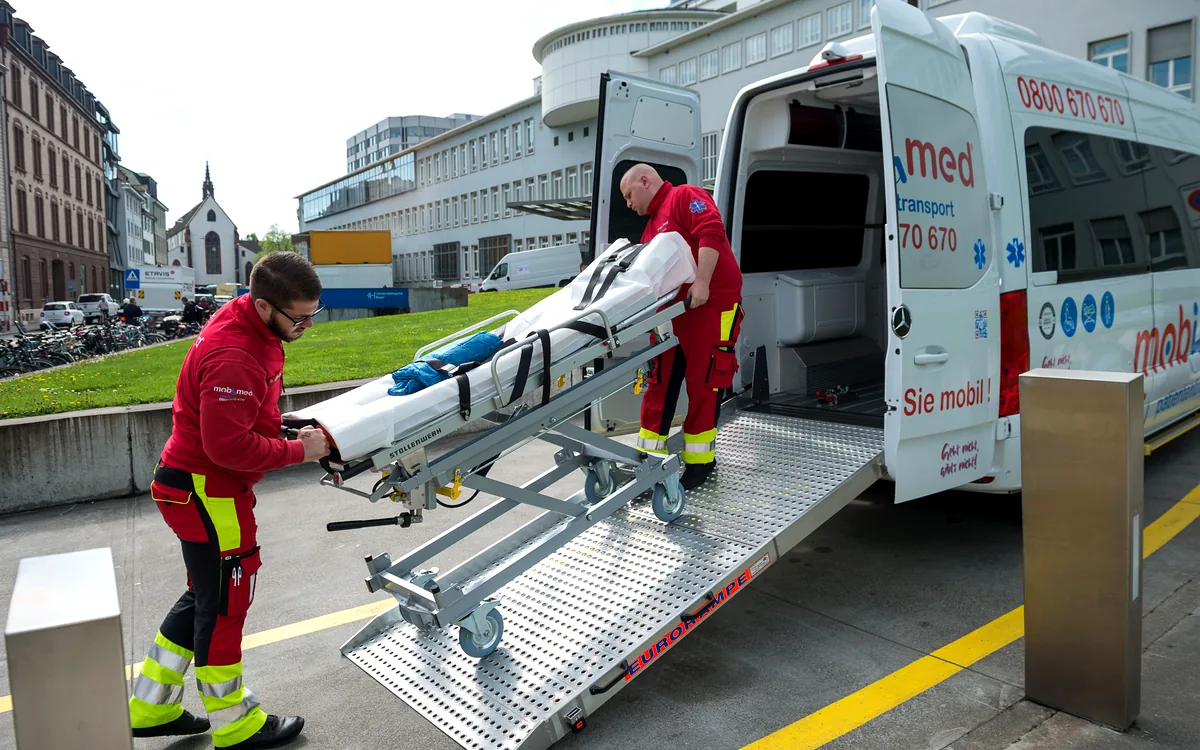
In a stretcher transport, the patient is carried on a patient stretcher in a vehicle specially equipped for the purpose.
Learn more: Stretcher transport
Glossary · Equipment · also: Wheeled stretcher, Ambulance stretcher, Patient trolley
A patient stretcher, also called a wheeled stretcher, is a mobile bed on which patients are transported lying down. Its height can be adjusted, it rolls on wheels right up to the bed and it is locked onto a fixed stretcher mount in the vehicle. It is the central piece of equipment in every stretcher transport.
Also called: Wheeled stretcher · Ambulance stretcher · Patient trolley · Gurney
A modern wheeled stretcher consists of a sturdy undercarriage with wheels and a padded lying surface. The head section can be raised so that the upper body lies in an elevated position — which is more comfortable for many people with breathing difficulties or after surgery. Side straps keep the person on the stretcher without feeling confined.
The undercarriage is height-adjustable. This means the stretcher can be lowered to bed level so that the patient can slide across from the bed onto the stretcher with as little lifting as possible. For the journey, the stretcher is brought to the right height and pushed into the vehicle via a ramp or a loading system.
In the vehicle, the wheeled stretcher is locked onto a stretcher mount. This anchoring prevents the stretcher from shifting when braking or cornering. In addition, straps secure the person on the stretcher. Only once both have been checked does the vehicle set off.
On a Mobimed stretcher transport, a second, specially trained transport assistant always travels alongside the driver. They sit with the patient, watch over them throughout the journey and can respond if the patient feels unwell. Oxygen, first-response emergency medical equipment and a defibrillator are on board.
A wheeled stretcher is needed by anyone who must not sit or cannot sit. Typical situations include the journey home after hip or back surgery, severe pain, being bedridden, marked weakness after a long illness or a transfer between two hospitals. If in doubt, the doctor decides whether a transport has to be carried out lying down.
It is important to distinguish this from the emergency medical service: even though ambulances also carry stretchers, stretcher transport is not an emergency call-out. It is intended for people in a stable physical condition. In a medical emergency in Switzerland, always call the emergency number 144.
Not every flat can be reached with a stretcher. In older buildings with a narrow stairwell or a small lift, a stair chair is therefore often used: the patient is carried down the stairs sitting and only transferred onto the wheeled stretcher at the vehicle. When booking, tell us which floor the flat is on and whether there is a lift — then the right equipment will be planned in.
Margrit, 78, is being discharged from a Basel hospital after hip surgery. She is not yet allowed to sit. The ward books a stretcher transport. Two staff members collect her from her room, transfer her from the bed onto the lowered stretcher with as little movement as possible, secure her with the straps and lock the stretcher in the vehicle. At home in Binningen, they take Margrit all the way to her bedroom.
In a stretcher transport, the patient is carried on a patient stretcher in a vehicle specially equipped for the purpose.
Learn more: Stretcher transport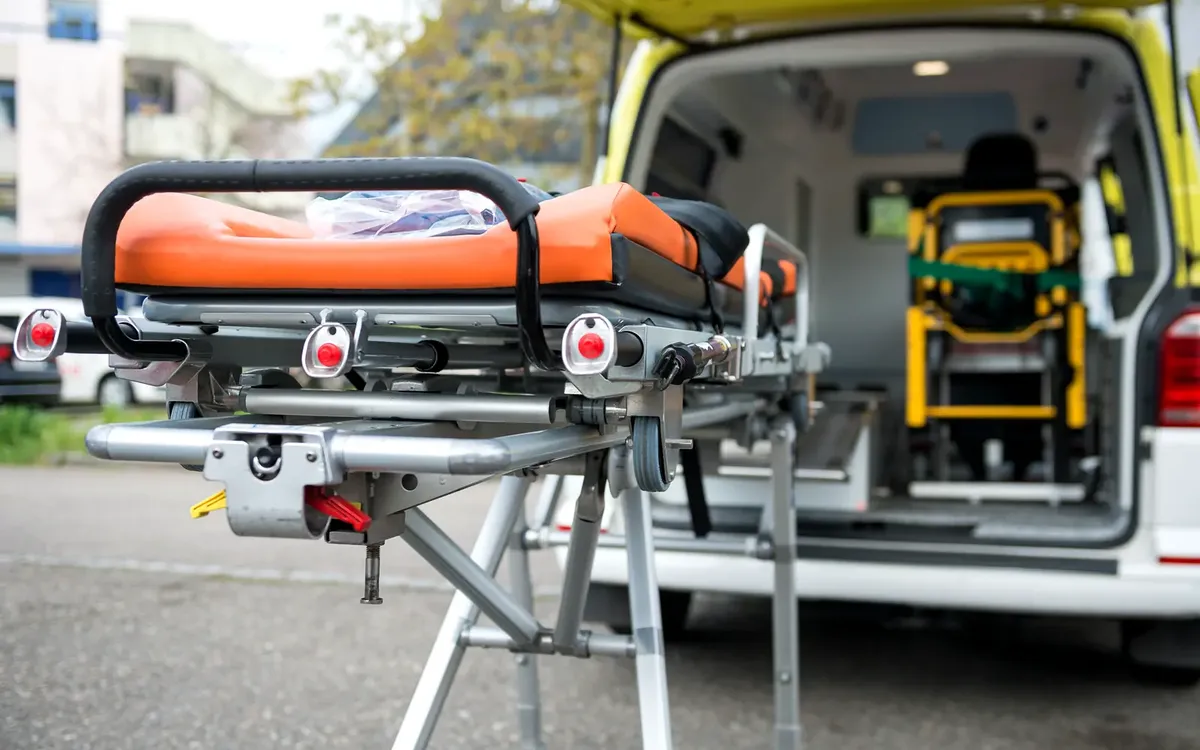
On a hospital transfer, we take patients from one institution to the next: from a hospital to another clinic, from an acute hospital to a care home or from a clinic back to hospital.
Learn more: Hospital transfers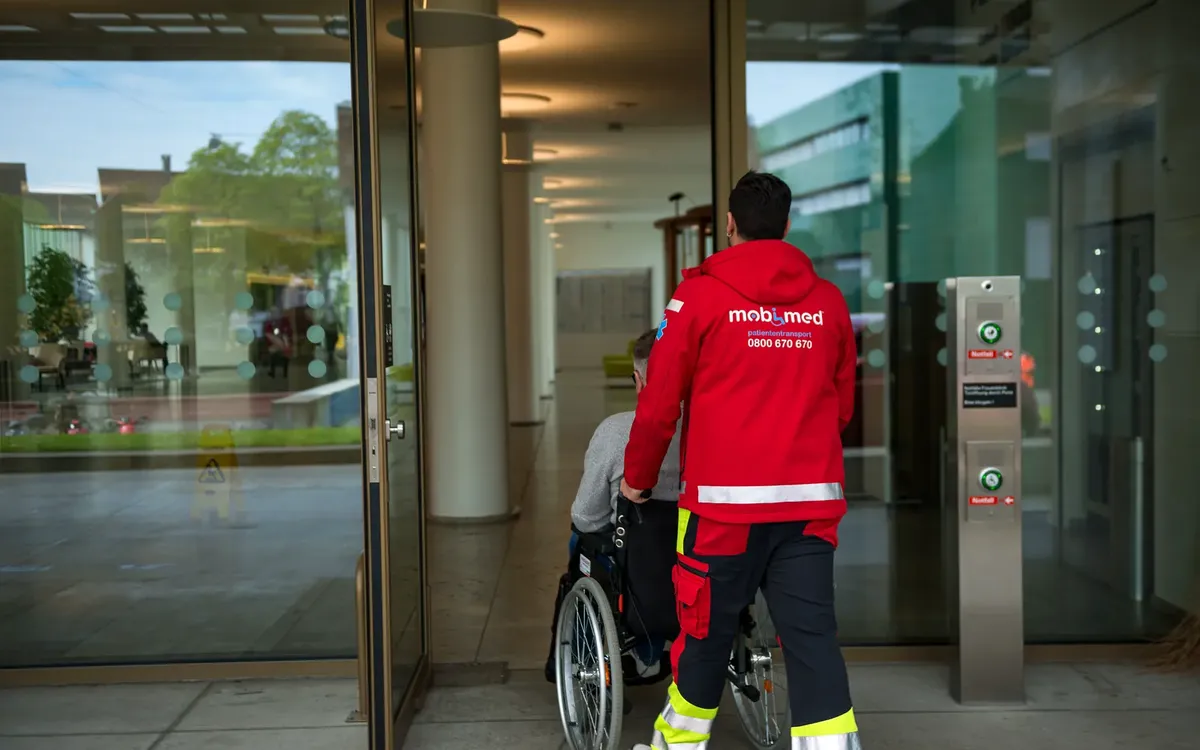
With our rehab transport, we take you to the rehabilitation clinic after a hospital stay and back home again afterwards – by stretcher, in a wheelchair or seated, with your luggage and aids.
Learn more: Rehab transportIn everyday language the terms are often used interchangeably. A litter is usually a simple stretcher without an undercarriage. A wheeled stretcher has wheels, is height-adjustable and is locked firmly in place in the vehicle.
Yes. At Mobimed, one companion rides free of charge with every type of transport. Mention this when booking so that the seat can be planned in.
The stretcher is lowered to bed level and the patient is moved across using slide sheets or with the help of two people. This way, nobody has to be lifted or pulled.
Client, patient, appointment — one form that goes directly to our dispatch team. Prefer to call? That works too.
Recognition by the Swiss Interassociation for Rescue Services (IVR/IAS) is not a self-assessment but the result of an external audit of vehicles, equipment, training and procedures. Mobimed was the first patient transport provider in north-western Switzerland to receive it — and still holds it today.
Check the certificate in the IVR register