
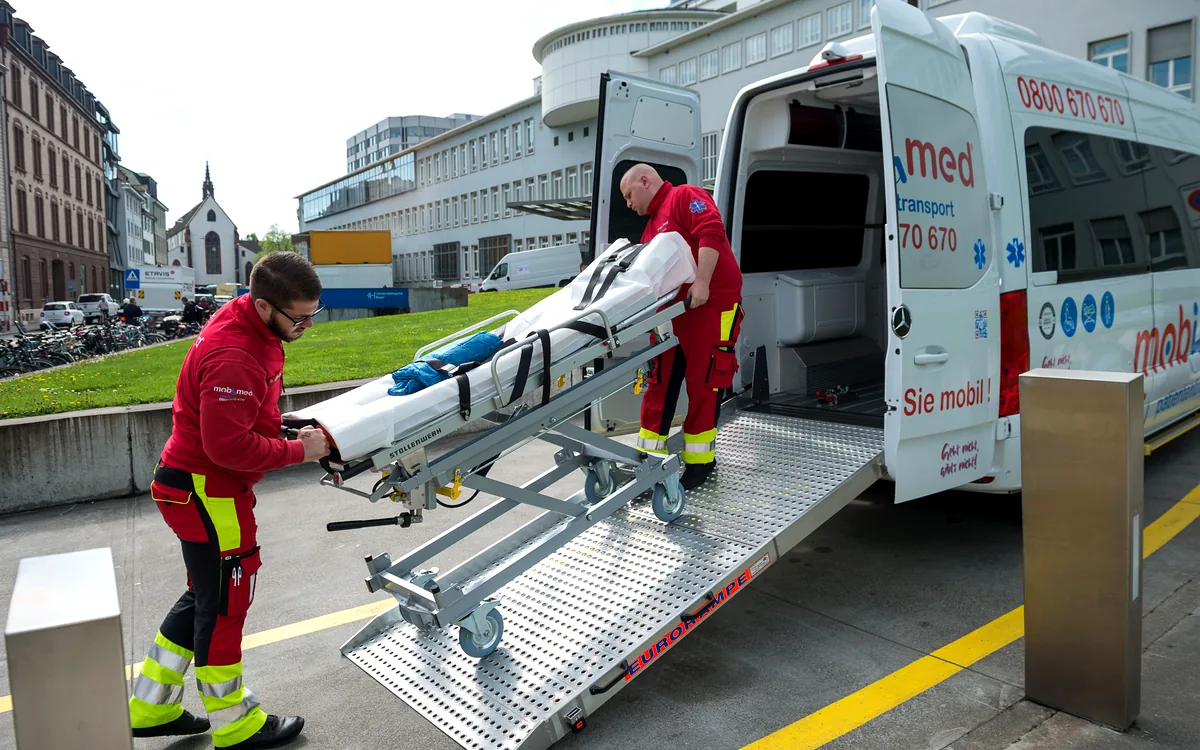
Stretcher transport
In a stretcher transport, the patient is carried on a patient stretcher in a vehicle specially equipped for the purpose.
Learn more: Stretcher transport
Glossary · Types of transport · also: non-emergency medical transport, patient transport, non-emergency ambulance
Medical transport is the transport of an ill or injured person in a specially equipped vehicle when their condition does not allow an ordinary journey, but no emergency care is needed. In Switzerland, the term is used largely interchangeably with “patient transport”. If medically necessary, basic health insurance covers 50 per cent, up to CHF 500 per year.
Also called: non-emergency medical transport · patient transport · non-emergency ambulance · medical transportation
Swiss law and the health insurers usually just speak of “transport”; in everyday German people say “Krankentransport” (medical transport), and providers often call themselves “Patiententransport” (patient transport). In Switzerland, these almost always mean the same thing: a planned, accompanied journey for someone who is ill, injured or has limited mobility and therefore cannot travel by car, taxi or tram.
Other countries sometimes draw finer distinctions. In Germany, for example, a “Krankenfahrt” is a simple journey by taxi or hire car, while a “Krankentransport” is a journey with professional medical care. Anyone reading information from Germany should therefore not transfer everything one-to-one to Switzerland — especially not the rules on cost coverage.
Medical transport is needed when another means of transport is not reasonable for health reasons: because the patient is not allowed to sit, uses a wheelchair, is weakened after treatment, could fall while walking or needs support on the way. Common occasions are hospital admission and discharge, transfers between hospitals, and journeys to dialysis, radiotherapy or rehabilitation.
Whether the health insurer contributes depends on exactly this question of reasonableness. That is why the doctor states in a prescription why the transport is medically necessary.
Medical transport can be planned and concerns patients in a stable condition. The emergency medical service, on the other hand, is alerted via the emergency number 144, responds with blue lights and provides medical care, often on the spot. Health insurers treat the two differently: for rescues, basic insurance also covers 50 per cent, but up to CHF 5,000 per year.
If you are unsure whether it is an emergency, always call 144. A medical transport service such as Mobimed does not provide emergency care.
Look for trained staff, equipped vehicles and verifiable quality recognition, for example by the Swiss Interassociation for Rescue Services (IVR). Ask whether an accompanying person may travel along, whether the patient is collected from the front door and whether the price is given before the journey. At Mobimed, the accompanying person travels free of charge, and you can get price information on 0800 670 670 (free call) before you book.
Peter, 69, from Allschwil, has to go to the Universitätsspital Basel (University Hospital Basel) every day for five weeks for radiotherapy. After the treatments he is exhausted and unsteady on his feet. His GP issues a prescription, and Mobimed drives him there and back, seated and accompanied. The health insurer covers half of the costs until the annual maximum of CHF 500 is reached; his supplementary insurance covers the rest.
In a stretcher transport, the patient is carried on a patient stretcher in a vehicle specially equipped for the purpose.
Learn more: Stretcher transport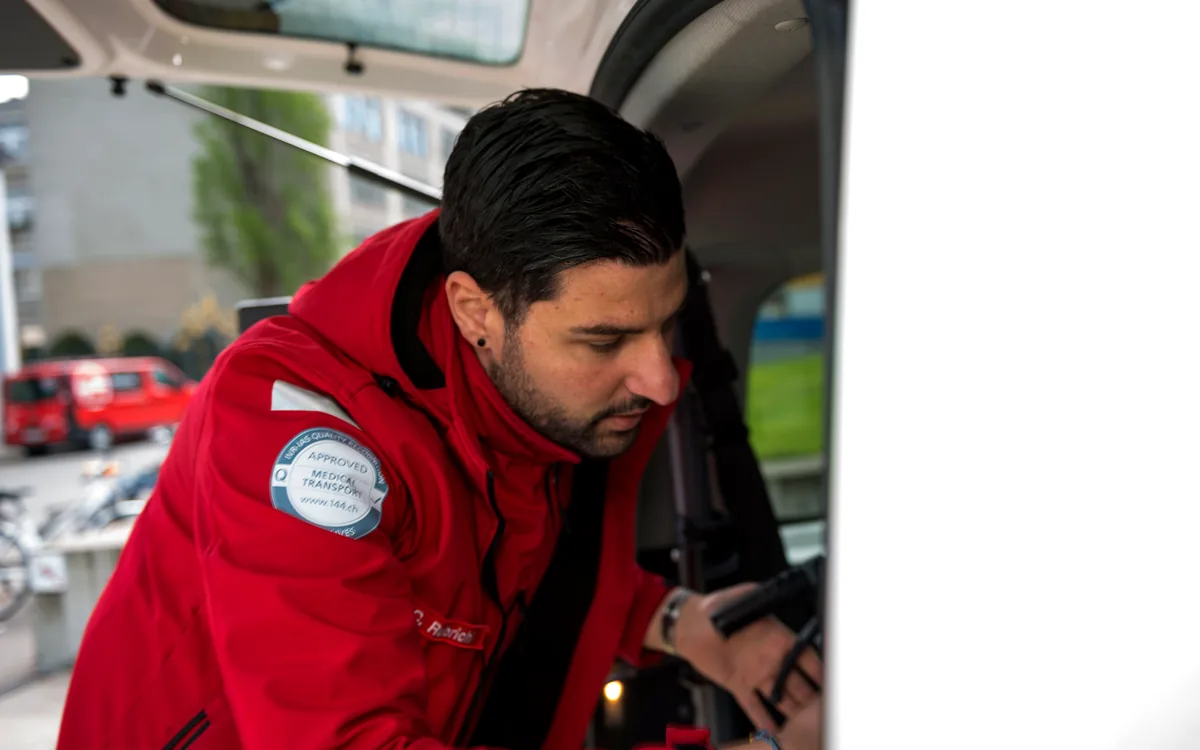
Seated transport is the right choice for medically stable patients who can sit during the journey but need support getting in and out.
Learn more: Seated transport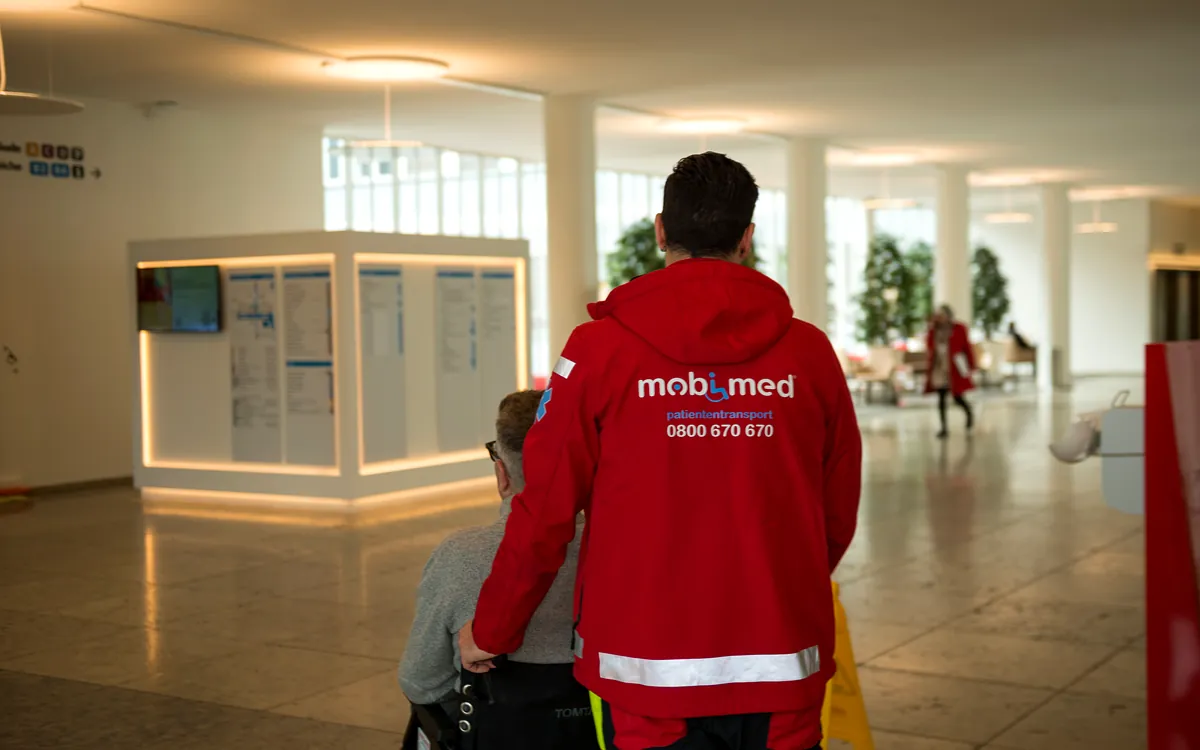
With our transport to medical examinations, we take you to your appointment – for example for an MRI, CT or X-ray, for chemotherapy or radiotherapy or for a follow-up check – and back again afterwards.
Learn more: Transport to medical examinations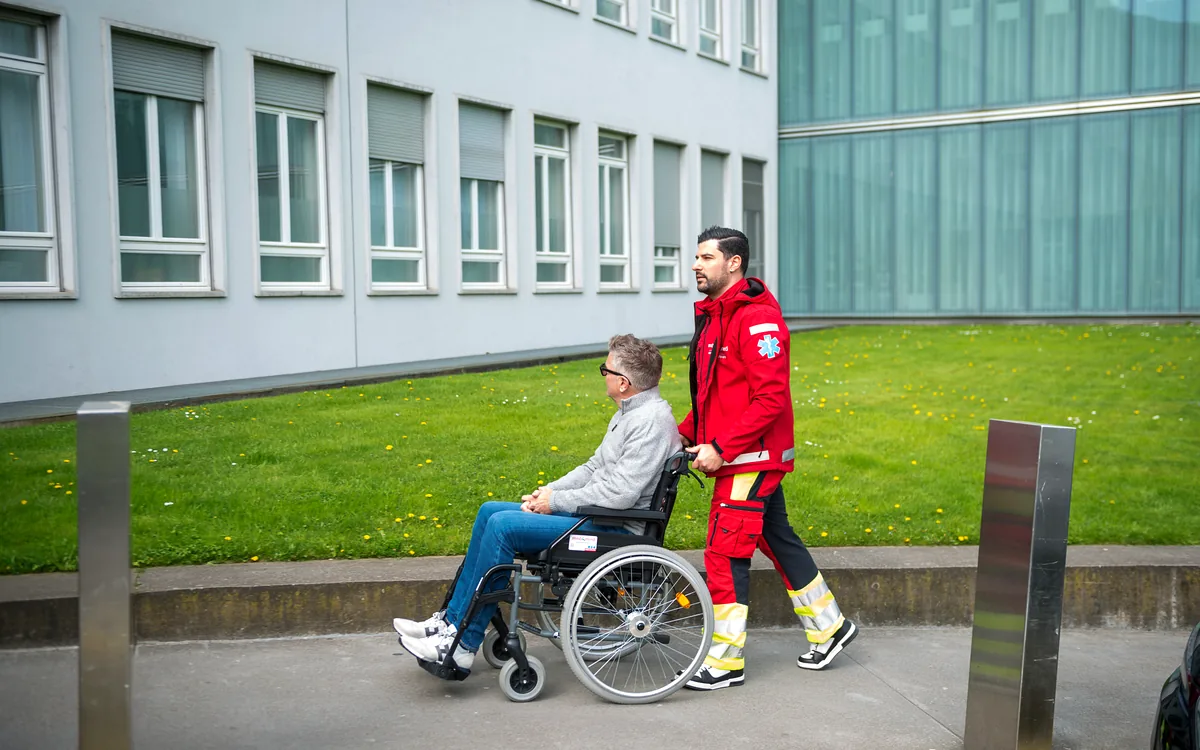
Dialysis transport is not a one-off matter but a routine: usually three times a week, often for years.
Learn more: Dialysis transportThat depends on the type of transport, the distance and the amount of assistance needed. A stretcher transport with two staff costs more than a seated journey. If medically necessary, basic health insurance covers half, up to a maximum of CHF 500 per calendar year.
For the health insurer to contribute, generally yes. Without a prescription you can still book the transport and then pay for it yourself.
Client, patient, appointment — one form that goes directly to our dispatch team. Prefer to call? That works too.
Recognition by the Swiss Interassociation for Rescue Services (IVR/IAS) is not a self-assessment but the result of an external audit of vehicles, equipment, training and procedures. Mobimed was the first patient transport provider in north-western Switzerland to receive it — and still holds it today.
Check the certificate in the IVR register