Wheelchair transport
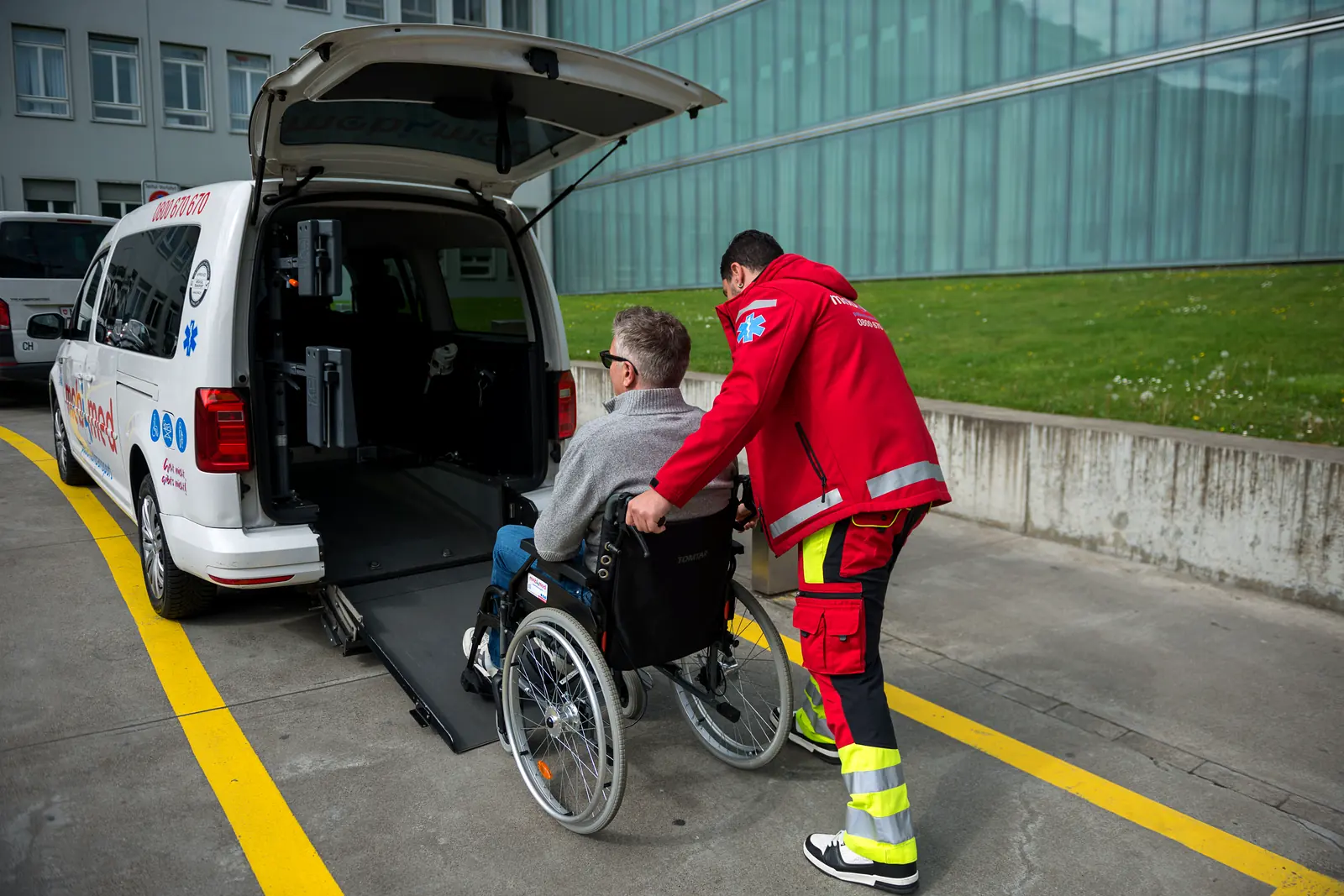
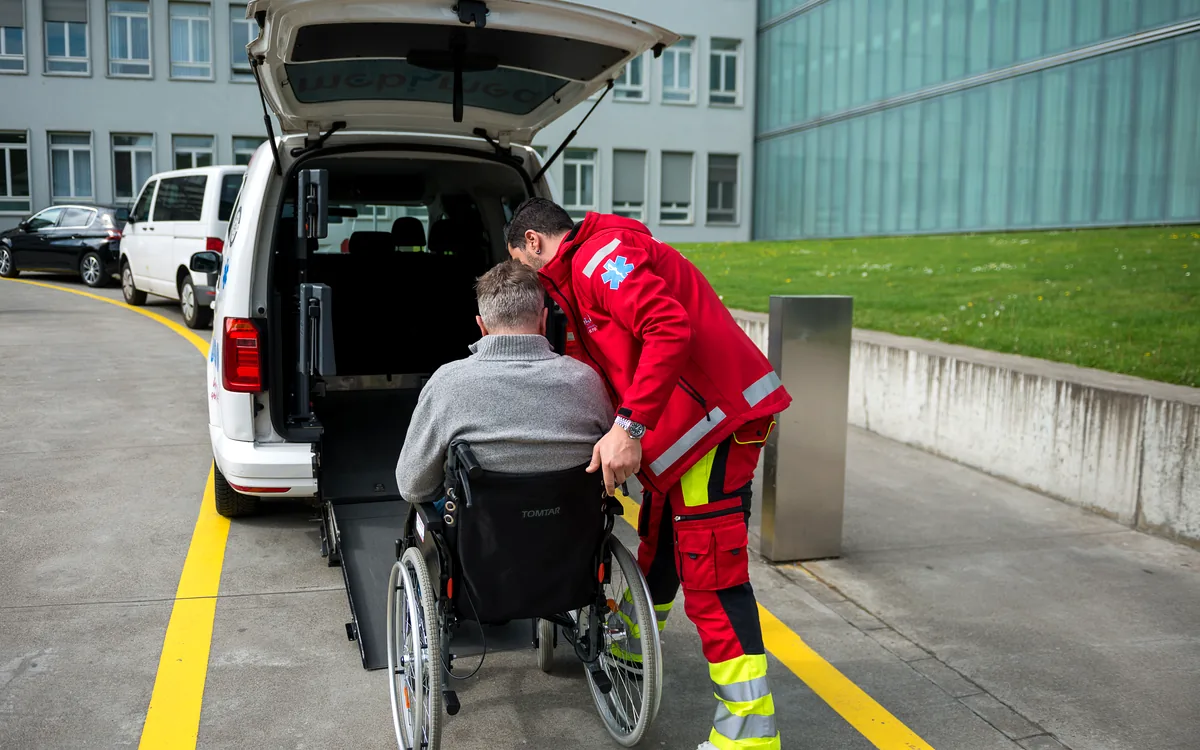
With wheelchair transport, the patient stays seated in their own wheelchair.
Learn more: Wheelchair transport
Glossary · Equipment · also: Wheelchair ramp, Wheelchair lift, Rear lift
A lift and a ramp are the two ways a wheelchair gets into the vehicle without the person having to transfer. A ramp is a sloping access over which the wheelchair is pushed; a lift is a platform that raises the wheelchair and its occupant horizontally to vehicle height. Both make boarding possible and safe for wheelchair users.
Also called: Wheelchair ramp · Wheelchair lift · Rear lift · Loading ramp · Tail lift
A ramp is folded out at the rear or side of the vehicle. The wheelchair is pushed up it, with staff securing it from behind. Ramps are light, quickly ready and ideal for most folding wheelchairs. The flatter the ramp, the less effort is needed — which is why good vehicle ramps are long and have a non-slip surface.
A ramp is also suitable for rollators and for people who can walk but struggle with a step: instead of a high entry sill, there is a gentle incline.
A lift is a platform that lowers to the ground electrically or hydraulically. The wheelchair moves onto it, is secured, and the platform raises it horizontally to the level of the vehicle floor. Nobody has to push or tackle an incline.
This is particularly important for electric wheelchairs, which often weigh well over a hundred kilograms, but also for people who do not tolerate being tilted well. Lifts need a little more space behind the vehicle and a little more time, but they are built for heavy loads.
A ramp or lift only gets the wheelchair into the vehicle. After that, it is anchored to the floor with a restraint system and the person is secured with their own belt. Only this combination makes travelling in a wheelchair safe.
Mobimed’s vehicles are equipped with a ramp or lift. Anyone travelling in their own wheelchair therefore does not need to be transferred. For electric wheelchairs, Mobimed needs the model and weight in advance so that a vehicle with suitable equipment is sent.
A ramp or lift needs some free space behind or beside the vehicle. If the street in front of the house is narrow or there is only a narrow access, a note when booking helps — the team will then plan the pick-up accordingly.
For institutions such as care homes and nursing homes, day centres or sheltered workshops, vehicles with a ramp or lift are the basis for regular journeys. Residents who use a wheelchair can be taken to the doctor, to therapy or on an outing without having to transfer.
Clear arrangements are important: where does the vehicle stop, how long is the way to the entrance, are there steps or thresholds? Once these points have been clarified, recurring journeys run without surprises — for staff, residents and the driving team alike.
Ruth uses a heavy electric wheelchair and has physiotherapy in Basel twice a week. When booking for the first time, her daughter gives the model and weight. Since then, a vehicle with a lift has come each time: Ruth drives onto the platform, is raised, her wheelchair is anchored — and she sits in her own chair for the whole journey.
With wheelchair transport, the patient stays seated in their own wheelchair.
Learn more: Wheelchair transport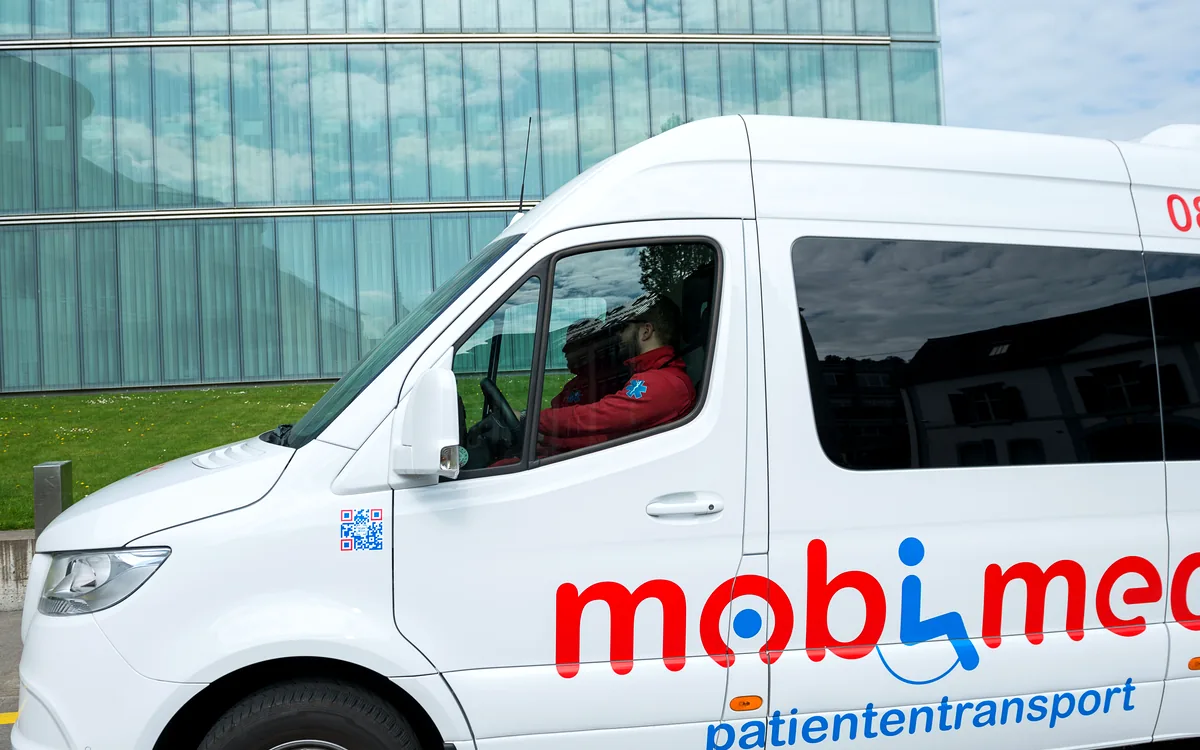
With our wheelchair transport service – often also called a wheelchair taxi – you stay seated in your own wheelchair: you enter the vehicle via a ramp or lift.
Learn more: Wheelchair taxi service Basel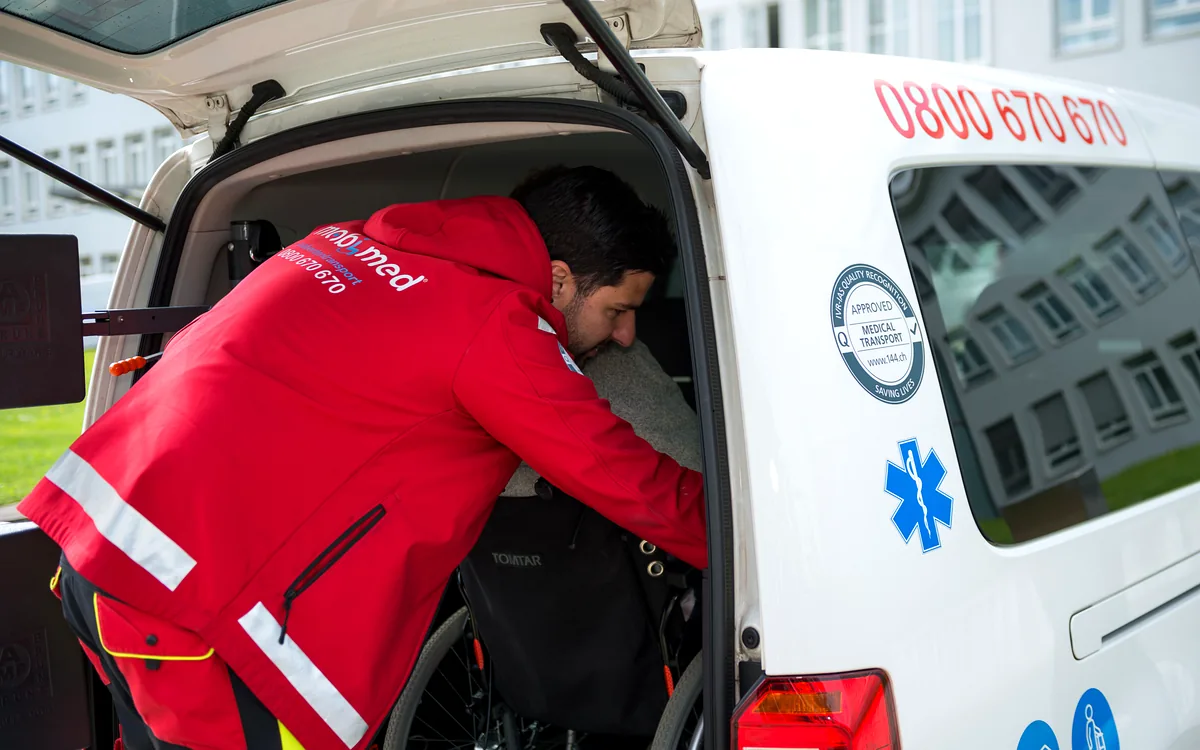
For us, transport for people with disabilities means accessible vehicles with a ramp or lift, trained staff and door-to-door assistance – for people with physical or multiple disabilities.
Learn more: Transport for people with disabilitiesFor light folding wheelchairs, the ramp is quick and simple. For heavy electric wheelchairs, or if being tilted is uncomfortable, the lift is the better choice. What matters is to describe the wheelchair precisely when booking.
Yes, if you can walk safely. The ramp replaces the high entry step. The staff accompany you and help you sit down.
Client, patient, appointment — one form that goes directly to our dispatch team. Prefer to call? That works too.
Recognition by the Swiss Interassociation for Rescue Services (IVR/IAS) is not a self-assessment but the result of an external audit of vehicles, equipment, training and procedures. Mobimed was the first patient transport provider in north-western Switzerland to receive it — and still holds it today.
Check the certificate in the IVR register