Wheelchair transport
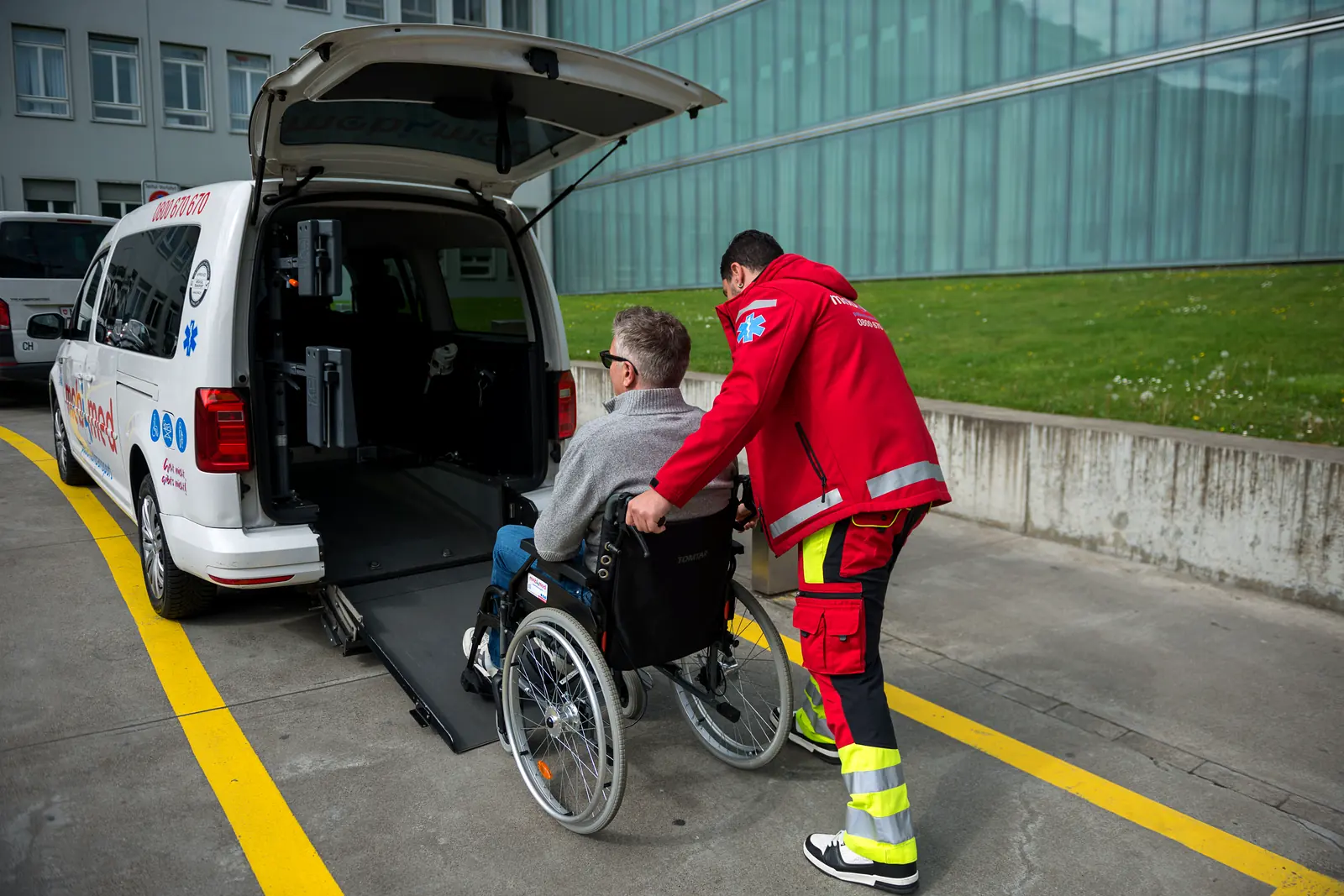
With wheelchair transport, the patient stays seated in their own wheelchair.
Learn more: Wheelchair transport
Glossary · Types of transport · also: wheelchair taxi service, wheelchair transfer, wheelchair accessible transport
Wheelchair transport is a form of patient transport in which the person stays seated in their own wheelchair. The wheelchair is pushed into the vehicle via a ramp or lift and secured there with an approved restraint system — there is no need to transfer into a car seat.
Also called: wheelchair taxi service · wheelchair transfer · wheelchair accessible transport · transport in a wheelchair
It is for people who depend on a wheelchair permanently or temporarily: after a stroke, with paraplegia, muscle diseases, in old age or after an injury. People who can still walk a few steps but need a wheelchair for longer distances are also in the right place here.
The big advantage: if you stay in your own wheelchair, you do not have to be transferred. This protects joints and skin, saves time and reduces the risk of falls — the transfer from wheelchair to car seat in particular is a common moment for falls.
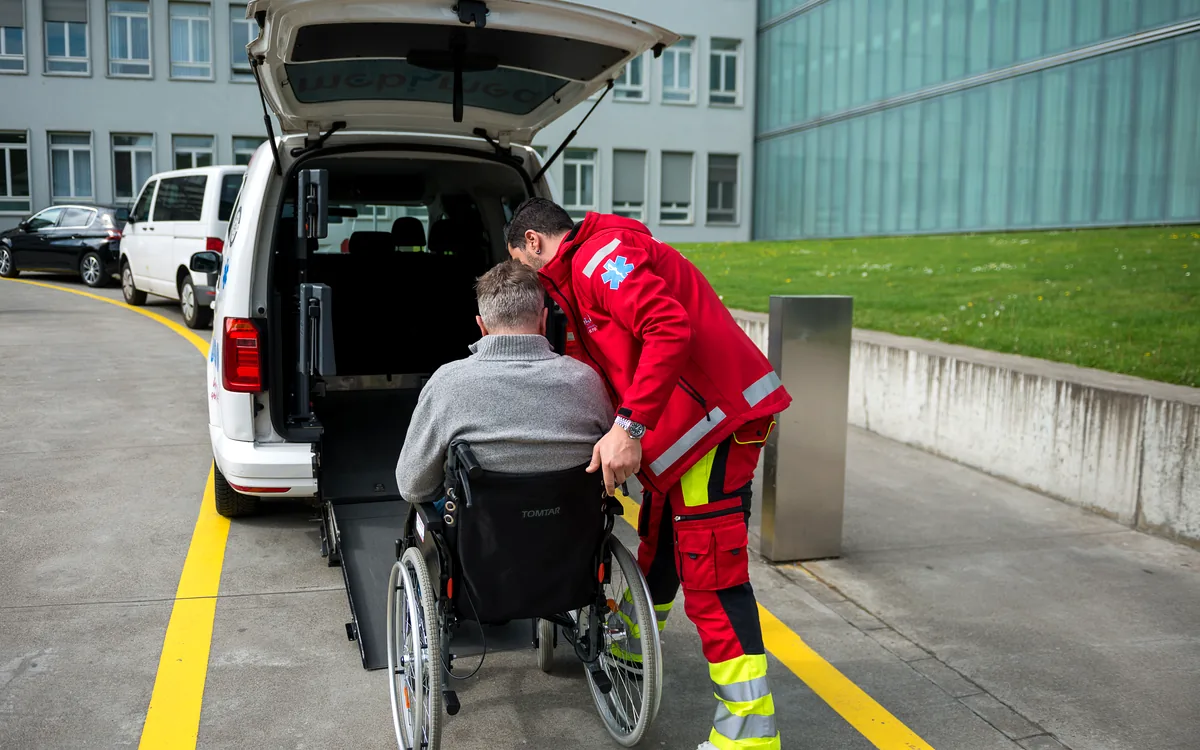
Our staff collect you from your front door and, if necessary, help you over thresholds or stairs. At the vehicle, the wheelchair rolls up the ramp or is raised by the lift. Inside the vehicle, it is fixed to the floor with a four-point restraint system, and you are secured with a separate belt. At the destination, the same steps are taken in reverse, and you are accompanied to the reception desk or into your home.
Electric wheelchairs are heavier and larger than folding wheelchairs. So that we can plan the right vehicle, we need the model and weight in advance. Tilt-in-space or comfort wheelchairs with an adjustable backrest or headrest can usually be transported too — please give us the dimensions when you book.
It is important that the wheelchair is suitable for transport in a vehicle and has securing points. If in doubt, we clarify this by phone before the journey.
A taxi with a ramp takes the wheelchair from kerb to kerb. Wheelchair transport goes further: collection from your home, accompaniment to the destination, trained staff and a secured journey. For medically necessary and prescribed journeys, basic health insurance (KVG/LAMal) covers 50 per cent, up to a maximum of CHF 500 per calendar year.
Relatives can book the journey for their parents or partner and travel along free of charge themselves. It helps if the wheelchair brakes, footrests and seat cushion are in order before the journey and a bag with documents, medication and ID is ready.
For recurring appointments — physiotherapy, dialysis, a sheltered workshop or day centre — it is worth setting up the journeys as a fixed series. The times then stay the same, and wherever possible the same drivers come.
Booking is simple: online via the order form or by phone on 0800 670 670 (free call), with details of the wheelchair type, collection address, destination and appointment.
Marco, 52, from Muttenz, has used an electric wheelchair since an accident at work and has physiotherapy in Basel twice a week. When he first books, he gives the model and weight of his wheelchair. Since then, Mobimed has driven him as a fixed series: same times, into the vehicle via the lift, secured with the four-point system, right into the practice.
With wheelchair transport, the patient stays seated in their own wheelchair.
Learn more: Wheelchair transport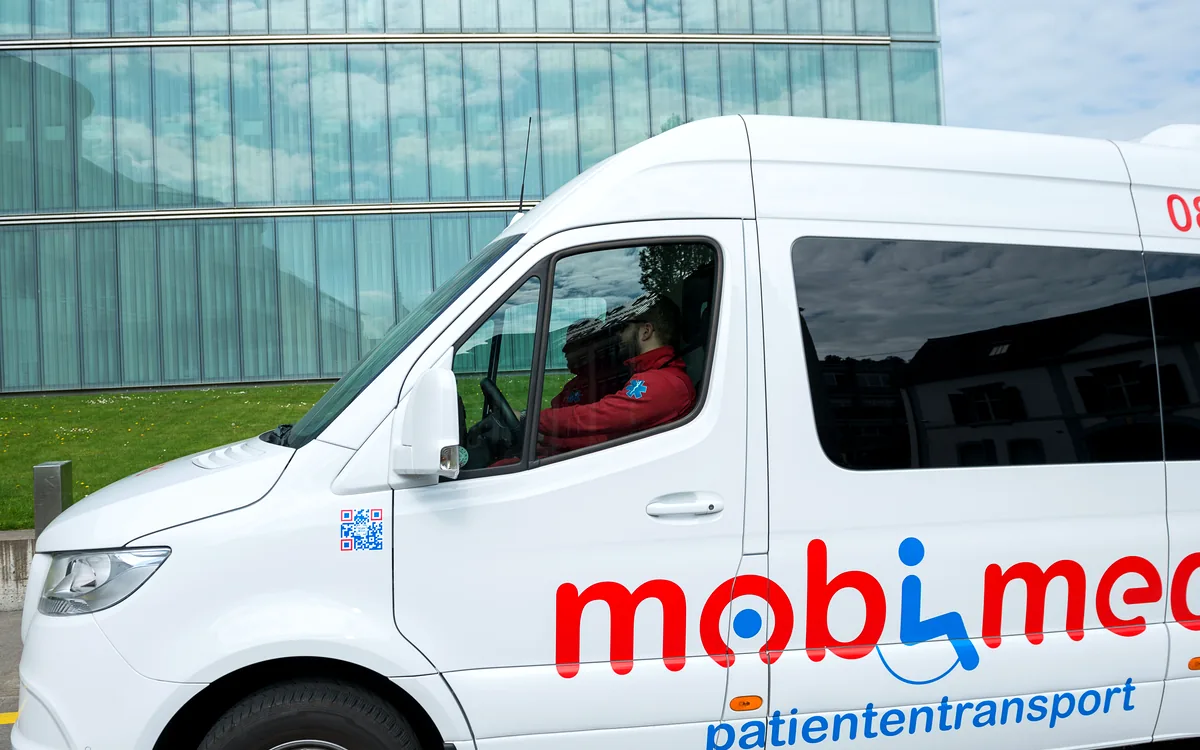
With our wheelchair transport service – often also called a wheelchair taxi – you stay seated in your own wheelchair: you enter the vehicle via a ramp or lift.
Learn more: Wheelchair taxi service Basel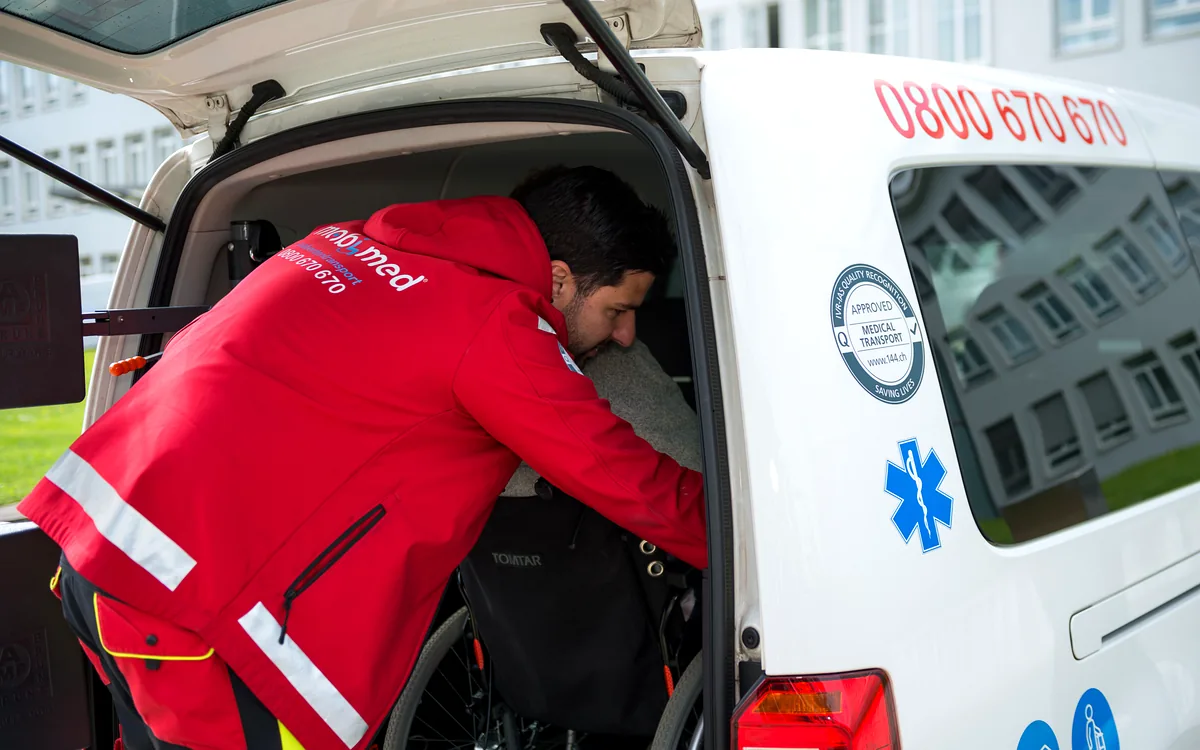
For us, transport for people with disabilities means accessible vehicles with a ramp or lift, trained staff and door-to-door assistance – for people with physical or multiple disabilities.
Learn more: Transport for people with disabilities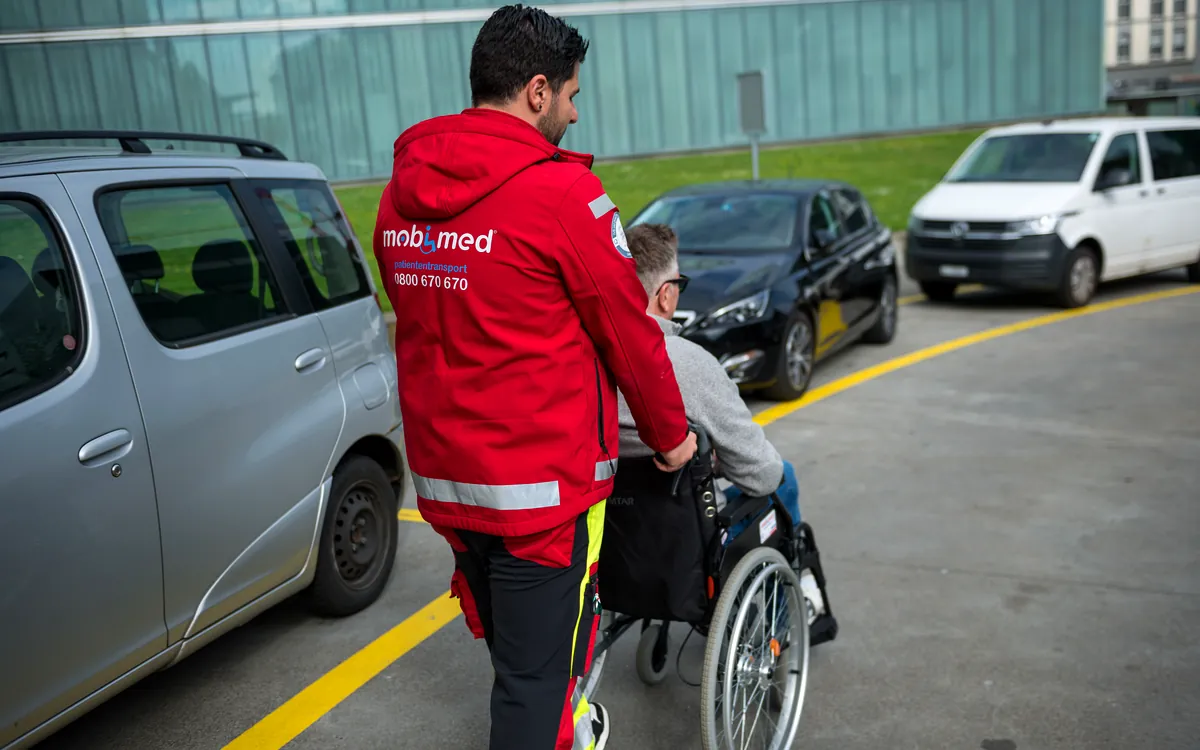
We drive you to your GP, dentist, specialist or physiotherapist and bring you back home after your appointment.
Learn more: Transport to the doctorYes. The wheelchair is brought into the vehicle via a ramp or lift and secured with an approved restraint system. You do not have to be transferred.
Generally yes. We need the model and weight in advance so that we can plan the right vehicle.
Client, patient, appointment — one form that goes directly to our dispatch team. Prefer to call? That works too.
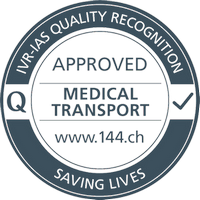
Recognition by the Swiss Interassociation for Rescue Services (IVR/IAS) is not a self-assessment but the result of an external audit of vehicles, equipment, training and procedures. Mobimed was the first patient transport provider in north-western Switzerland to receive it — and still holds it today.
Check the certificate in the IVR register