Seated transport
Seated transport is the right choice for medically stable patients who can sit during the journey but need support getting in and out.
Learn more: Seated transport
Glossary · Types of transport · also: seated patient transport, accompanied seated journey, sitting patient transport
Seated transport is a form of patient transport for people who can sit during the journey but need support getting in and out and on the way. They travel in a normal seat, are collected from their front door and accompanied all the way to their destination.
Also called: seated patient transport · accompanied seated journey · sitting patient transport · escorted patient transport
Seated transport is the right choice for medically stable patients who do not need to lie down or use a wheelchair, but should not travel alone. Typical passengers are older people who are unsteady on their feet, patients after outpatient treatment, people with mild dementia or people weakened after chemotherapy.
Seated transport is also often the solution when public transport reaches its limits: too many changes, walks that are too long, too few seats — or simply the uncertainty of finding the right entrance alone in an unfamiliar hospital.
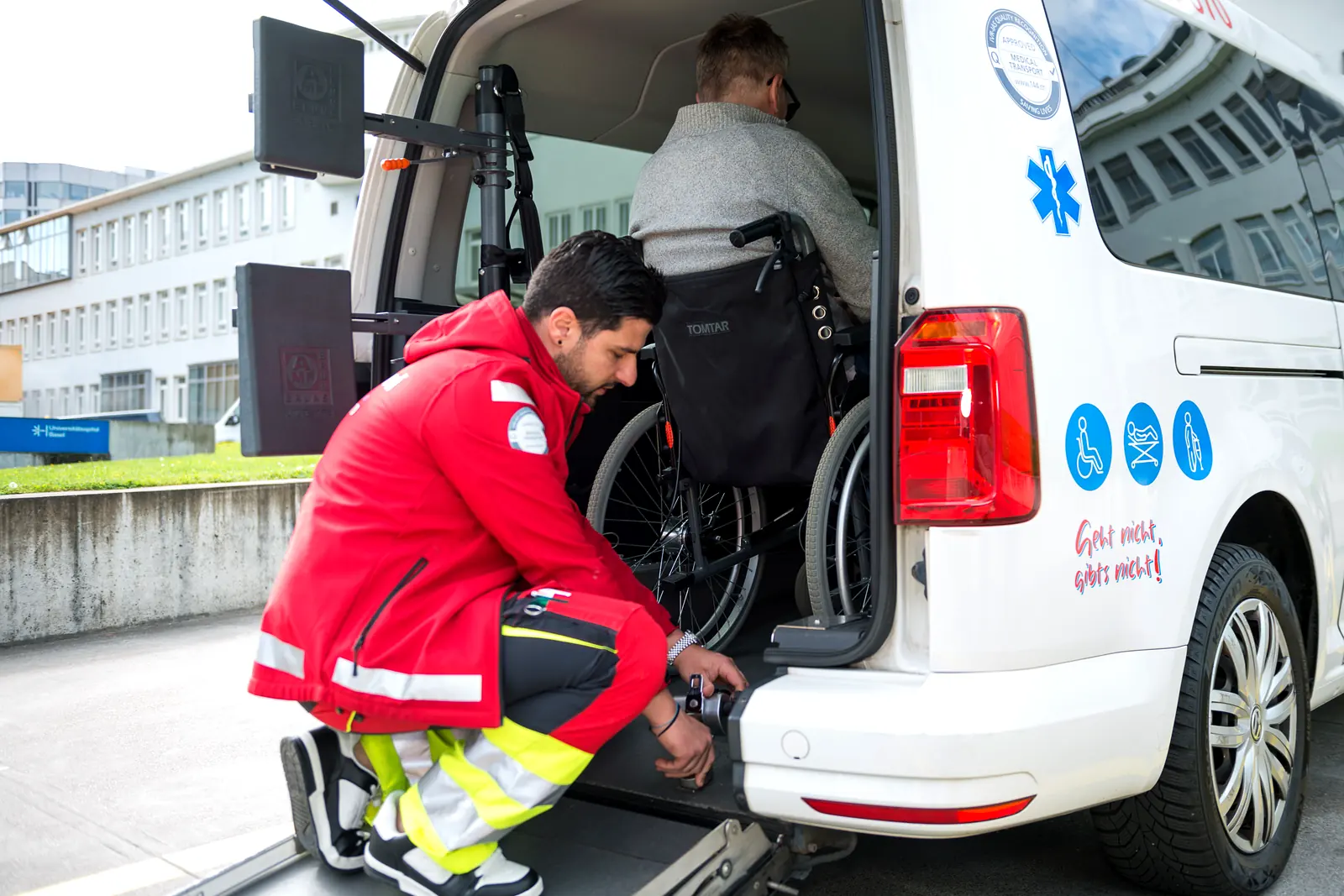
At Mobimed, accompaniment means: we collect you from your home, help you put on your jacket and get down the stairs, support you on the way to the vehicle and secure you in your seat. At the destination, we take you to the registration desk or the waiting room. On request, we wait during your appointment and drive you straight back.
It is precisely this part of the journey — the way between the front door and the vehicle, between the car park and the reception — that is the really difficult part for many patients.
A taxi drives from address to address; help at the door is not part of the service and the drivers are not trained to care for patients. Stretcher transport is needed when sitting is not allowed, and wheelchair transport when the patient has to stay in their wheelchair. Seated transport lies in between: less effort than the stretcher, much more care than a taxi.
If the journey is medically necessary and prescribed by a doctor, basic health insurance (KVG/LAMal) covers 50 per cent, up to a maximum of CHF 500 per calendar year.
Seated transport requires the person to be able to sit stably for the duration of the journey and to help when transferring. If that is not permitted after an operation, stretcher transport is the answer; if someone uses a wheelchair, they are better off staying in it. On very long journeys, too, travelling lying down can be more comfortable.
If there is no lift in the building, seated transport is combined with a stair chair. Let us know about such points when you book — then the vehicle, equipment and number of staff will be right.
For regular appointments — such as check-ups, therapies or courses of treatment — seated transport can be booked as a fixed series. Collection times then stay the same, and wherever possible the same staff come. For older people in particular, this builds trust and saves new explanations on every journey.
Elsa, 81, from Riehen, has a check-up at the eye clinic. After the examination her pupils are dilated, her vision is blurred and she is not allowed to drive anyway. Mobimed collects her from home, accompanies her to the registration desk, waits during the examination and then brings her safely back into her flat.
Seated transport is the right choice for medically stable patients who can sit during the journey but need support getting in and out.
Learn more: Seated transport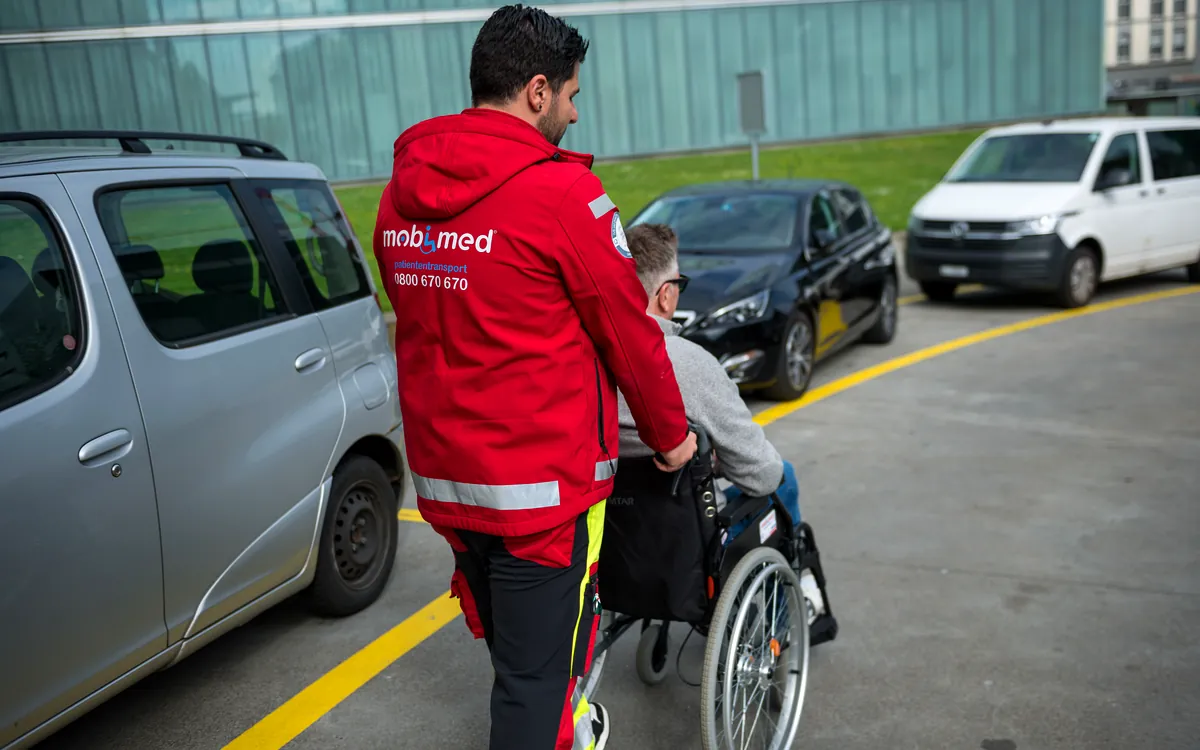
We drive you to your GP, dentist, specialist or physiotherapist and bring you back home after your appointment.
Learn more: Transport to the doctor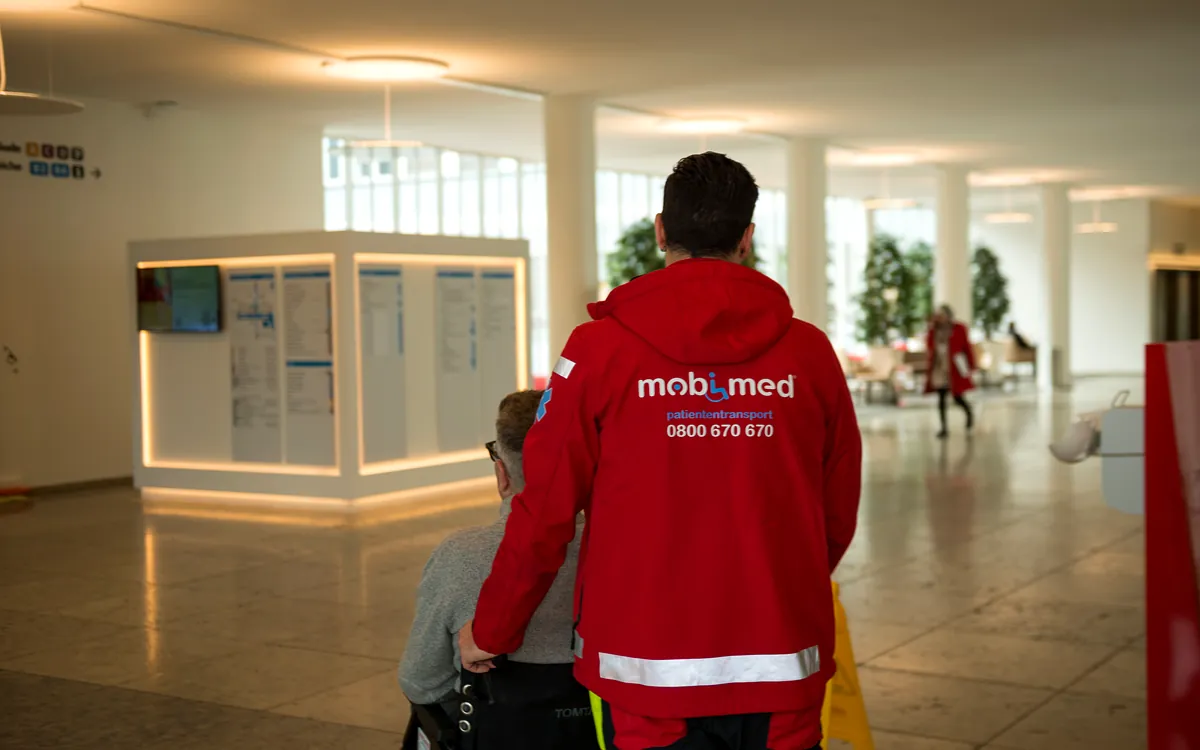
With our transport to medical examinations, we take you to your appointment – for example for an MRI, CT or X-ray, for chemotherapy or radiotherapy or for a follow-up check – and back again afterwards.
Learn more: Transport to medical examinations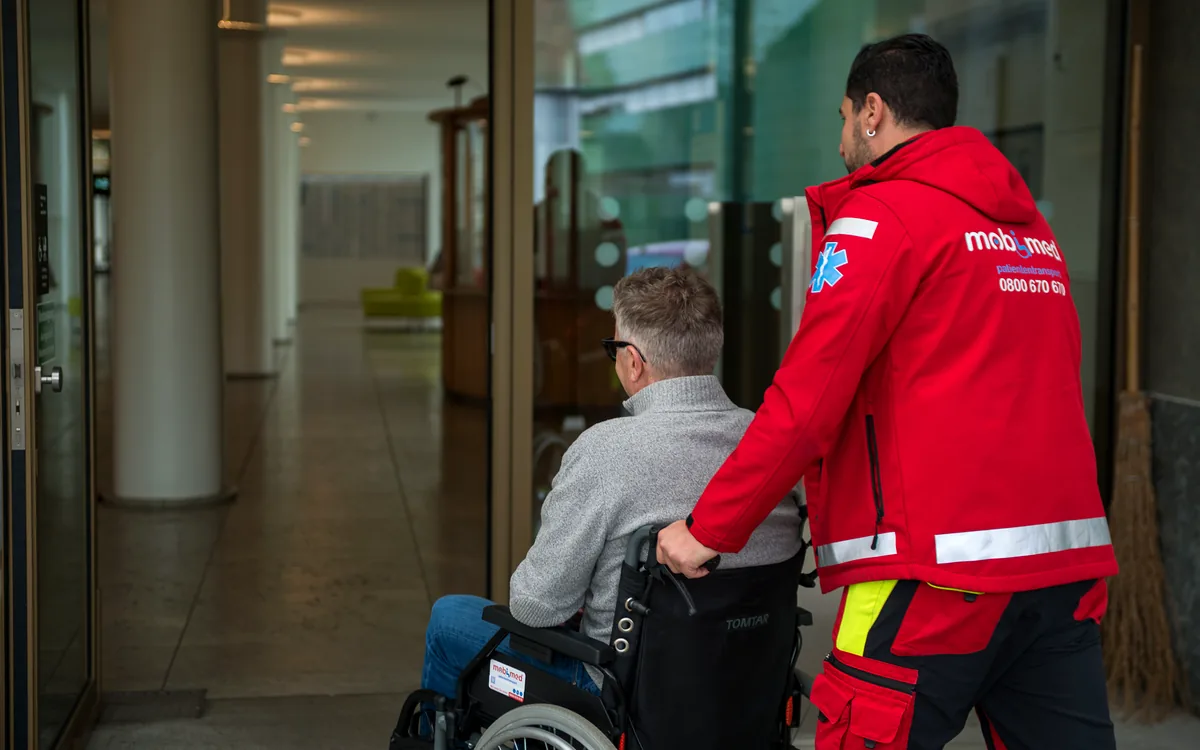
Our private transport service for seniors takes you to the doctor, to hospital, to therapy, to the hairdresser or to visit family – and back home again.
Learn more: Transport service for seniorsWith seated transport, you are collected from your home, accompanied by trained staff and taken all the way to your destination. A taxi drives from address to address without accompaniment.
Yes. At Mobimed, one accompanying person travels free of charge with every type of transport.
Client, patient, appointment — one form that goes directly to our dispatch team. Prefer to call? That works too.
Recognition by the Swiss Interassociation for Rescue Services (IVR/IAS) is not a self-assessment but the result of an external audit of vehicles, equipment, training and procedures. Mobimed was the first patient transport provider in north-western Switzerland to receive it — and still holds it today.
Check the certificate in the IVR register