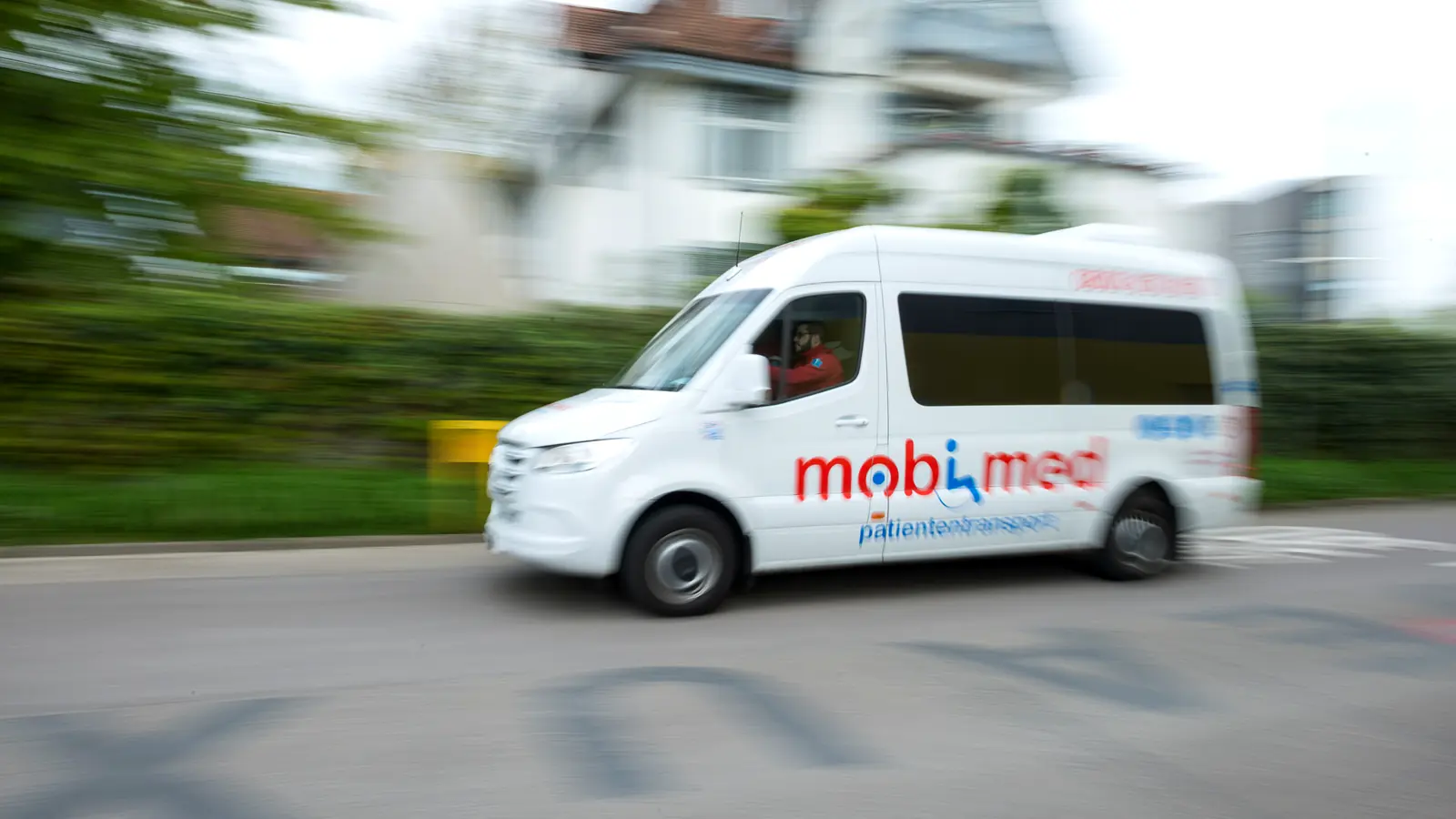
Wheelchair transport
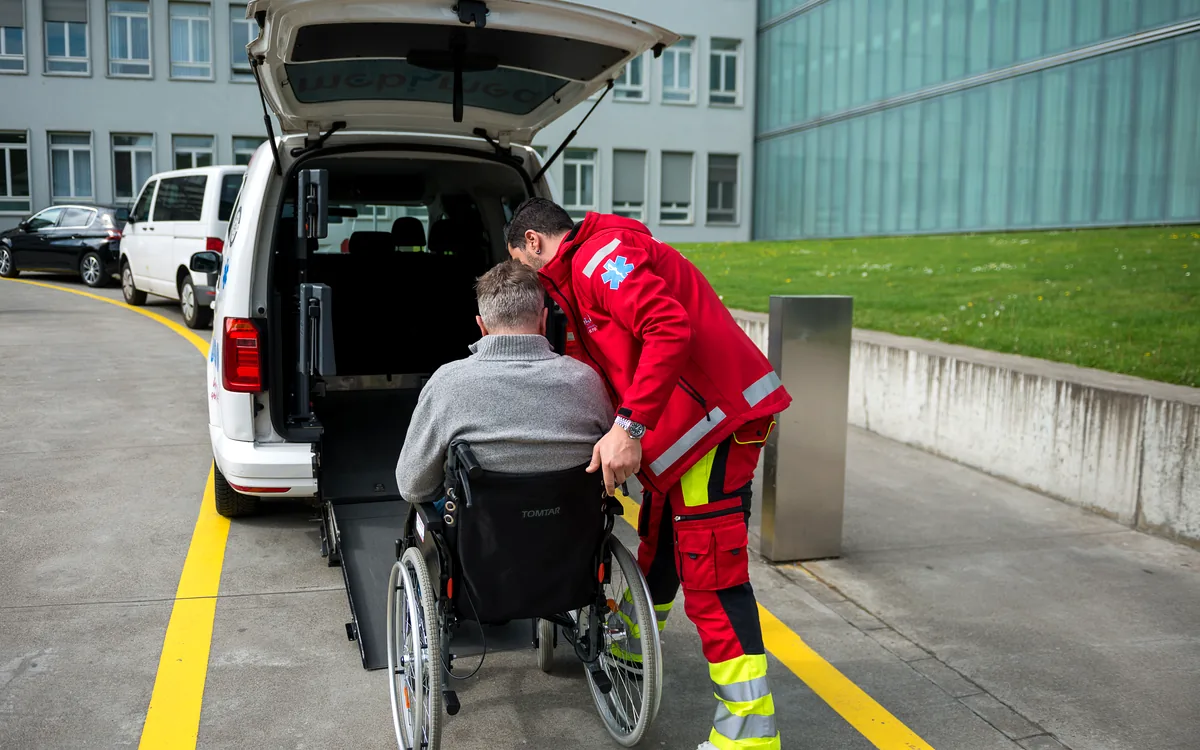
With wheelchair transport, the patient stays seated in their own wheelchair.
Learn more: Wheelchair transport
Glossary · Equipment · also: E-wheelchair, Power wheelchair, Motorised wheelchair
An electric wheelchair is a wheelchair with an electric motor and battery, controlled by joystick. For a transport, the person usually stays seated in it; because electric wheelchairs are heavy and large, a vehicle with a lift or a suitable ramp and careful securing are needed. It is therefore important to give the model and weight when booking.
Also called: E-wheelchair · Power wheelchair · Motorised wheelchair · Powerchair
Because of the motor, battery and robust frame, electric wheelchairs often weigh well over a hundred kilograms — together with the person, this can be several times the weight of a folding wheelchair. On top of that come dimensions, turning circle and special features such as headrests, adjustable seats or leg rests.
For the transport, this means: the vehicle must offer enough space, the lift or ramp must be approved for the weight, and the restraint system must grip the frame securely. That is why Mobimed asks for the model and weight of electric wheelchairs in advance and plans in the right vehicle.
Pushing a heavy electric wheelchair up a steep ramp is pleasant neither for the staff nor for the person in it. With a lift, the wheelchair moves onto a platform that raises it horizontally to vehicle height. Some electric wheelchairs can also drive up a shallow ramp under their own power — the staff then secure them from behind.
In the vehicle, the electric wheelchair is anchored to the floor with a four-point restraint system like any other wheelchair, and the person is secured with their own belt. The motor is switched off so that the wheelchair cannot move accidentally.
Before the journey, it is worth checking the battery so that the wheelchair still has enough range at the destination — especially for longer appointments or a return journey on the same day. Removable accessories such as trays, bags or mounts are secured or stowed separately.
For very specialised models, for example with a standing function or an electrically adjustable reclining position, a short conversation beforehand makes sense. That way the team knows how the wheelchair is secured and which position is best during the journey.
Even for longer journeys, for example to the airport or to a clinic outside the region, you can remain seated in your electric wheelchair. For air travel, however, the airline has its own rules for transporting the wheelchair and above all for batteries — these should be clarified with the airline in good time.
On long journeys, the team plans in breaks. Anyone sitting in an electric wheelchair for a long time may need pressure relief or a different seating position now and then. Tell us when booking what works well for you — and the journey will be planned accordingly.
Daniel has used an electric wheelchair with a headrest for years. For his mother’s 70th birthday in Pratteln, he books a journey and gives the model and weight. A vehicle with a lift arrives, his wheelchair is anchored and the motor switched off. His partner rides along as his companion at no extra charge.
With wheelchair transport, the patient stays seated in their own wheelchair.
Learn more: Wheelchair transport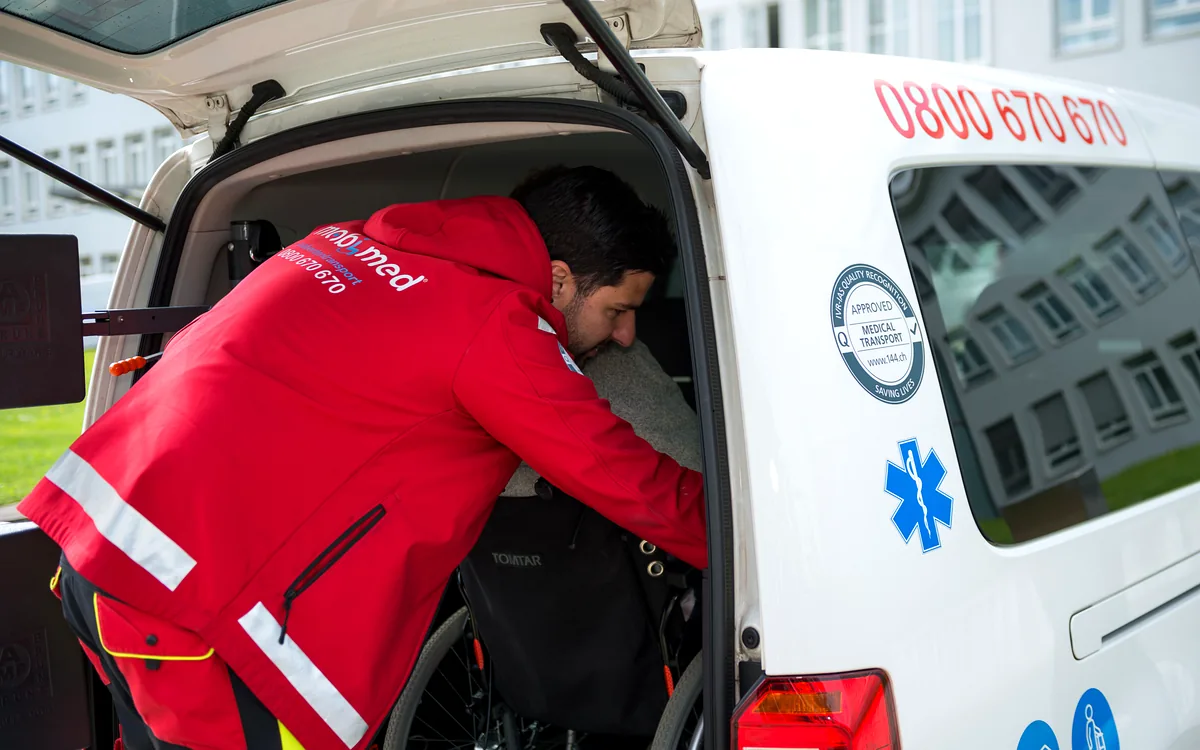
For us, transport for people with disabilities means accessible vehicles with a ramp or lift, trained staff and door-to-door assistance – for people with physical or multiple disabilities.
Learn more: Transport for people with disabilities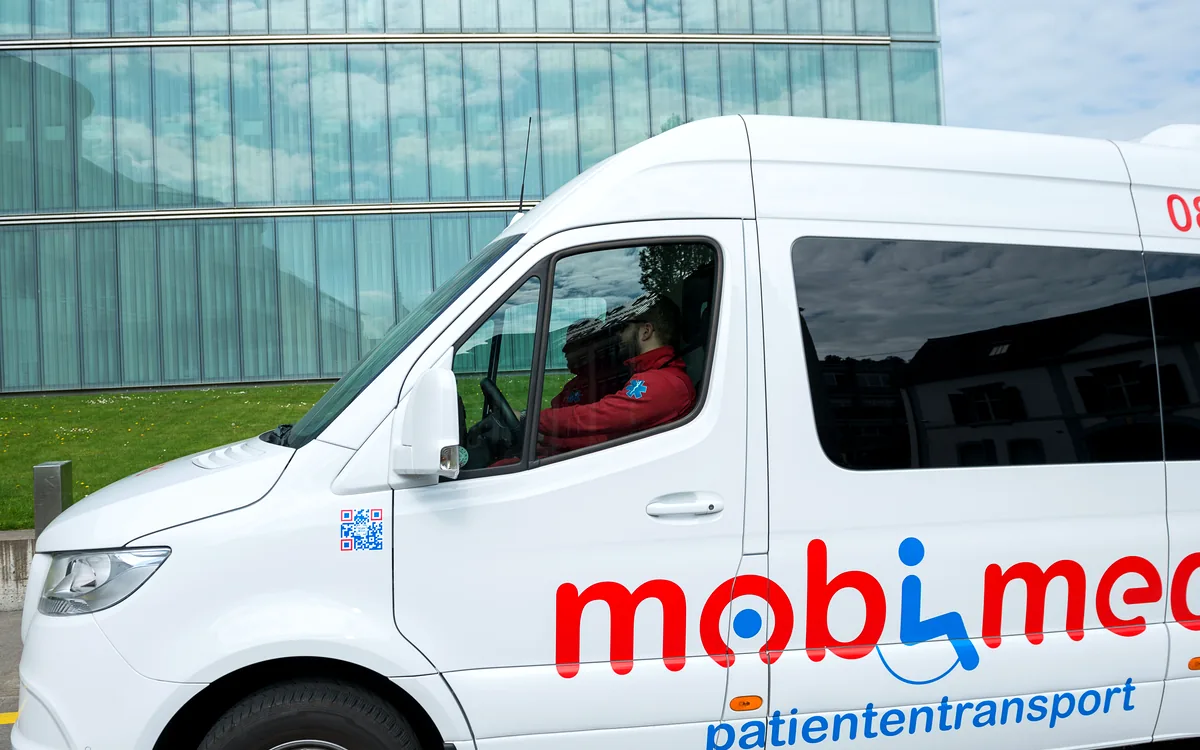
With our wheelchair transport service – often also called a wheelchair taxi – you stay seated in your own wheelchair: you enter the vehicle via a ramp or lift.
Learn more: Wheelchair taxi service BaselAs a rule, yes. This requires a vehicle with a suitable lift or ramp and a wheelchair that can be secured with the restraint system. That is why Mobimed needs the model and weight in advance.
During the journey the wheelchair is switched off and secured, so the battery is not in use. To ensure you are mobile at your destination, it should be sufficiently charged before departure.
Client, patient, appointment — one form that goes directly to our dispatch team. Prefer to call? That works too.
Recognition by the Swiss Interassociation for Rescue Services (IVR/IAS) is not a self-assessment but the result of an external audit of vehicles, equipment, training and procedures. Mobimed was the first patient transport provider in north-western Switzerland to receive it — and still holds it today.
Check the certificate in the IVR register