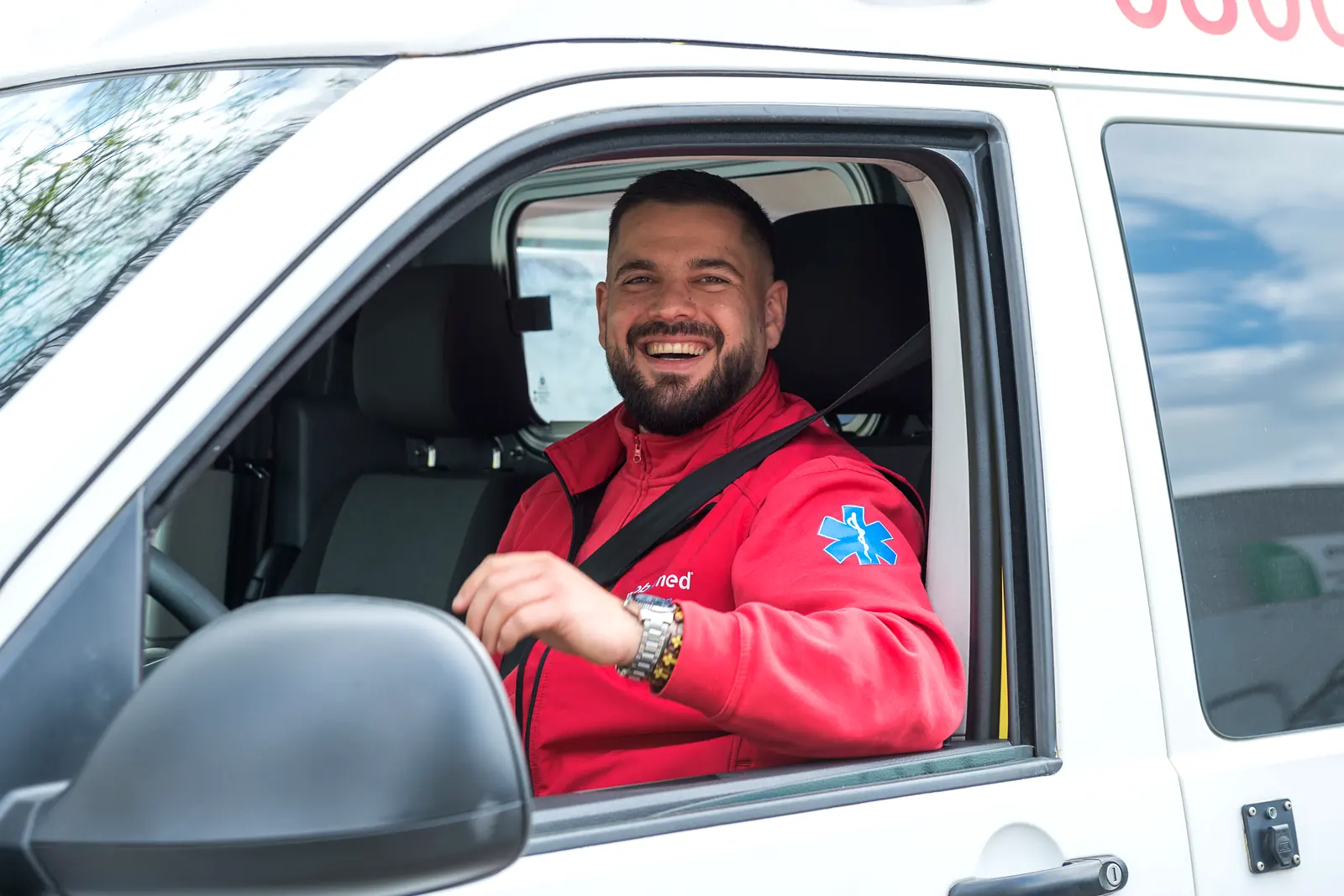
Dialysis transport
Dialysis transport is not a one-off matter but a routine: usually three times a week, often for years.
Learn more: Dialysis transport
Glossary · Occasions and assistance · also: Blood purification, Haemodialysis, Kidney replacement therapy
Dialysis is a blood purification procedure that takes over the work of the kidneys when they no longer function adequately. The most common form is haemodialysis, in which the blood is cleaned in a dialysis centre, usually three times a week for several hours at a time. For many patients this means six journeys a week — over months or years.
Also called: Blood purification · Haemodialysis · Kidney replacement therapy · Peritoneal dialysis · PD
In haemodialysis, blood is drawn from the body through a vascular access, filtered in a machine and then returned. Treatment usually takes place in a dialysis centre or a hospital dialysis unit and lasts several hours per session.
An alternative is peritoneal dialysis. It is carried out at home and uses the lining of the abdomen (the peritoneum) as a filter. Which procedure is suitable is decided by patients together with the nephrology team.
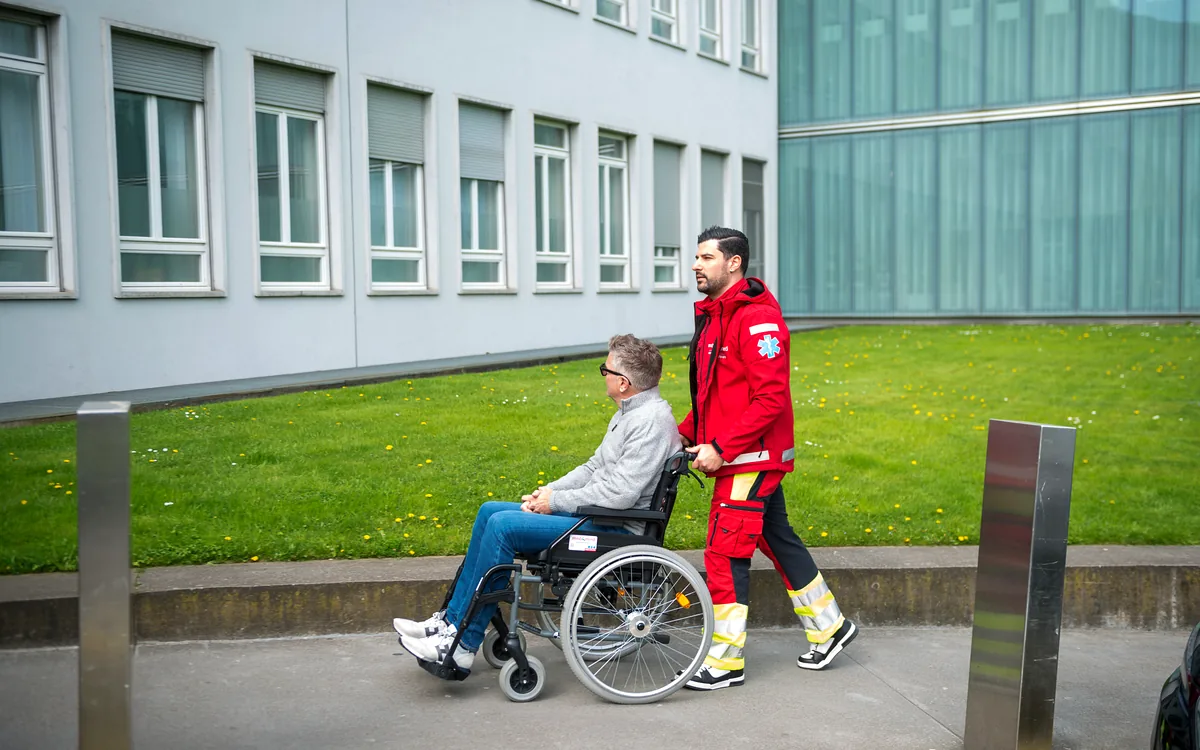
Anyone who has to go to haemodialysis three times a week has six journeys a week — there and back. After treatment, many people feel tired and weak, and some have circulatory problems. Driving themselves or getting home by public transport is then often no longer reasonable.
For such recurring journeys, a fixed routine is crucial: the same weekdays, the same times, and the same drivers wherever possible. Mobimed therefore sets up dialysis transport as a fixed series. You or the dialysis unit provide the appointments once; changes are reported by phone. Transport is seated, in a wheelchair or — if necessary — lying down.
Dialysis journeys are generally regarded as medically necessary transport. Basic health insurance covers 50 per cent of the transport costs, up to a maximum of CHF 500 per calendar year. Because dialysis journeys are so frequent, this amount is quickly used up.
That is why it pays to clarify early on what a supplementary insurance covers and whether you are entitled to supplementary benefits (EL), which can reimburse the cost of transport to treatment. A medical prescription should also be in place. Mobimed tells you the price before the first journey.
Dialysis does not only affect the person who is ill. Many relatives organise appointments, accompany them to examinations and step in when something goes wrong. When the journeys are reliably organised, this noticeably relieves the whole family.
A fixed contact person and a clear procedure for changes are helpful: who reports it when a treatment is postponed, when a hospital stay intervenes or when the dialysis unit’s times change? With a fixed series and a short phone call, this can usually be handled without fuss.
Hans from Therwil has been going to Basel for haemodialysis three times a week for a year. His wife does not drive. The dialysis unit has set up a fixed series with Mobimed: on Monday, Wednesday and Friday the team picks him up at 7 am and takes him home again after treatment. When Hans spends a week in hospital, his wife reports the break by phone.
Dialysis transport is not a one-off matter but a routine: usually three times a week, often for years.
Learn more: Dialysis transport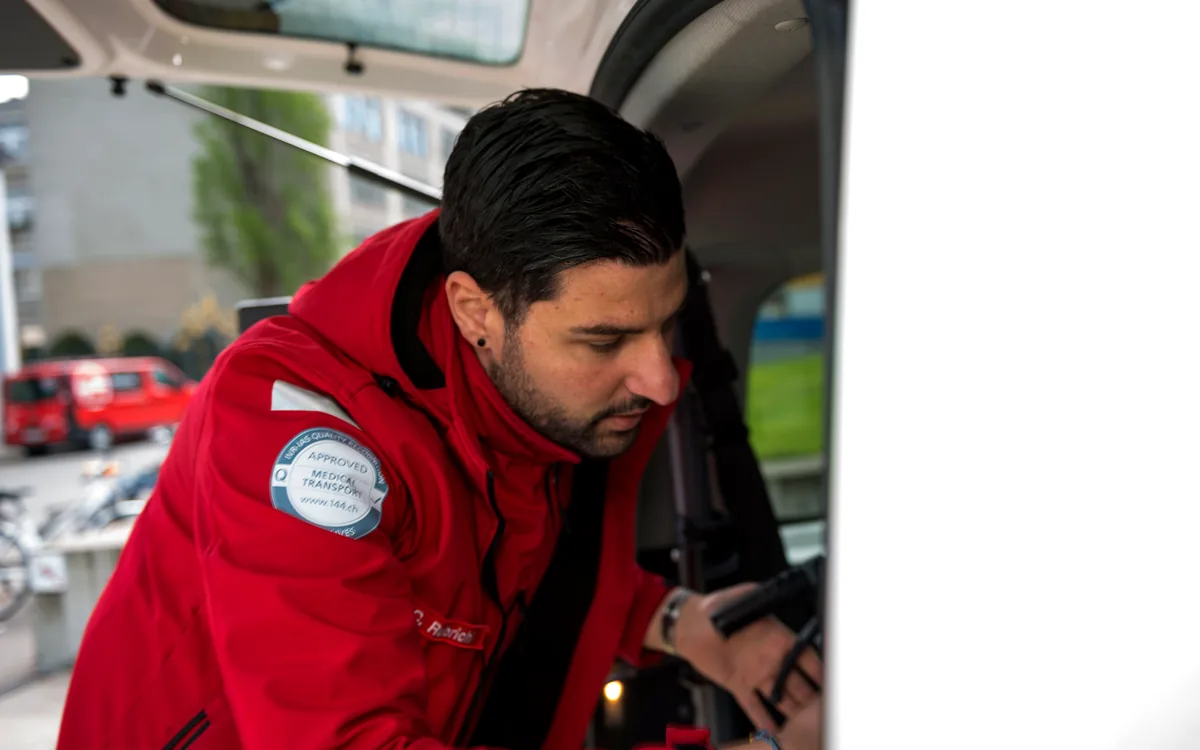
Seated transport is the right choice for medically stable patients who can sit during the journey but need support getting in and out.
Learn more: Seated transport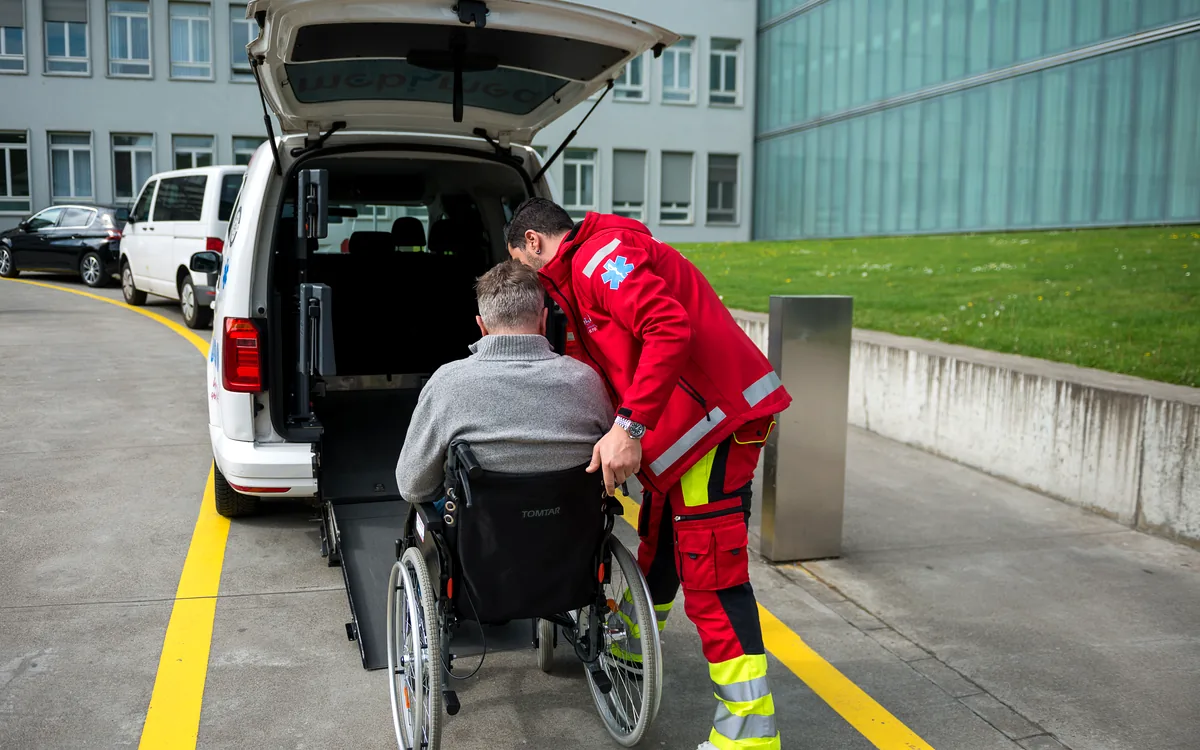
With wheelchair transport, the patient stays seated in their own wheelchair.
Learn more: Wheelchair transportYes. Weekdays and times are recorded once, after which the journeys run on a fixed schedule. You report changes, for example during a hospital stay, by phone.
Then we take you home in a wheelchair or lying down and accompany you into your flat. Mention this when booking or ask the dialysis unit to make a note of it.
Basic health insurance covers 50 per cent, up to a maximum of CHF 500 per year. With regular dialysis journeys this limit is quickly reached; supplementary insurance and supplementary benefits can partly cover the rest.
Client, patient, appointment — one form that goes directly to our dispatch team. Prefer to call? That works too.
Recognition by the Swiss Interassociation for Rescue Services (IVR/IAS) is not a self-assessment but the result of an external audit of vehicles, equipment, training and procedures. Mobimed was the first patient transport provider in north-western Switzerland to receive it — and still holds it today.
Check the certificate in the IVR register